

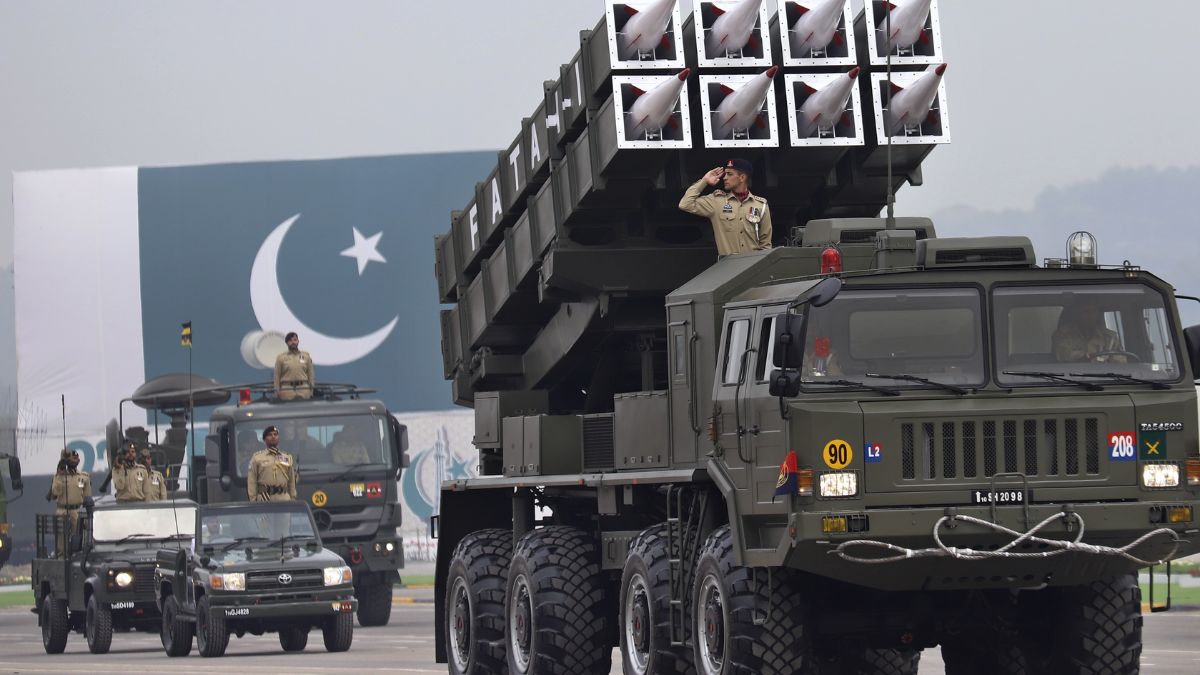
A recent statement attributed to a Pakistani security official indicating that Pakistan may support Saudi Arabia under an existing defence agreement if a regional conflict intensifies marks a development of considerable geopolitical weight. Although couched in conditional language, the timing of this signal, against a backdrop of renewed tensions across West Asia, suggests a recalibration that extends beyond routine diplomatic reassurance. It reflects a deeper strategic alignment that carries implications not only for regional security but also for global trade, energy markets, and maritime stability.
The defence partnership between Pakistan and Saudi Arabia is neither new nor superficial. It has evolved over decades into a multifaceted strategic axis grounded in military cooperation, financial interdependence, and geopolitical convergence. Pakistan has long provided military training, advisory roles, and, at various junctures, troop deployments to the Kingdom. The relationship has also been reinforced by Saudi financial assistance during periods of economic stress in Pakistan, creating a reciprocal framework of security and economic support. While never formally acknowledged, persistent strategic discourse has alluded to a potential nuclear dimension underpinning this relationship, given Pakistan’s status as the only nuclear armed Muslim majority state. Institutional cooperation has also been formalised through joint exercises and Pakistan’s participation in Saudi led initiatives such as the Islamic Military Counter Terrorism Coalition. Yet, Pakistan has historically exercised restraint when confronted with direct military involvement, most notably in 2015 when it declined to join the Saudi led campaign in Yemen, citing domestic sensitivities and the need to preserve its delicate relationship with Iran.
The significance of the current statement lies primarily in its timing. Despite the diplomatic thaw between Saudi Arabia and Iran facilitated by China in 2023, structural rivalries remain unresolved. The regional theatre continues to be shaped by proxy engagements spanning Yemen, Iraq, Syria, and Lebanon. In such an environment, even a conditional expression of military backing introduces a new variable into an already volatile equation. For Pakistan, the challenge is inherently complex. Its strategic calculus must reconcile strong defence ties with Saudi Arabia, geographic proximity and economic engagement with Iran, and internal sectarian dynamics that make overt alignment a politically sensitive decision. Any perceived tilt towards Riyadh in the event of escalation risks unsettling Pakistan’s western frontier and complicating its bilateral engagements with Tehran. The nuclear dimension further amplifies the weight of such signalling. Even indirect implications of strategic backing from a nuclear capable state introduce deterrence considerations that extend beyond conventional military calculations, particularly in a region characterised by deep mistrust and rapid escalation risks.
From a trade and macroeconomic perspective, the ramifications are immediate and potentially far reaching. Saudi Arabia remains central to global energy markets, contributing roughly a tenth of global oil output and acting as a stabilising force within OPEC. Any escalation involving the Kingdom has the potential to disrupt production or export infrastructure, triggering upward pressure on crude prices and injecting volatility into global energy benchmarks. The risks are compounded by the geographic proximity of critical energy transit routes. The Strait of Hormuz, situated along Iran’s southern coastline, facilitates nearly a fifth of global oil shipments. In a conflict scenario, even limited disruption or perceived threat to this chokepoint would have cascading effects. Freight costs would rise, insurance premiums would surge, and supply chains would face immediate strain. For major import dependent economies such as India, China, and the European Union, this would translate into inflationary pressures and renewed stress on economic recovery trajectories.
Shipping markets would likely register the earliest and most pronounced impact. The Gulf region serves as a critical artery for both energy and container traffic linking Asia, Europe, and beyond. In the event of heightened tensions, war risk premiums imposed by insurers would increase sharply, reflecting elevated threat perceptions. This would not only raise the cost of transportation but also influence routing decisions, potentially leading to longer transit times and congestion at alternative ports. Such disruptions would reverberate across global logistics networks. Container availability, already sensitive to geopolitical shocks, could tighten further, while energy shipments would face scheduling uncertainties. The cumulative effect would be a systemic increase in trade friction, affecting both commodity flows and finished goods supply chains.
At the same time, the evolving situation presents a distinct dimension within defence economics. Saudi Arabia continues to rank among the world’s largest importers of defence equipment and services. Any movement towards deeper military coordination with Pakistan could open avenues for expanded defence cooperation, including training programmes, joint exercises, and potential equipment supply arrangements. For Pakistan, this represents an opportunity to enhance its strategic relevance while potentially strengthening its defence export portfolio. However, such gains would need to be balanced against the broader geopolitical risks and the constraints imposed by its domestic economic environment.
Pakistan’s ability to translate strategic signalling into tangible military commitment remains constrained. The country continues to navigate significant economic challenges, including reliance on external financial support mechanisms such as IMF programmes. Internal security concerns and political volatility further limit the scope for sustained overseas military engagement. Any decision to extend support would therefore require careful calibration, ensuring that external commitments do not exacerbate domestic vulnerabilities. Public opinion, fiscal capacity, and security considerations will all play a determining role in shaping Pakistan’s eventual course of action.
Iran’s position in this evolving dynamic is critical. Sharing an extensive border with Pakistan, Iran represents both a neighbour of strategic importance and a potential source of risk in the event of misalignment. Any perception of Pakistani support for Saudi Arabia in a conflict scenario could strain bilateral relations, disrupt cross border trade, and heighten security concerns along the frontier. Moreover, Iran’s capacity to influence regional stability through asymmetric means, including maritime disruption and proxy engagement, adds an additional layer of uncertainty. The interplay between these factors underscores the delicacy of Pakistan’s strategic positioning.
The broader international context further complicates the picture. The United States continues to maintain strong ties with Saudi Arabia, although its regional posture has evolved in recent years. China, with substantial energy dependencies on both Saudi Arabia and Iran, has demonstrated a clear preference for stability, as evidenced by its role in facilitating diplomatic rapprochement. Russia, meanwhile, may view heightened tensions as an opportunity to exert influence over energy markets and geopolitical alignments. Pakistan’s signalling must therefore be interpreted within this wider framework of great power competition, where regional developments intersect with global strategic interests.
The statement attributed to a Pakistani security official should be understood not as an isolated remark but as a strategic signal embedded within a complex and fragile geopolitical environment. Its implications extend far beyond bilateral relations, touching upon energy security, maritime trade, defence economics, and global market stability. For trade professionals and policymakers alike, the key takeaway is the speed and scale at which geopolitical developments in West Asia can translate into tangible economic consequences. Even conditional alignments have the capacity to reshape risk perceptions, influence market behaviour, and disrupt established trade flows. As the situation continues to evolve, close monitoring of diplomatic signals, military postures, and market indicators will be essential. In an increasingly interconnected global economy, the intersection of geopolitics and trade has rarely been more pronounced, or more consequential.