

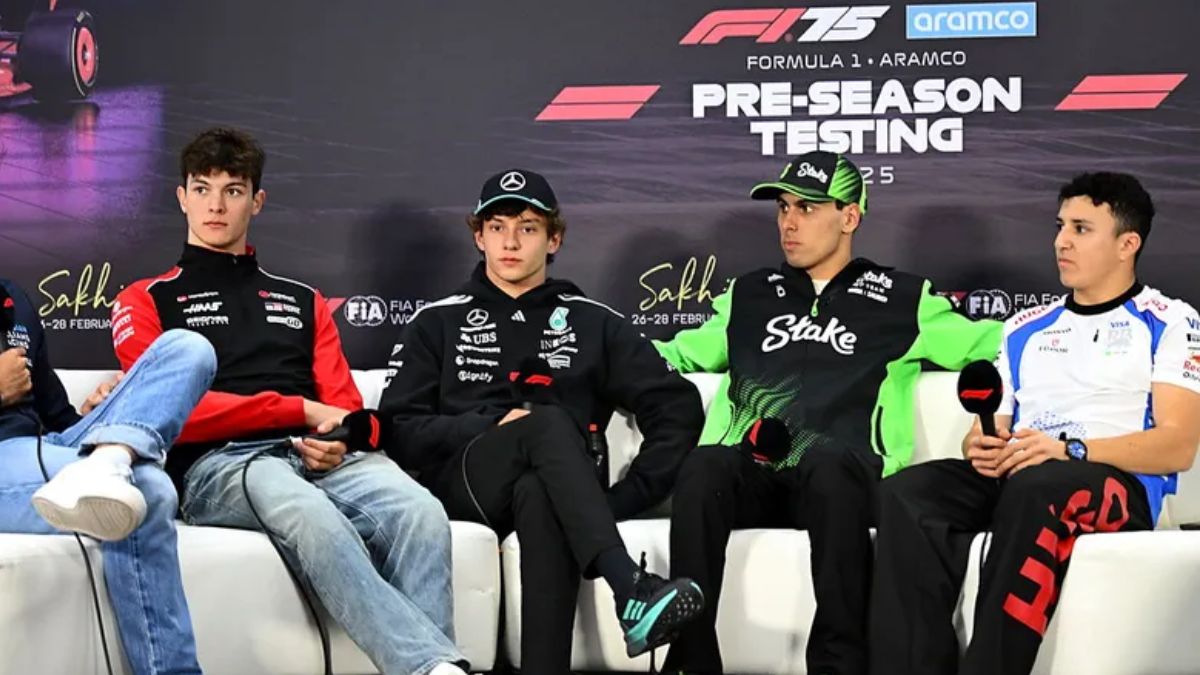
Formula 1 has always had young drivers making their debuts, but what is happening in 2026 feels different in scale and in impact. This is not a story about promising teenagers managing results and staying out of trouble while veterans dominate. Several of this season’s newest entrants are actively reshaping the championship, and the grid is beginning to look younger than it has in over a decade.
Kimi Antonelli is the most obvious example. At 19, he is leading the world championship with four wins from five races. That is not a rookie season by any conventional definition. He replaced Lewis Hamilton at Mercedes, a seat that carries enormous expectation, and has not merely acquitted himself but has dominated. The pressure that would have broken many experienced drivers has seemed to accelerate his development rather than slow it.
Arvid Lindblad joined Racing Bulls as the only true rookie on the 2026 grid, the 18-year-old Swede stepping up from the junior categories to partner Liam Lawson. His early season results have drawn attention. Lindblad showed his class and maturity on debut in Australia, scoring points in his first Formula 1 race, with team observers describing him as looking “the real deal” at just 18 years old.
Isack Hadjar, who made his debut in 2025, was promoted to Red Bull Racing for 2026 as Verstappen’s teammate, a significant step up in pressure and expectation. He has shown pace but is still adapting to the demands of the lead team environment. Gabriel Bortoleto, meanwhile, has the unenviable task of building Audi’s new programme alongside Nico Hulkenberg.
What this generation shares is a different kind of preparation. They have grown up with simulation technology, data analysis, and junior series that are closer in character to Formula 1 than ever before. They arrive on the grid more technically informed and less overawed than predecessors from earlier eras.
The veterans who remain, Hamilton, Verstappen, Alonso, are competing against drivers who have been shaped by a completely different sporting environment. In 2026, that tension is producing some of the most interesting racing the sport has seen in years.