

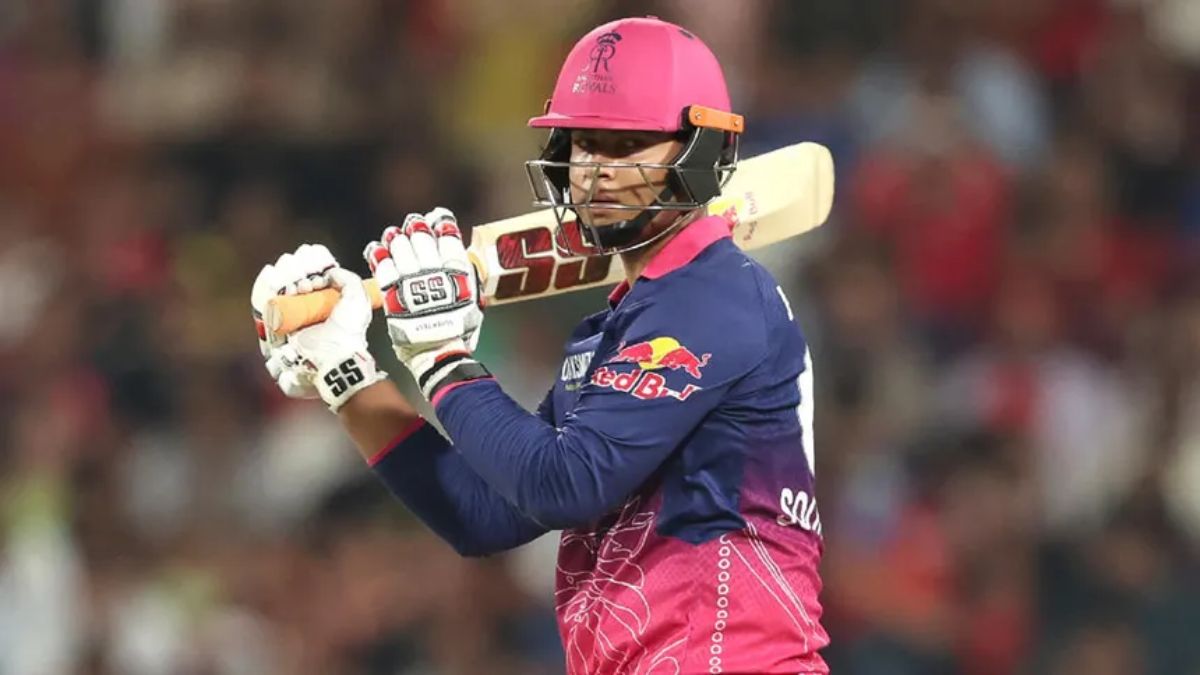
There is cricket before Vaibhav Suryavanshi, and there is cricket after him. Wednesday evening in Hyderabad made that division permanent.
A 15-year-old from Muzaffarpur, Bihar, walked out to open the batting for Rajasthan Royals in an IPL Eliminator against Sunrisers Hyderabad, with everything on the line and nothing to lose, and proceeded to play an innings that no one in the 18-year history of this tournament had played before. He scored 97 off 29 balls. He hit 12 sixes. He broke Chris Gayle’s 14-year-old record for the most sixes in a single IPL season. He equalled the fastest fifty in IPL knockout history. He gave his team 125 runs in 8 overs and a platform that felt less like a cricket score and more like a statement of intent about what this sport is about to become.
He was dismissed three runs short of a century that would have made grown men weep in the stands.
He is still only 15.
What he did today
Suryavanshi walked in with Yashasvi Jaiswal at the top of the order and began doing what he has done all season, only faster, only bigger, only with more at stake. By the third over he had equalled Gayle’s seasonal record of 59 sixes with a whipped inside-out shot over covers off Sakib Hussain that barely needed a follow-through. The next ball cleared long-off. Fourteen years of Gayle’s record, gone in a single movement from a boy who was not born when most of those records were being set.
The ball after that brought up his fifty. Sixteen balls. Joint fastest in IPL Eliminator and Playoffs history, matching Suresh Raina’s record from the 2014 Qualifier 2 at Wankhede.
When he was dismissed, the score was 125 for 1 in 8 overs. His opening stand with Jaiswal, who made 25 off 20, was worth 125 runs off 48 balls. Pat Cummins, one of the finest T20 captains and bowlers in the world, had no answer. Neither did Hussain, Hinge, or Eshan Malinga. They bowled. He hit. That was the entirety of the contest for 29 deliveries.
The records inside the innings
Most sixes in overs one to six in a single IPL innings: 8, by Suryavanshi today, breaking the previous record of 7 held jointly by Sanath Jayasuriya, Jos Buttler, Jonny Bairstow, Abhishek Sharma, and Suryavanshi himself from an earlier match this season.
Most powerplay runs in a single IPL season: 490, by Suryavanshi in 2026, ahead of David Warner’s 467 in 2016, Travis Head’s 402 in 2024, Sai Sudharsan’s 402 in 2025, and Adam Gilchrist’s 382 in 2009.
Fastest fifty in an IPL Eliminator or Playoffs: 16 balls, joint with Raina in 2014, ahead of Gilchrist’s 17-ball effort in Centurion in 2009, Dhoni’s 20-ball knock in 2012, and Virender Sehwag’s 21-ball fifty at Wankhede in 2014.
Most 50-plus scores inside the powerplay in IPL history: Suryavanshi now has 5, behind only Warner’s 6.
Most fifties scored in under 20 balls in IPL history: 5, joint with Nicholas Pooran, behind only Abhishek Sharma’s 6.
Second-quickest team century in IPL knockout history: Rajasthan Royals reached 100 in 7.2 overs today, behind only CSK’s 6.0-over effort against PBKS in the 2014 Qualifier 2.
Third-highest powerplay total in IPL knockout history: RR’s 80 for 0, behind only CSK’s 100 for 2 at Wankhede in 2014 and Deccan Chargers’ 84 for 1 in Centurion in 2009.
And then the one that towers above all of them. Suryavanshi’s seasonal sixes tally, which stood at 53 after the league stage, equalled Gayle’s record of 59 with one shot in the third over and broke it with the next. His total now stands at 65 for the season. A record that had belonged to one of the most destructive batters the sport has ever produced, held for 14 years, now belongs to a boy who has not yet sat his board exams.
The season that built to this
This innings did not arrive without context. It arrived as the natural culmination of a season that had been systematically dismantling what anyone believed was possible from a teenager in elite T20 cricket.
Across 14 league-stage matches, Suryavanshi scored 583 runs at an average of 41.64 and a strike rate of 232.27, finishing as Rajasthan Royals’ highest run-scorer in the league phase. His strike rate of 238 across the season is the best ever recorded by any batter who has crossed 300 runs in a single IPL season, across 460 qualifying instances in the tournament’s history. While batting, he contributed more than 58 per cent of all runs his team scored with him at the crease.
He has now scored two IPL centuries in just 15 innings, a record. Hashim Amla needed 16 innings to reach two IPL hundreds. Gayle needed 20. In all T20 cricket combined, Suryavanshi has scored four centuries in 26 innings, faster than any man in history, beating Usman Khan’s previous record of 33 innings.
The boy
At 12, he debuted in the Ranji Trophy, becoming the second youngest to represent Bihar. At 13, Rajasthan Royals signed him at the IPL 2025 mega auction for Rs 1.1 crore, making him the youngest player in history to earn an IPL contract. At 14, he became the youngest centurion in men’s T20 cricket anywhere in the world, hitting 101 off 38 balls against Gujarat Titans, with the century arriving off just 35 deliveries.
He is 15 years and 61 days old today. He idolises Brian Lara. When asked at a BCCI awards function which record he most wanted to break, he said Gayle’s 175, the highest individual score in IPL history, without a moment’s hesitation.
He broke Gayle’s sixes record today. He will come back for the 175.
Three runs
A century in an IPL Eliminator, off fewer than 30 balls, with Gayle’s all-time record broken inside it, would have been the single most complete individual moment in the history of this tournament. It did not come. He was dismissed for 97, three runs short, and the crowd at Rajiv Gandhi International Stadium rose anyway, because they understood, in the way that crowds sometimes understand things before they can articulate them, that they had just watched something that would not come again for a very long time.
Cricket has had Gayle. It has had Sehwag. It has had McCullum and de Villiers and all the men who redefined what the bat could do. Vaibhav Suryavanshi is not the next version of any of them. He is the first version of himself, and that, on the evidence of today, is enough to define a new era entirely.