
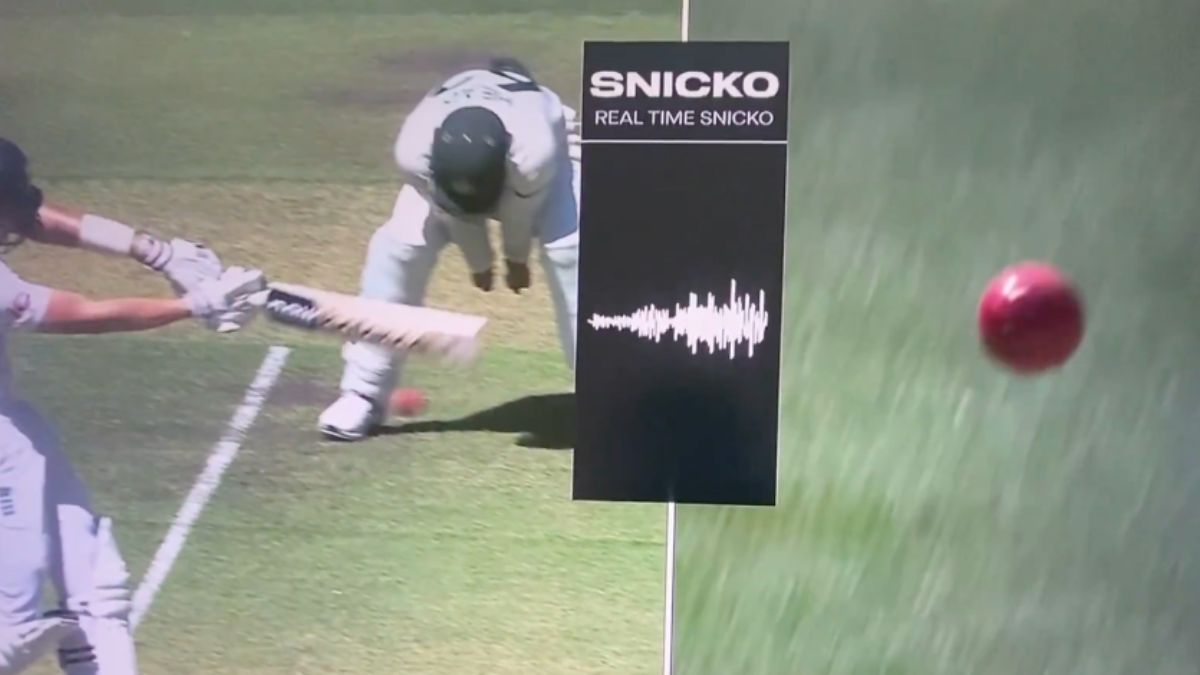
The use of Real-Time Snickometer (Snicko) has once again come under intense scrutiny during the third Ashes Test at Adelaide, after a controversial dismissal reignited concerns over the reliability of cricket’s decision review technology.
The flashpoint occurred during England’s first innings when Jamie Smith was adjudged caught behind off Pat Cummins. As Smith attempted a pull shot to a short-of-length delivery outside off, Alex Carey completed a looping catch behind the stumps. Australia appealed immediately, and on-field umpire Nitin Menon sent the decision upstairs, initially to check for a clean catch.
However, what followed has triggered widespread debate. Snickometer showed a pronounced spike as the ball passed the bat, even though replays suggested a visible gap between bat and ball. Despite the visual uncertainty, third umpire Chris Gaffaney relied on the Snicko spike and ruled Smith out, with the ball clearly carrying to Carey.
Both Jamie Smith and Ben Stokes were visibly unconvinced by the decision. Smith walked off shaking his head, while Stokes expressed clear frustration from the non-striker’s end, as England questioned whether bat had been involved at all.
Why Snicko is under the microscope again
The controversy is magnified because it comes just a day after Snickometer failed in another crucial moment of the same Test. On Day 1, Alex Carey survived a caught-behind review when Snicko showed a sound spike that appeared out of sync with the visuals. England’s appeal was turned down due to “inconclusive evidence,” allowing Carey to continue and later score a match-shaping century.
That incident later escalated when BBG Sports, the firm operating Snickometer, publicly admitted that the wrong stump microphone had been selected during Carey’s review — a technical error that directly influenced the outcome.
Against that backdrop, Smith’s dismissal has raised uncomfortable questions about consistency. If Snicko was deemed unreliable enough to save Carey, critics argue, why was it considered decisive enough to dismiss Smith — especially when visual evidence once again appeared unclear.
The core issue: audio vs visuals
At the heart of the debate lies the recurring mismatch between sound spikes and video frames. Snickometer detects sound frequencies but cannot independently identify the source of that noise. Contact with pad, bat handle, ground, or even equipment movement can trigger spikes, making visual correlation critical.
In Smith’s case, the spike appeared near the toe-end of the bat, an area prone to ambiguity. With no UltraEdge confirmation beyond the Snicko reading and no clear bat-ball contact on replay, the decision has divided opinion.
Bigger implications for DRS
This is now the second consecutive day in which Snickometer has influenced a major Ashes moment — in two completely different ways. One decision went against England due to “lack of conclusive evidence,” while the other went against them based almost entirely on Snicko.
With temperatures soaring above 40°C in Adelaide and tensions already high, technology — rather than cricket — has become the dominant talking point. The latest incident only deepens concerns about whether current DRS protocols provide consistency and fairness in high-pressure Test matches.
As post-day reactions pour in, Snickometer’s role, calibration, and interpretation are set to face renewed examination. For now, one thing is certain: Snicko is once again under the radar, and the debate around its reliability is far from over.
