
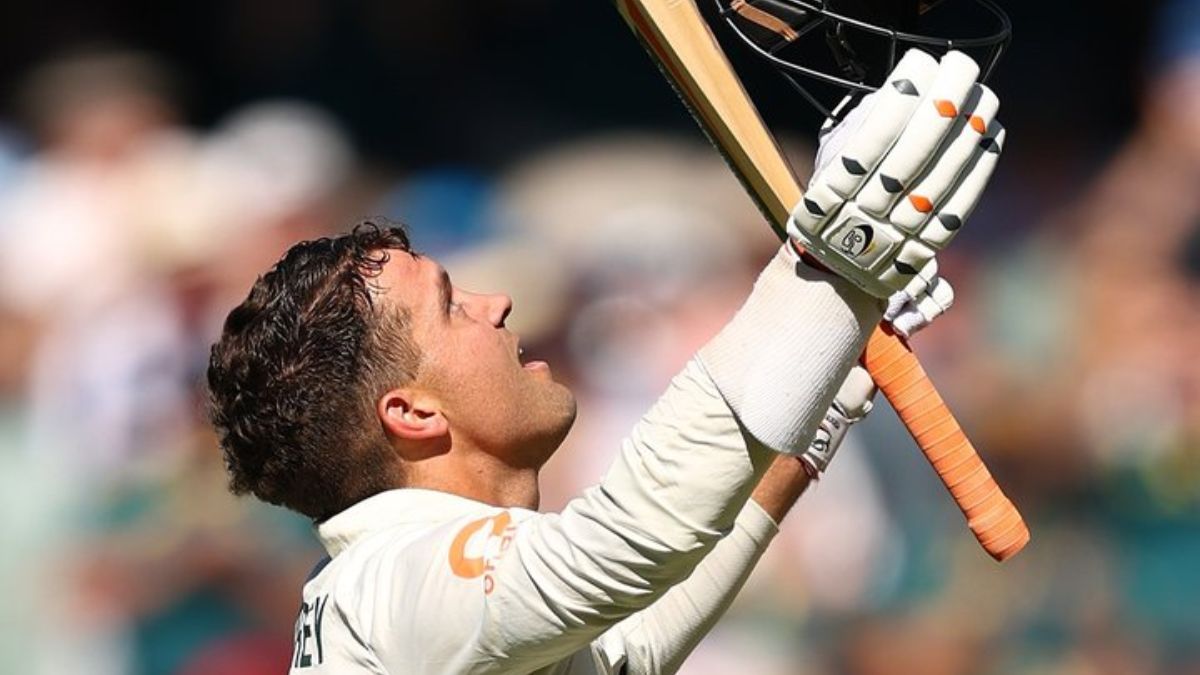
The third Ashes Test at Adelaide has been overshadowed by a major DRS controversy, after Alex Carey survived a caught-behind decision that should have gone England’s way — a moment that later proved decisive as the Australian wicketkeeper went on to score a match-shaping century.
The incident unfolded on Day 1 when Carey was batting on 72, facing Josh Tongue. England appealed confidently for a nick behind. The on-field umpire ruled not out, but England immediately opted for a review, convinced they had their man.
What the DRS showed — and why it failed
During the review, Real-Time Snickometer showed a sound spike before the ball reached Carey’s bat. With the audio and visuals not aligning, third umpire Chris Gaffaney ruled there was no conclusive evidence of an edge, and Carey was allowed to continue.
That decision baffled England players and commentators alike — especially as Carey later admitted he believed he may have hit the ball.
The controversy deepened after BBG Sports, the company operating Snickometer, publicly admitted fault.
According to BBG, the wrong stump microphone — from the non-striker’s end — was mistakenly selected during the review process. This caused the sound spike to appear out of sync, misleading the decision-making process.
“In light of this, BBG Sports takes full responsibility for the error,” the company said.
A Day Without Cheating is A Day Wasted for Australia. There was no way this wasn't out. It's 100 percent out. Australia uses low quality Ultraedge to do cheating. Once A Cheater, Forever A Cheater. Alex Carey should have walked off. Clear Cheating pic.twitter.com/2w8cjME4RS
— Aryan Goel (@Aryan42832Goel) December 17, 2025
Why this decision mattered so much
Carey didn’t just survive — he capitalised. He went on to score 106, guiding Australia to 326 for 8 on a pitch where England felt they had done enough to keep the hosts under control.
England bowling coach David Saker later revealed the side was “pretty confident” Carey had edged the ball and questioned the reliability of the technology being used throughout the series.
“At that stage, it was a pretty important decision,” Saker said. “Those things hurt.”
Carey’s candid admission
Adding fuel to the controversy, Carey himself acknowledged after play that he sensed contact.
“I thought there was a bit of a feather or some sort of noise,” Carey said.
“It looked a bit funny on the replay. Snicko obviously didn’t line up.”
While Carey accepted the moment as part of cricket’s unpredictability, England saw it as a system failure, not just bad luck.
England consider formal action
With the Ashes already tilted in Australia’s favour, England are now considering raising the issue with match officials, particularly because DRS is mandatory in World Test Championship matches and supplied by the host broadcaster, Fox Sports.
The incident has reignited wider debate about:
- Human error in tech-assisted decisions
- Accountability when DRS tools malfunction
- Whether teams are unfairly penalised by broadcast-side mistakes
A turning point in the Test?
On a day when England felt 300 was par or even above-par, Carey’s century — enabled by a flawed DRS moment — shifted momentum firmly Australia’s way. While cricket has always lived with fine margins, this controversy has left England feeling robbed by technology, not beaten by skill.
As the Ashes series progresses, the Carey Snickometer episode is likely to be remembered not just as a talking point — but as a moment that may have changed the course of the Test.
