
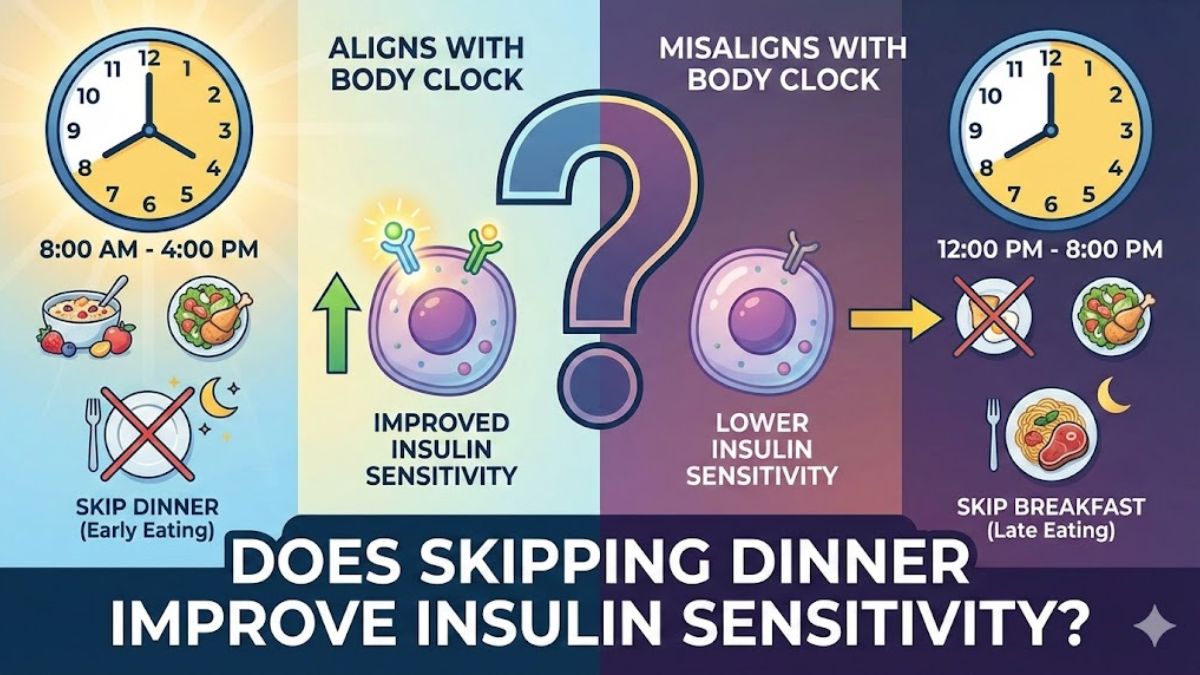
With the rise of intermittent fasting (IF), many are rethinking not just what they eat, but when they eat. While skipping breakfast has long been the popular choice for fasters, emerging research suggests that skipping dinner—or practicing Early Time-Restricted Eating (eTRE)—may be the superior strategy for improving metabolic health and insulin sensitivity.
The Circadian Connection: Why Timing Matters
Your body does not process food the same way at 8:00 AM as it does at 8:00 PM. This is due to your circadian rhythm, the internal biological clock that regulates hormones.1
-
Morning Peak: Humans are naturally more insulin sensitive in the morning.2 This means your body is efficient at clearing sugar from your blood and moving it into cells for energy early in the day.
-
Evening Slump: As the day progresses, insulin sensitivity drops.3 Melatonin (the sleep hormone) begins to rise in the evening, which naturally inhibits insulin secretion.4 Eating a large meal when your insulin response is blunted can lead to prolonged blood sugar spikes and increased fat storage.
Skipping Dinner vs. Skipping Breakfast
Research comparing different eating windows has yielded fascinating results regarding insulin resistance:
| Feature | Skipping Breakfast (Late Eating) | Skipping Dinner (Early Eating) |
| Eating Window | ~12:00 PM to 8:00 PM | ~8:00 AM to 4:00 PM |
| Insulin Response | Often results in higher post-meal blood sugar spikes later in the day. | Aligns food intake with peak insulin sensitivity. |
| Metabolic Impact | Can sometimes lead to “metabolic jetlag” if eating late at night. | shown to improve beta-cell responsiveness and lower 24-hour blood glucose levels. |
Note: A study published in Cell Metabolism found that early time-restricted feeding improved insulin sensitivity, blood pressure, and oxidative stress levels in men with prediabetes, even without weight loss.5
Does “Occasionally” Work?
While most studies focus on consistent habits, skipping dinner occasionally can still offer benefits, primarily through caloric restriction and gut rest.
-
Gut Rest: Giving your digestive system a break before sleep allows the body to focus on repair processes (autophagy) rather than digestion.
-
Glucose Reset: An occasional early fast can prevent the high fasting glucose levels often seen the morning after a late, heavy dinner.
However, to truly reverse insulin resistance, consistency is key. The body adapts to a rhythm; sporadically skipping dinner may help with weight management, but the profound hormonal shifts require a more regular schedule.
How to Skip Dinner Safely
If you want to test this approach to boost your insulin sensitivity:
-
Front-Load Your Calories: Make breakfast and lunch your largest meals. Do not just cut calories; shift them.
-
Hydrate: Drink herbal tea or water in the evening to manage hunger waves.
-
Start Slow: Instead of skipping dinner entirely, try moving it to 5:00 PM or 6:00 PM to widen your overnight fasting window.
Skipping dinner appears to be more biologically aligned with our hormonal rhythms than skipping breakfast. By eating when your body is primed to handle nutrients, you can significantly improve insulin sensitivity and metabolic health. While occasional skipping is a good start, adopting a consistent “early eater” pattern offers the most robust protection against insulin resistance.
Medical Disclaimer:The content provided in this article is for educational and informational purposes only and is not intended as a substitute for professional medical advice, diagnosis, or treatment. Fasting and meal skipping can have significant effects on blood sugar levels and medication requirements, particularly for individuals with diabetes, hypoglycemia, or a history of eating disorders. Always seek the advice of your physician or other qualified health provider with any questions you may have regarding a medical condition or before making significant changes to your diet.
