
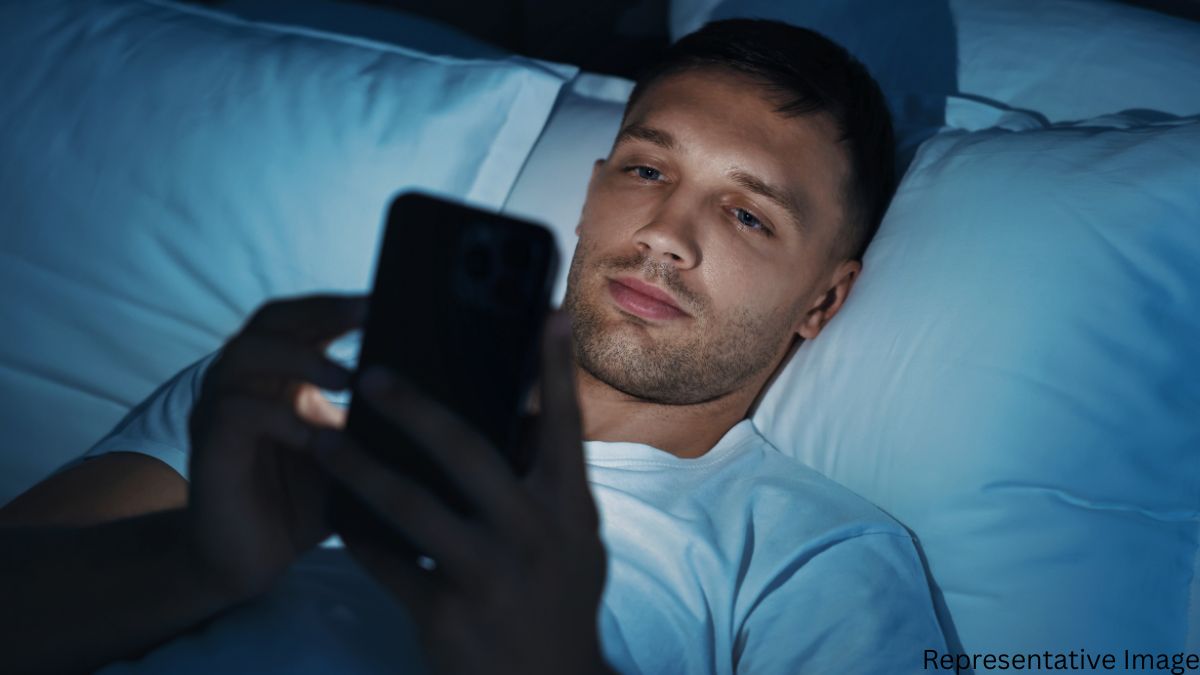
Using your phone or other screens before going to bed has become a nightly habit for many people. From scrolling social media to watching videos or reading on a phone, screens are often the last thing we see before sleep. But does this routine actually harm sleep quality, or is the concern overstated?
A large new study from Norway adds fresh evidence to this debate, suggesting that screen time at bedtime is strongly linked to poorer sleep.
What the new Norwegian study found
A recent study published on March 31 in Frontiers in Psychiatry examined the sleep habits of 45,202 young adults aged 18 to 28. Researchers looked at how different types of screen use before bed affected sleep duration and insomnia risk.
The findings were striking. Each additional hour of screen time at bedtime was associated with a 59% higher risk of insomnia and an average loss of 24 minutes of sleep. Importantly, the study found that social media use was no more disruptive than watching TV, movies, gaming or reading on a mobile device.
“While previous research has often suggested that social media use is particularly disruptive to sleep, our findings challenge this notion,” said Børg Sivertsen, senior researcher at the Norwegian Institute of Public Health and lead author of the study.
Is social media worse than other screen activities?
One of the more surprising findings was that participants who only used social media before bed reported lower insomnia rates and longer sleep duration than those who mixed multiple screen activities. The researchers suggest that the social connection aspect of social media may, in some cases, be less stimulating than gaming or switching rapidly between apps and content.
However, experts caution against overinterpreting this result. The study was observational and cannot prove that social media improves sleep. Individual responses to social media vary widely depending on stress levels, emotional engagement and personal habits.
Does blue light really disrupt sleep?
Much of the concern around screens focuses on blue light. Previous research has shown that blue-wavelength light can suppress melatonin, the hormone that helps regulate sleep. This has led many devices to include night modes or blue-light filters.
That said, the science is not entirely settled. Some recent studies suggest that bright light of any colour before bedtime may be disruptive, not just blue light.
“We still have the same neural circuitry as our caveman ancestors whose lives were ruled by the sun,” said Leah Kaylor, a sleep specialist. Exposure to artificial light at night can confuse the brain into thinking it is still daytime.
Why light affects people differently
Not everyone responds to light exposure in the same way. According to Jonathan Cedernaes, sensitivity to light-induced melatonin suppression can vary by as much as 50-fold between individuals.
This means some people may be able to tolerate screen use before bed with minimal impact, while others experience significant sleep disruption from even short exposure.
The health consequences of poor sleep
Poor sleep quality is more than an inconvenience. Chronic sleep deprivation affects nearly every major system in the body, including the immune, cardiovascular, endocrine and digestive systems.
Data from the Casper-Gallup State of Sleep in America report shows that 33% of US adults rate their sleep as fair or poor, rising to 38% among young adults. Only about 35% of Americans regularly get the recommended eight hours of sleep.
Long-term sleep deprivation increases the risk of hypertension, diabetes, obesity, depression, heart attack and stroke.
Screen time, sleep and young people
The relationship between screen use and sleep may be particularly complex in adolescents and young adults. A large meta-analysis involving over 125,000 children found that simply having electronic devices in the bedroom was linked to poorer sleep, even if the devices were not actively used.
Younger people are also more emotionally reactive, which may make social interactions, games or online content harder to disengage from before bedtime.
Practical tips to protect sleep quality
Experts generally agree that improving sleep hygiene is a sensible step, regardless of the ongoing debate around blue light. Limiting screen use in bed, avoiding stimulating content, using night mode or blue-light filters, silencing notifications and keeping devices out of the bedroom can all help.
Maintaining a consistent sleep and wake schedule is one of the most effective ways to support the body’s circadian rhythm.
The bottom line
The new Norwegian study strengthens the link between bedtime screen use and poorer sleep, showing higher insomnia risk and reduced sleep duration with increased screen time. While social media may not be uniquely harmful compared to other screen activities, screens in general appear to interfere with sleep for many people.
As research continues to evolve, reducing screen exposure before bed remains a practical, low-risk strategy to support better sleep quality and long-term health.
