
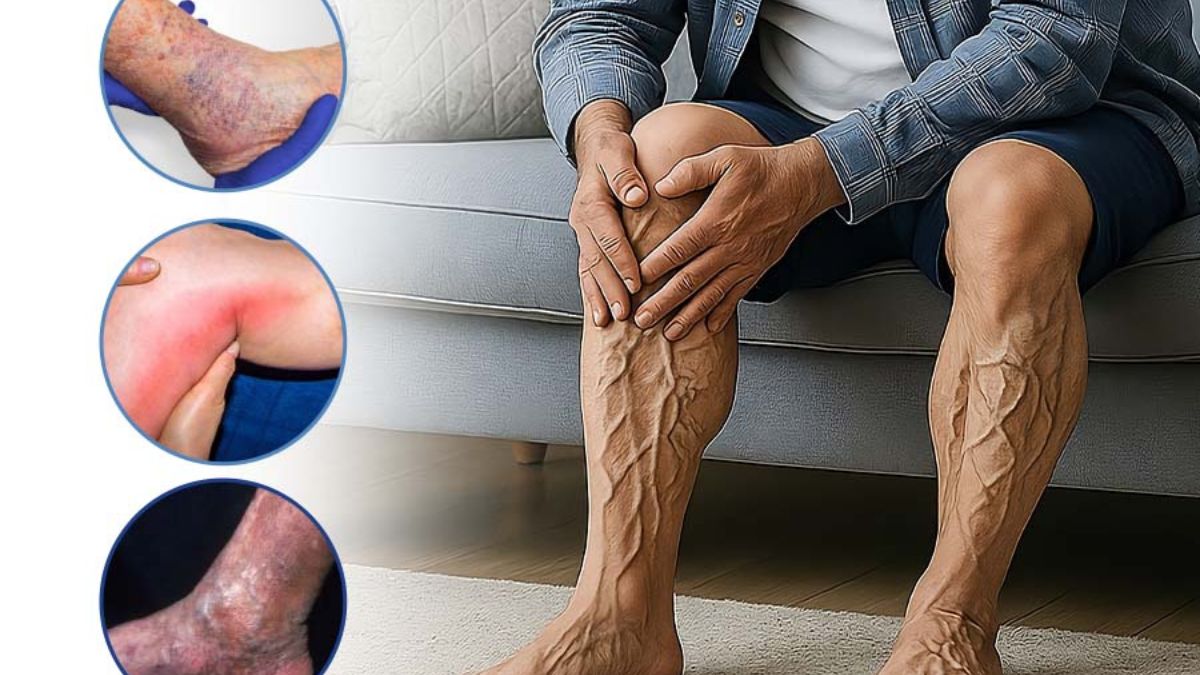
What Are Varicose Veins?
Varicose veins are enlarged, twisted, bluish-purple veins, most commonly seen in the legs. They occur due to failure of tiny one-way valves inside veins. Normally, these valves help blood flow upward toward the heart, against gravity. When these valves weaken or collapse, blood flows backward and collects in the legs – a process called venous reflux. The pooled blood elevates pressure, stretches vein walls, and leads to chronic venous insufficiency (CVI). Early symptoms include tired, heavy legs, pain, swelling at the ankles, itching, burning sensations, night cramps, and restlessness. If ignored, CVI can worsen to skin darkening, inflammation, bleeding, clot formation, and venous ulcers.
Can Standing All Day Cause It?
Standing itself isn’t the sole cause, but one of the strongest risk amplifiers. When a person stands and remains still for hours, gravity pulls blood downward and the calf muscles – crucial for pumping blood upward – stay inactive. Over months or years, this constant venous pressure load can damage valves prematurely. Many people who develop varicose veins already carry a genetic predisposition, which means their vein valves or walls are naturally weaker. Standing adds environmental stress on top of biological vulnerability.
Prolonged static standing increases venous load through a collapse of the muscle-venous pump– leg muscles in the calves and thighs stay inactive, removing the natural upward squeeze that assists circulation. This creates hydrostatic venous pressure overload in thin, low-pressure vein walls. Gravity then drives venous reflux, leading to persistent blood pooling, faster vein wall expansion, and micro-inflammatory trauma from lack of posture rotation. Speaking, stretching, or exertion adds abdominal pressure spikes, pushing blood further downward and worsening valve strain.
Which Jobs Increase the Risk the Most?
Professions that combine prolonged upright posture and low movement are at highest risk:
- Teachers, retail workers, chefs, security personnel
- Nurses, surgeons, OT teams, pharmacists
- Factory line operators, courier partners, salon professionals
These jobs may require 6–12 hours of standing, often on hard floors, reducing venous return.
Additional Job-Linked Reasons That Worsen Vein Health
Heat Exposure
Jobs in hot environments (kitchens, outdoor sites, furnaces) dilate veins, slowing flow and increasing pooling.
Heavy Lifting + Standing
Workers in logistics, CFS yards, construction, or gyms repetitively lift with poor breathing control, spiking abdominal pressure.
No Sit-Stand Rotation
Roles that lack posture rotation remove natural circulation resets.
Dehydration
In workplaces without hydration breaks, blood thickens temporarily, making veins work harder.
Hard Flooring
Standing on concrete or tiles increases leg fatigue which indirectly reduces movement further.
Tight Deadlines/Stress
Stress raises blood pressure and restricts mindful posture correction or break discipline.
What Symptoms Do Workers Usually Report?
- Leg heaviness and fatigue
- Swollen ankles at end of day
- Restless legs at night
- Itching or mild cramps
These are often first markers of valve stress.
Importance of Early Screening
A Doppler ultrasound scan is the gold-standard, non-invasive test used to detect venous reflux, valve health, and pressure severity.
Advanced Treatment Options Available Today
At Avis Vascular Centre, modern minimally invasive vein treatments correct valve failure without cuts or long recovery stays.
EVLA (Endovenous Laser Ablation)
Laser energy seals and closes the damaged vein causing reflux.
RFA (Radiofrequency Ablation)
Controlled heat closes the vein precisely, improving symptoms rapidly.
Foam Sclerotherapy
Medicated foam collapses smaller veins painlessly.
CLaCS (Cryo-Laser & Cryo-Sclerotherapy)
Laser with vein cooling for surface-visible vein correction, especially cosmetic and branch veins.
Bottom Line
Standing all day doesn’t guarantee varicose veins, but if your job includes long static upright hours, lifting, or heat exposure, it gives gravity too much control – enough to damage valves when vulnerability already exists. The disease is manageable, predictable, and highly treatable when detected early. If your legs feel heavy every evening – your veins may already be struggling. Early action protects your mobility, confidence, and long-term vein health.
