
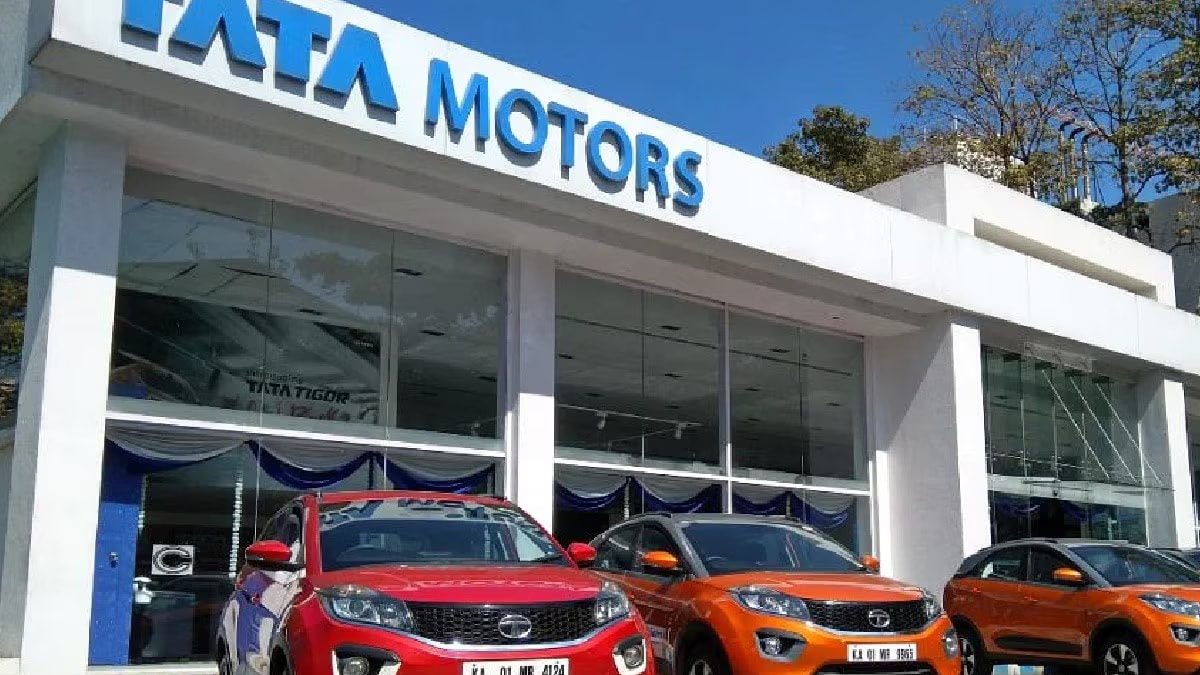
Tata Motors Passenger Vehicles Ltd. delivered a strong sales performance in Q3 FY26, driven by sustained demand for SUVs and rising adoption of electric and alternative powertrains. The company reported combined domestic and international passenger vehicle sales of 171,013 units during the quarter, marking a 22.3% year-on-year increase compared to 139,829 units in Q3 FY25. This growth highlights continued momentum across key segments despite a competitive market environment.
Domestic passenger vehicle sales stood at 168,616 units in Q3 FY26, up 20.9% year-on-year, while international business volumes rose sharply to 2,397 units from 405 units a year ago. For December 2025 alone, total passenger vehicle sales, including electric vehicles, increased 14.1% year-on-year to 50,519 units, reflecting steady monthly traction. The company’s electric vehicle portfolio continued to outperform, with EV sales of 24,103 units in Q3 FY26, registering a 49.5% growth compared to the same period last year.
Commenting on the performance, Managing Director and CEO Shailesh Chandra said calendar year 2025 marked the fifth consecutive year of record-breaking annual sales for Tata Motors’ passenger vehicle business. The company sold 587,218 units during CY25, including its highest-ever annual EV volumes of 81,125 units. He noted that the momentum generated after the rollout of GST 2.0 in late Q2 FY26 carried into Q3, resulting in the company’s highest-ever quarterly wholesales. Retail sales also crossed 200,000 units for the first time, underlining healthy consumer demand.
SUVs remained a key growth driver during the quarter. The Nexon emerged as India’s top-selling car and SUV in October and November and is on track to retain leadership for Q3 FY26, with sales of around 64,000 units. Punch continued to dominate its segment, while Tiago posted solid growth, strengthening Tata Motors’ presence in the hatchback category. December 2025 was another strong month, with overall sales rising 22% year-on-year, alongside a sharp improvement in retail-to-wholesale alignment that reduced dealer inventory to about 18 days.
The company’s multi-powertrain strategy also delivered notable results. CNG volumes crossed 47,000 units in Q3 FY26, SUV volumes grew 18% year-on-year, and EV adoption accelerated on the back of longer driving range, lifetime battery warranty, and pricing parity with ICE models. During the quarter, Tata Motors also unveiled petrol versions of the Harrier and Safari and showcased the Sierra, which received strong initial response.
Looking ahead, Tata Motors Passenger Vehicles remains optimistic about industry growth in FY26. With deliveries of newly introduced models beginning in Q4 and a pipeline of upcoming launches and innovations, the company expects to build on its current momentum and further strengthen its position in India’s passenger vehicle market.
