
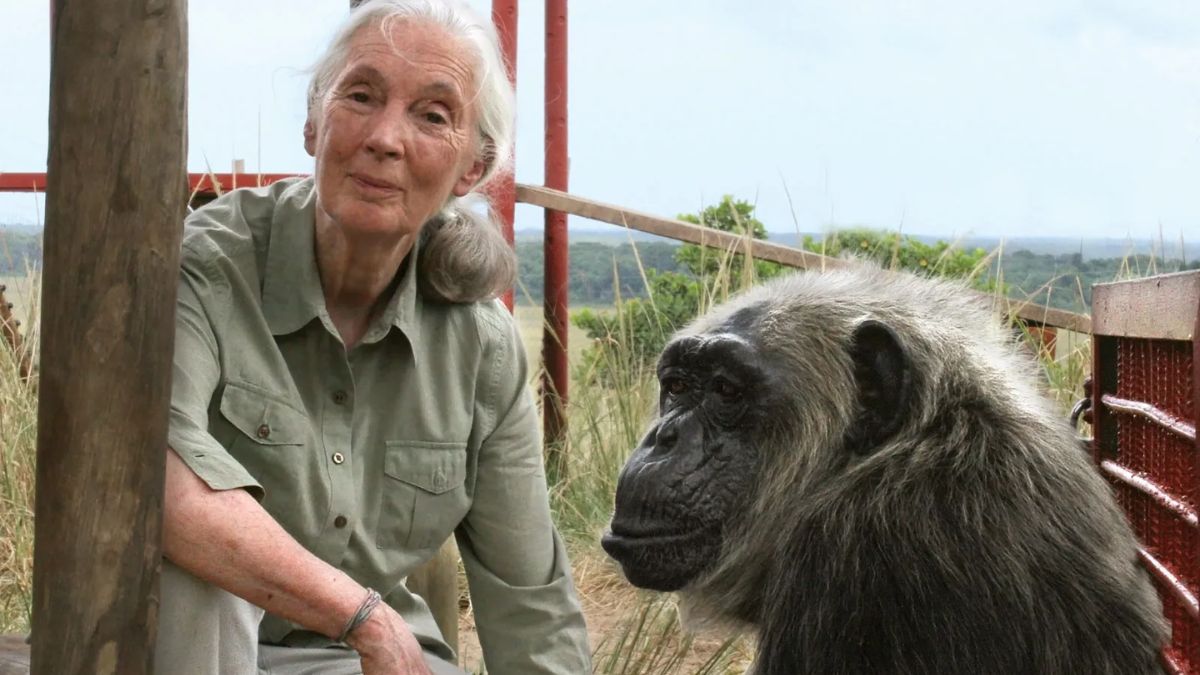
Jane Goodall, the pioneering British primatologist, ethologist, and anthropologist, has passed away at the age of 91. The Jane Goodall Institute announced her death on October 1, 2025, confirming that she died of natural causes while in California as part of a speaking tour in the United States
Who was Jane Goodall?
Born Valerie Jane Morris-Goodall on April 3, 1934, in London, Goodall developed a profound interest in animals from a young age. In 1957, she moved to Africa to pursue her dream of living with animals. Under the mentorship of paleoanthropologist Louis Leakey, she began her landmark study of chimpanzees in 1960 at Gombe Stream National Park in Tanzania. Her research revealed that chimpanzees make and use tools, a behavior previously thought to be uniquely human, challenging established scientific beliefs.
Advocacy and Legacy
Beyond her scientific contributions, Goodall was a tireless advocate for conservation and animal welfare. She founded the Jane Goodall Institute and the youth program Roots & Shoots, aiming to inspire young people to take action on behalf of animals and the environment. Throughout her life, she received numerous accolades, including the Templeton Prize in 2021 and the Presidential Medal of Freedom in 2025.
Final Years and Passing
In her later years, Goodall continued to travel extensively, delivering lectures and advocating for environmental and animal rights causes. Her passing marks the end of an era for the scientific community and the global conservation movement. She is survived by her son, Hugo, and three grandchildren.
Remembering Jane Goodall
Jane Goodall’s legacy lives on through her groundbreaking research and unwavering commitment to conservation. Her work has inspired generations to understand and protect the natural world. As we reflect on her life, we are reminded of the profound impact one individual can have on science, conservation, and the world at large.
