

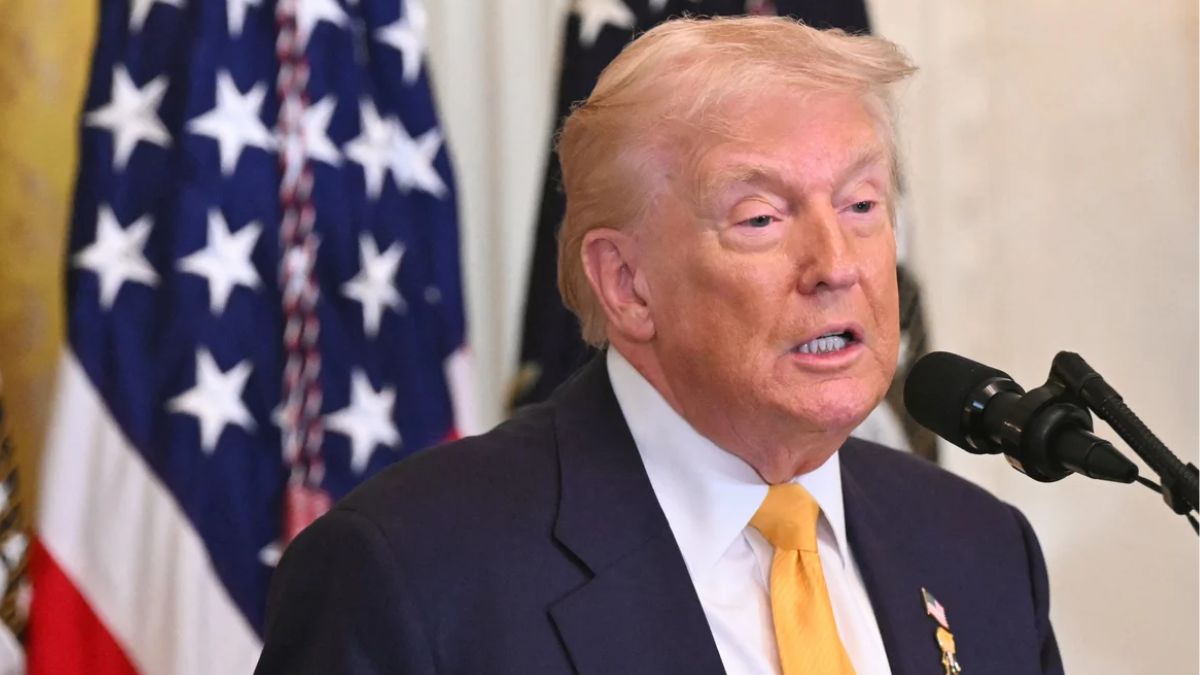
United States President Donald Trump said in a Fox News interview on May 15 that the US and Iran share similar goals — ending the conflict, opposing nuclear weapons, and supporting open straits — in his most conciliatory public statement since the Strait of Hormuz closure began on March 4. The remarks, flagged by financial newswire First Squawk, represent a meaningful shift in tone from just four days ago, when Trump described the ceasefire as being on “massive life support” after rejecting Iran’s 14-point counterproposal as “totally unacceptable.”
The significance of the statement lies less in any specific diplomatic breakthrough — none has been announced — and more in what it signals about the negotiating temperature as Trump concludes his May 14-15 summit with Chinese President Xi Jinping in Beijing. Markets had been watching the Trump-Xi meeting for any mediation angle on Iran, given that Washington has sought to press Beijing to lean on Tehran to reopen the strait, though China’s appetite to act as a pressure mechanism remains unclear.
The Strait of Hormuz, which accounts for approximately 20% of global oil and LNG supply, has been effectively closed to commercial shipping since Iran announced its closure following the US and Israeli strikes under Operation Epic Fury in late February 2026. Brent crude prices have remained nearly $20 more expensive than before the war started, with US crude roughly $10 more expensive, with oil remaining highly sensitive to negotiation headlines.
The negotiations have been deadlocked over sequencing. Under Iran’s framework, the war would end with a guarantee against further US-Israel attacks, Iran would open the strait, and the United States would lift its blockade — with nuclear program talks deferred to a later stage. Washington has resisted this sequencing, demanding nuclear concessions as part of any deal rather than as a follow-on process. Trump has demanded that Iran formally halt its nuclear program for a defined period and surrender its existing stockpile of an estimated 440 kilograms of highly enriched uranium.
Trump’s May 15 framing — that both sides share the goal of open straits and opposition to nuclear weapons — suggests he may be signalling a willingness to acknowledge Iran’s stated position as a basis for renewed talks, even without a formal agreement. Whether Tehran reads it the same way is another question. Iran’s President Pezeshkian said his government would “never bow” before the enemy, framing any diplomatic engagement as a defence of national interests rather than concession.
For India, the stakes of every negotiation headline are immediate and material. With Brent ranging between $100 and $126 per barrel through this period and currently trading near $106-107, India’s oil marketing companies — IOC, BPCL, and HPCL — are collectively losing ₹1,600-1,700 crore per day, with accumulated losses crossing ₹1 lakh crore over ten weeks. The rupee hit an all-time low of 95.74 on May 12 and forex reserves have declined by approximately $37 billion in thirty days. April 2026 WPI fuel and power inflation surged to 24.71% year on year, with crude petroleum up 88.06%, directly reflecting the Hormuz disruption running through wholesale prices.
A credible path to Hormuz reopening would be the single largest positive macro shock available to the Indian economy at this moment — reversing the fuel import bill, stabilising the rupee, and relieving OMC losses simultaneously. Trump’s May 15 remarks are the most hopeful signal in weeks. But with the gap between US and Iranian positions still wide on nuclear sequencing and sovereignty over the strait, markets will wait for actions rather than words before pricing in a meaningful de-escalation.
Disclaimer: This article is for informational purposes only and does not constitute investment advice. Please consult a SEBI-registered financial advisor before making investment decisions.