
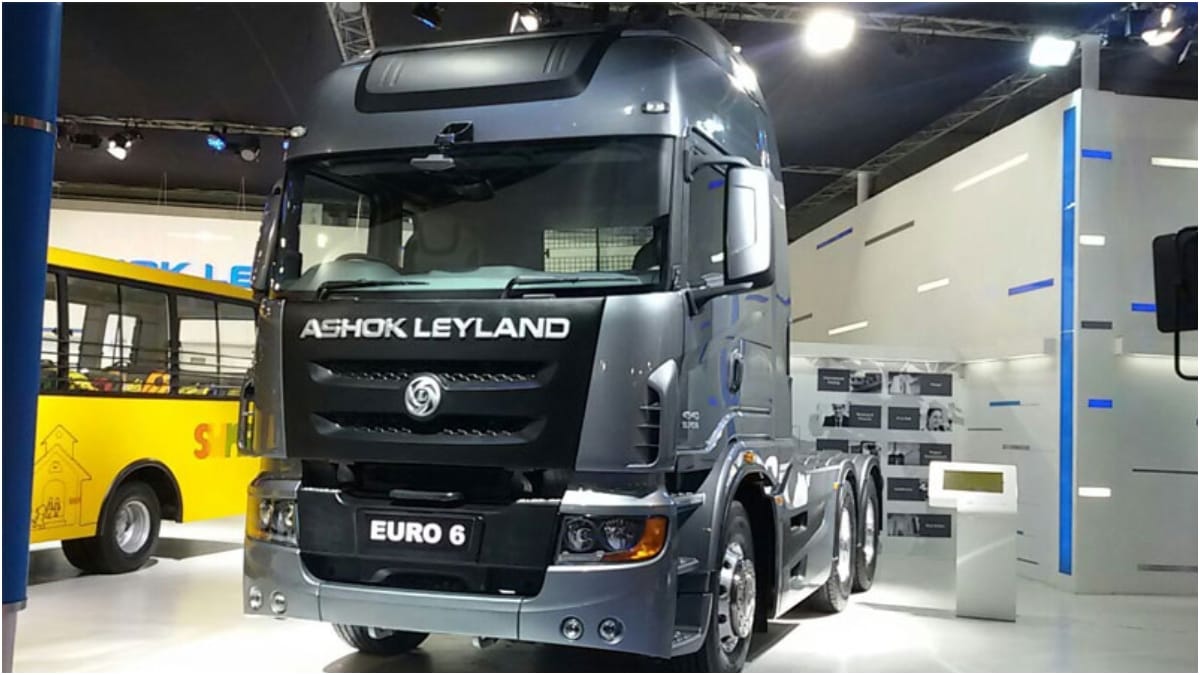
Ashok Leyland shares surged over 7% to ₹130.06 in Saturday’s trade after the company posted a steady set of numbers for the June quarter. The Street cheered its operating performance, with brokerages turning increasingly positive on the counter and projecting further gains of up to 15 percent from the day’s high.
UBS reiterated a “buy” call on the stock with a target price of ₹150, highlighting that the company delivered a margin beat driven by operational discipline. The brokerage noted that medium and heavy commercial vehicle (MHCV) growth is expected in mid-single digits, while light commercial vehicle (LCV) growth could be slightly stronger. International operations, which have been performing well, are expected to sustain their momentum. Importantly, Switch Mobility – Ashok Leyland’s EV subsidiary – turned profit before tax (PBT) positive in the June quarter, marking a milestone for its clean mobility business.
The company has lined up multiple product launches in the higher horsepower MHCV category, including 280–360 HP tippers, tractor trailers, and multi-axle vehicles, targeting demand from mining, construction, and logistics. A new bi-fuel LCV is also under development for metro markets, alongside upgraded offerings for exports. “We believe these differentiated offerings will help Ashok Leyland strengthen pricing power, customer stickiness, and competitive positioning. With demand revival expected post-monsoon and a strong infrastructure push from the government, the company’s expanded product pipeline positions it for sustainable growth,” said Choice Broking in a note.
On the financial front, Ashok Leyland reported a net profit of ₹594 crore in Q1FY25, up 13 percent from ₹526 crore in the year-ago period. Revenue rose 1.5 percent year-on-year to ₹8,725 crore compared to ₹8,599 crore. Earnings before interest, tax, depreciation, and amortisation (EBITDA) stood at ₹970 crore, up 6.6 percent from ₹911 crore last year. Margins expanded to 11 percent from 10.6 percent in the same quarter a year ago, aided by cost control measures and favourable pricing trends.
Also, the rally comes amid heightened optimism around the government’s proposal to rationalise GST into a two-slab structure. According to reports, the government is weighing a flat 18% levy on mass-market vehicles, down from the current 28–31% (including cess). This would cover two-wheelers under 350cc, small cars up to 1,200cc, and select hybrid vehicles. Luxury cars and SUVs, however, are expected to continue under the top 40% GST slab. Such a cut could materially reduce vehicle prices, expand affordability for middle-income households, and provide a major festive season trigger for the automobile sector.
