
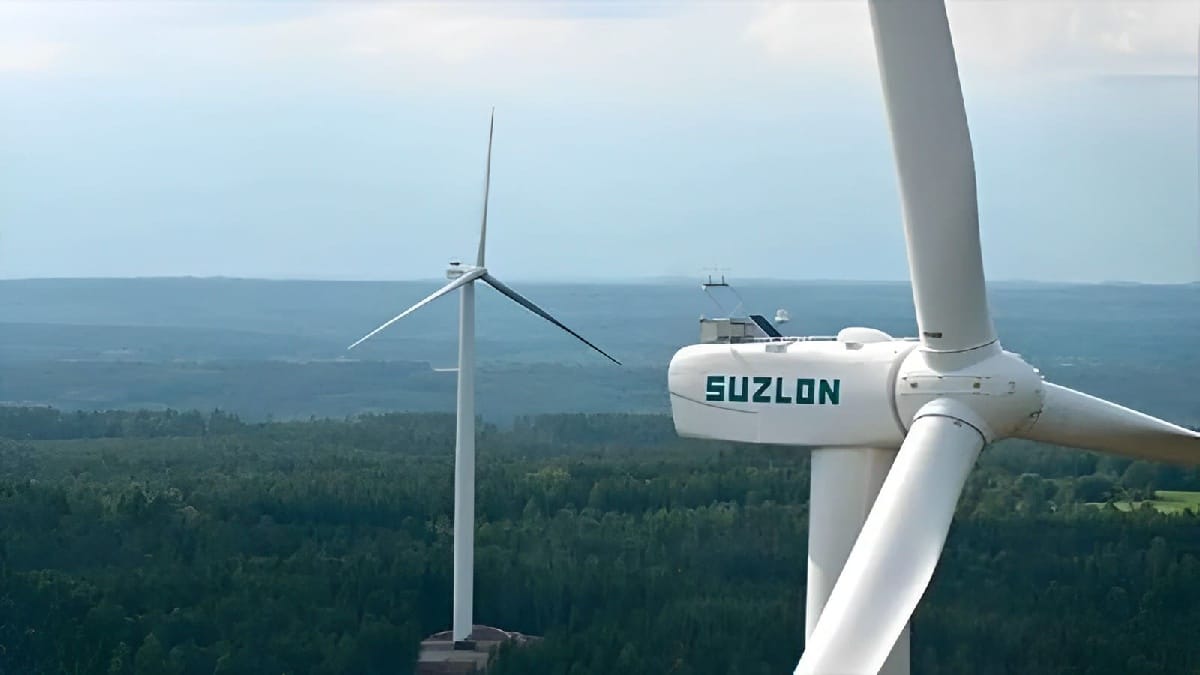
Suzlon Energy has strengthened its long-standing partnership with Yanara by securing two new wind energy contracts of 153 MW each for Yanara’s firm and dispatchable renewable energy (FDRE) projects in Barmer, Rajasthan. These repeat orders, both received within a single year, further reinforce Suzlon’s leadership position in India’s wind energy sector, particularly in Rajasthan.
The two projects will be executed in Barmer district and are part of Yanara’s larger strategy to develop grid-scale hybrid renewable assets capable of delivering round-the-clock clean power. With these latest contracts, Suzlon will supply and install a total of 102 S144 wind turbine generators, each with a rated capacity of 3 MW. The turbines will be mounted on hybrid lattice towers and deployed across Yanara’s two FDRE projects, which together aggregate to around 800 MWp.
Suzlon currently holds a 44% market share in Rajasthan’s wind energy segment, with over 2.3 GW of installed capacity in the state. The company has played a significant role in establishing Rajasthan as one of India’s leading renewable energy hubs. In addition to the Yanara projects, Suzlon is executing other engineering, procurement and construction assignments in the state, with a combined capacity of 791 MW.
The power generated from the Barmer projects will partially meet Yanara’s power purchase agreement obligations with utilities such as NTPC and NHPC. These projects align with Yanara’s broader clean energy roadmap, which focuses on integrating solar, wind and energy storage technologies to deliver firm and dispatchable renewable power.
Yanara has been steadily expanding its multi-technology renewable portfolio across India. The Rajasthan wind projects follow closely after the company’s 115 MW co-located solar-wind hybrid project in Maharashtra, which is nearing completion. That project includes a 29.4 MW wind order supplied by Suzlon, highlighting the growing collaboration between the two companies.
Both Suzlon and Yanara view these developments as contributing to India’s long-term energy transition goals, including the national target of achieving 500 GW of non-fossil fuel energy capacity by 2030. The Barmer FDRE projects are expected to support grid stability while advancing the deployment of large-scale, dispatchable renewable energy solutions in the country.
