
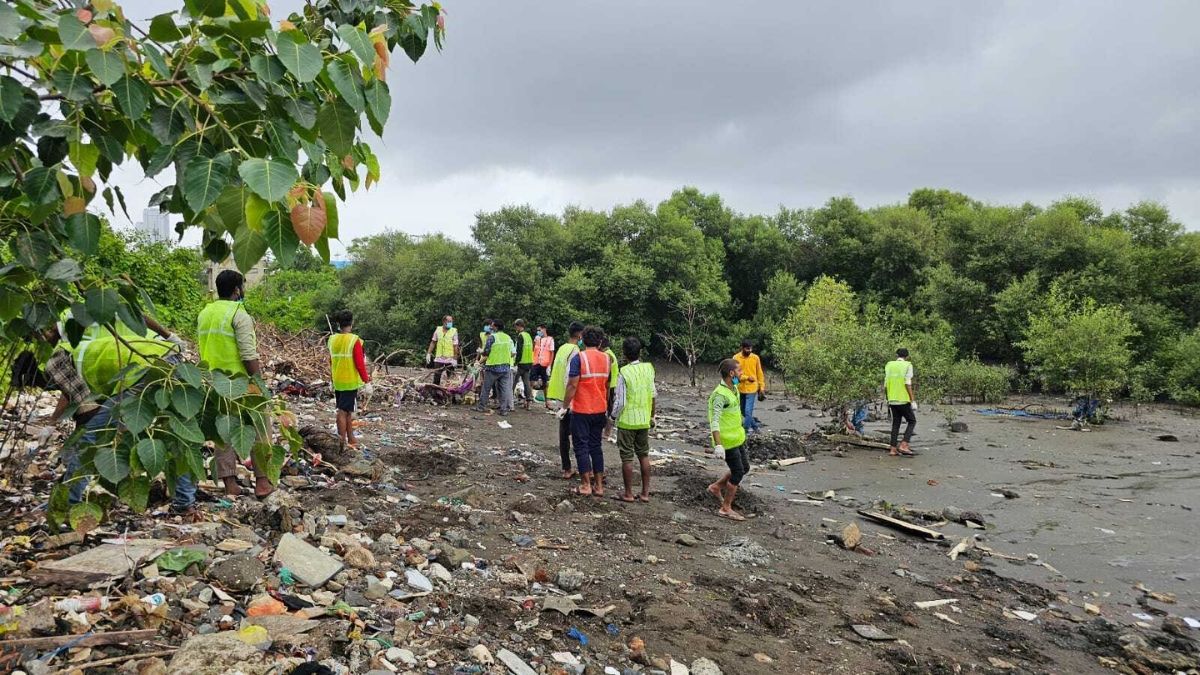
Located between Mumbai’s port and its growing neighbourhoods, the mangroves of Sewri have long stood as a buffer – quietly filtering air, anchoring soil, and sheltering birds that many residents have never seen up close. Over the years, however, these coastal forests have fallen prey to neglect, choking waste, and the deepening clutch of urbanisation. After being largely overlooked for years, this part of Mumbai’s coastline is beginning to witness meaningful change.
A large-scale restoration project led by SEEDS, a humanitarian organisation known for its work in disaster response and resilience-building, has helped revive over 10,000 square metres of mangrove and wetland habitat in Sewri. The initiative aims to increase the community’s engagement with environmental issues that affect their immediate lives, as well as highlighting the importance of preserving precious coastal barriers that serve as guardians against storms. The work combined scientific research, careful waste removal, and strong community involvement.
Before starting the clean-up, the team carried out detailed surveys to understand the ground situation as it was and to assess the effect it had on this fragile natural shield. Using satellite mapping, water testing, and soil checks, they found serious issues – like high pollution levels, untreated sewage entering the wetlands, and a sharp drop in biodiversity. These findings helped the team plan targeted, urgent action.
Water samples showed high levels of biological oxygen demand and nitrate – signs of pollution from both domestic and industrial sources. Soil tests also pointed to stress and contamination. Despite heavy monsoon rains and shifting tides, clean-up teams worked steadily across the site, often racing against incoming waves that brought in more waste.
The first phase of the project focused on removing invasive plant species and clearing various kinds of waste – including single-use plastics, e-waste, biomedical litter, and construction debris. Each step was carefully documented and linked to specific environmental indicators.
The clearest sign of progress was not in the lab data – it was in the return of life. Local birders and residents observed painted storks reappearing in zones where they had not been seen for several years. Crabs and mudskippers, once overshadowed by debris, now move freely through cleaner intertidal pools. These ecological shifts are early but promising.
For many residents of the Ramgad slum, which borders parts of the mangrove site, these changes are already making a visible difference.
“There used to be garbage and mosquitoes everywhere,” said Anju, who lives near the creek. “But after the clean-up drive, the mosquito problem has reduced. We are very grateful for that.”
“The team worked really well,” added Shehnaz, another resident. “Now that everything is getting clean, our children will not fall sick as often.”
Equally significant is the growing momentum among local communities, who are now taking an active interest in the project’s outcomes. Community consultations and street plays were held to initiate conversations around sanitation, hygiene, and the ecological value of mangroves. What started as information-sharing has gradually grown into a shared sense of responsibility. Inhabitants not only participated in clean-ups but also voiced their views on future plans, often offering grounded insights into what the land once looked like – and what it could become again.
This growing engagement reflects a stronger sense of ownership, with many not only recognising the impact of the work but also taking initiative to maintain cleanliness and improve hygiene in their neighbourhood. It signals a positive shift in behaviour and is a step toward building a more resilient, environmentally aware community.
Technology, too, has played a key role. Satellite imagery and GIS tools helped map erosion-prone areas and track changes in mangrove cover. This data-driven approach enables better planning, especially in the face of climate-related challenges like tidal surges and saltwater intrusion. “Nature-based solutions (NbS) like mangrove restoration become far more effective when backed by science and real-time data,” said Sanghamitra Mishra, Head – Centre of Excellence, NbS at SEEDS. “Technology helps us not only understand what’s changing, but also where to act – and how urgently.
Implemented by SEEDS, the initiative has undertaken a combination of scientific tools, community engagement, and on-ground action that sets it apart. Nurturing nature-based solutions, such as restoring coastal ecosystems, allows communities to adapt to extreme climate incidents. Adaptation focuses on helping both people and nature adjust to long-term challenges like pollution, flooding, and climate change. By encouraging better waste practices, restoring local ecosystems, and using data to guide future action, the initiative is helping the community become more prepared and resilient in the face of ongoing environmental stress.
The final leg of the effort includes compiling a comprehensive report that will not only capture the progress made but also serve as a tool for future conservation action and policy support.
As Mumbai continues to expand, the margins of the city often bear the brunt of its progress. Yet, in Sewri, there’s a reminder that even amid the weight of urban pressure, natural systems can rebound – if given the chance, and the care they deserve.
Disclaimer: The above press release comes to you under an arrangement with a PR agency. Business Upturn takes no editorial responsibility for the same.
