
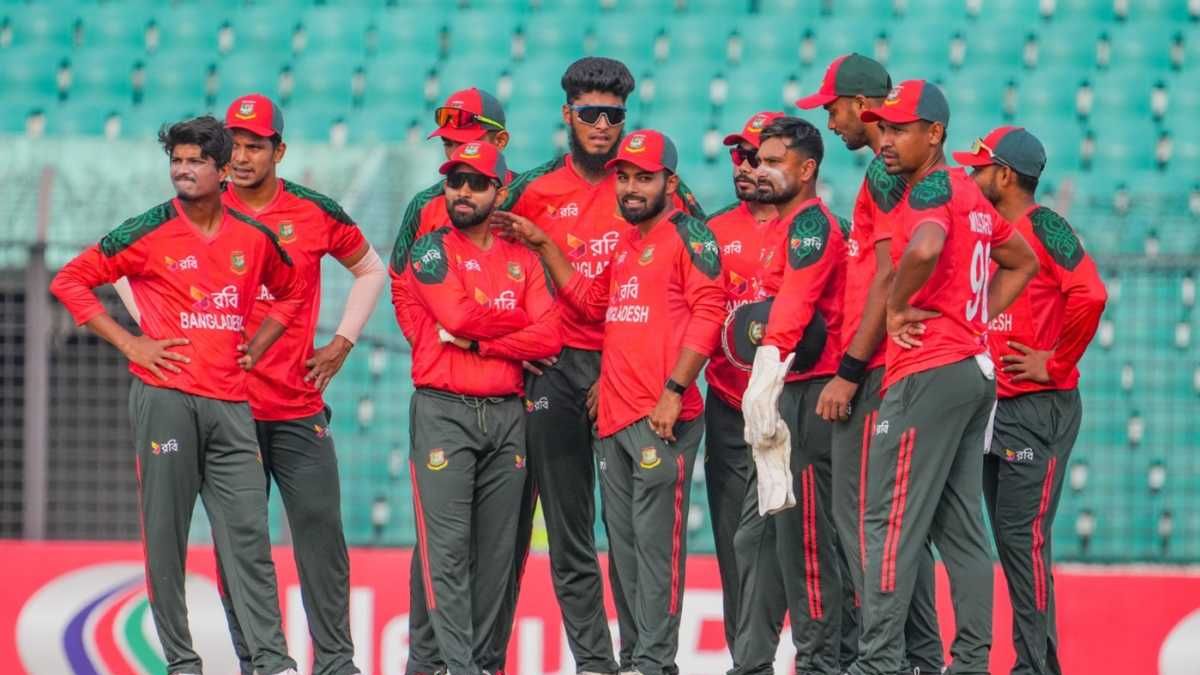
Reports suggesting Bangladesh’s government-backed boycott of the ICC T20 World Cup 2026 would have material implications for Group C, potentially reshaping qualification dynamics and competitive balance.
Why Bangladesh mattered in Group C
Group C was built around a familiar World Cup structure: two favourites, a strong mid-tier side, and two emerging teams. Bangladesh occupied the crucial middle layer—often the “danger match” that tests adaptability, depth, and in-game problem-solving. Their absence removes a competitive hinge that keeps the group balanced.
Group C teams:
- England
- West Indies
- Bangladesh
- Nepal
- Italy
Scenario 1: Bangladesh replaced
If a replacement team is added, the group remains operational and fixtures proceed as scheduled. However, the competitive intensity likely drops. England and West Indies lose a matchup that typically demands tactical nuance, while margins against weaker opposition become more decisive.
- Net run rate (NRR) gains outsized importance
- Big-margin wins are more likely
- Upsets carry less competitive weight
For Nepal and Italy, points may become more attainable, but the significance of those points changes. A win over Bangladesh has different sporting and psychological value than a win over a late replacement.
Scenario 2: matches decided by forfeit
If Bangladesh’s fixtures become walkovers, the distortion is sharper. Forfeits award points without pressure, overs, or recovery moments—advantages that are administrative rather than sporting.
- Early points-table skew without on-field contest
- Reduced number of meaningful matches
- Qualification shaped more by circumstance than performance
Impact on emerging teams
For smaller nations, forfeits are especially costly. Exposure, rhythm, and learning against top sides are central to World Cup participation. Walkovers remove those opportunities entirely.
What qualification would represent
- With replacement: smoother paths for favourites; NRR-driven outcomes; diluted upset value
- With forfeits: distorted fairness; spreadsheet outcomes over cricketing contests
Bangladesh’s absence would not only influence who advances from Group C—it would redefine what advancement from this group means.
