
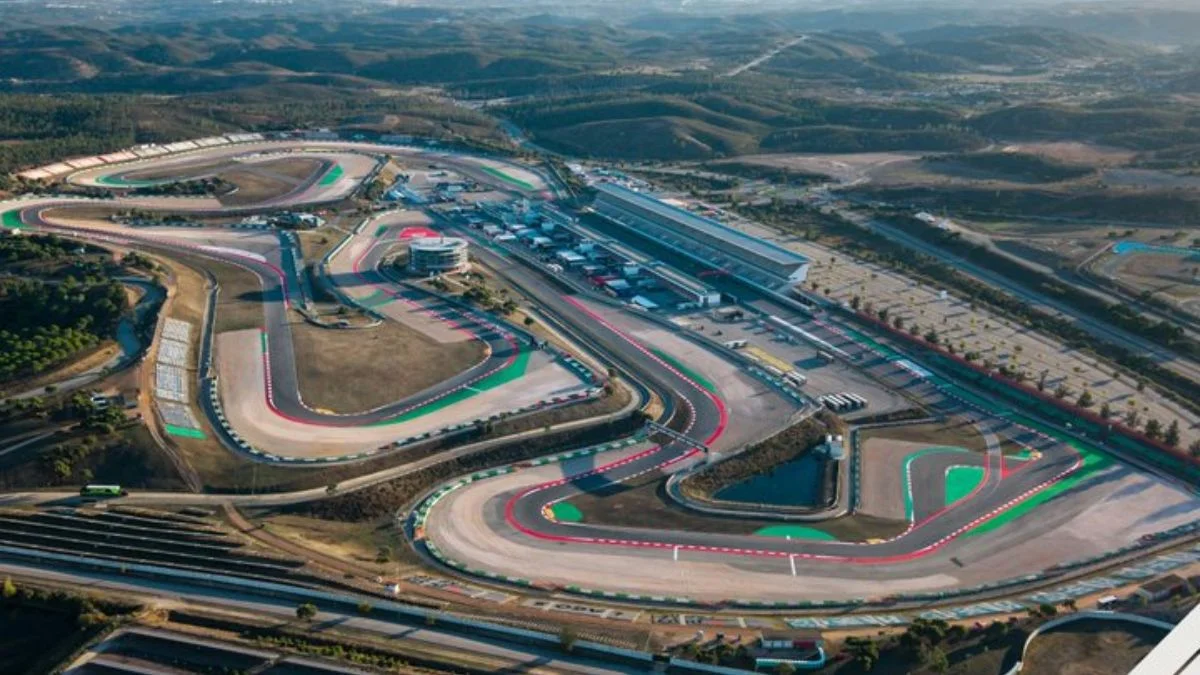
Formula 1 has confirmed that the Portuguese Grand Prix will return to the calendar in 2027 and 2028, with races set to be held at the Algarve International Circuit in Portimão. The venue previously hosted two grands prix during the pandemic-hit seasons of 2020 and 2021, earning praise for its dramatic elevation changes and strong television visuals.
The return of Portugal comes as a direct replacement for the Dutch Grand Prix, which will be staged at Zandvoort for the final time in 2026. Announcing the development, F1 Chair and CEO Stefano Domenicali said the demand to host a Formula 1 race is currently “the highest that it has ever been,” underlining the intense competition for limited calendar slots.
At first glance, bringing Portimão back appears to be a safe and popular decision. The circuit is already F1-ready, requires minimal adaptation, and fills a confirmed European vacancy following Zandvoort’s exit, with Barcelona also facing uncertainty beyond 2026. However, the two-year duration of the contract is striking and suggests Portugal’s role may be temporary rather than permanent.
Rather than signalling a renewed long-term commitment to traditional European circuits, the short deal appears to give Formula 1 breathing room. With interest from governments, cities, and promoters at record levels, the championship is carefully balancing its calendar while major future projects take shape.
One of the key factors shaping this approach is Saudi Arabia. The country is developing the Qiddiya circuit, envisioned as a permanent flagship F1 venue from 2028 onwards. Until then, the Jeddah street circuit remains on the calendar and continues to deliver ultra-fast racing. Combined with Saudi Aramco’s expanding commercial role within Formula 1, speculation has grown about the possibility of two Saudi Arabian races, at least in the short term.
While a Jeddah–Qiddiya double-header would be unprecedented, it would not be out of step with Formula 1’s current expansion strategy. The United States already hosts three races, and the Middle East has become a central pillar of F1’s commercial growth.
Viewed through this lens, Portugal’s two-year return looks less like hesitation and more like strategic contingency planning. Portimão provides a reliable European placeholder while Formula 1 evaluates when and how additional high-value races—whether in Saudi Arabia or via new street circuits—can be integrated without locking the calendar too far in advance.
Street races remain a key part of that equation. Formula 1 has consistently expressed interest in city-based events that offer political backing, commercial upside, and access to new audiences. Although not every proposed project has materialised, the pipeline remains active, reinforcing the idea that Portugal’s comeback, while welcome, may be part of a broader transitional phase rather than a long-term reset.
