
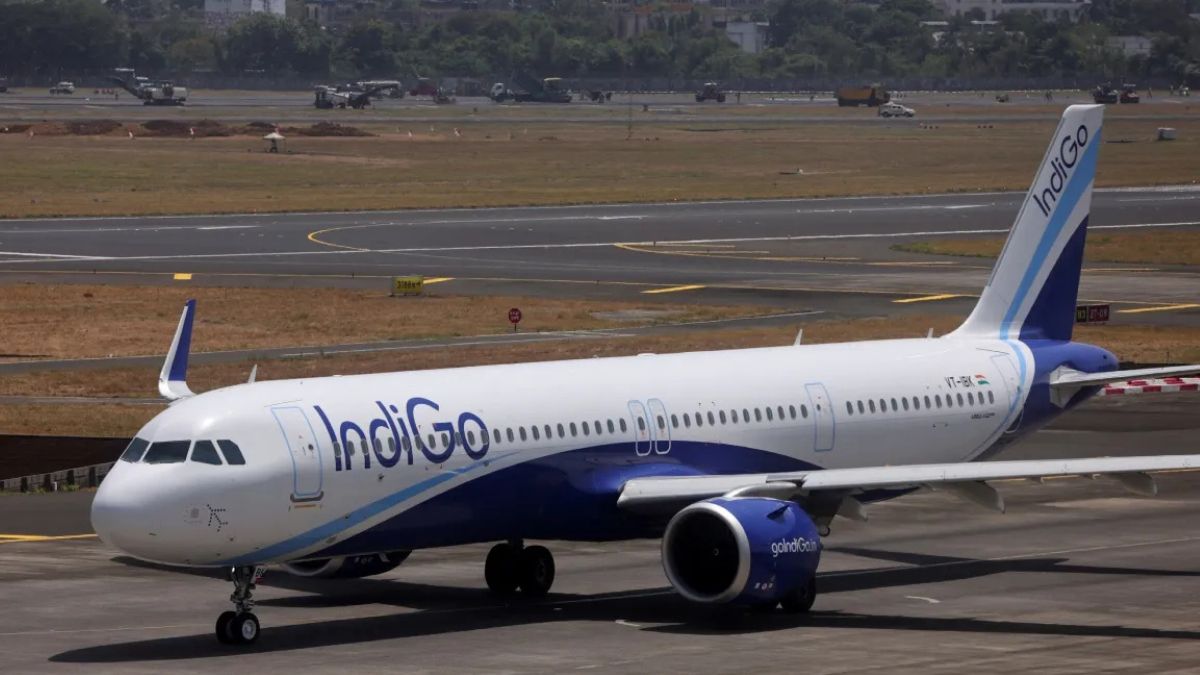
Shares of InterGlobe Aviation, the parent company of IndiGo, staged a sharp intraday recovery on Friday, Dec 5, rebounding nearly 3% from the day’s lows after crashing earlier in the session due to widespread nationwide flight cancellations and severe operational disruptions at major airports, including Delhi and Mumbai.
The stock, which slipped following the cancellation of 500+ flights, bounced back to around ₹5,437, supported by a regulatory development that eased investor concerns.
What triggered the early crash?
IndiGo cancelled hundreds of flights across major metros — Delhi, Mumbai, Bengaluru, Hyderabad, Kolkata and Ahmedabad — leading to airport chaos, steep fare surges, and long queues of stranded passengers.
Delhi Airport later announced that all IndiGo departures were cancelled till midnight, while Mumbai suspended IndiGo departures till 6 p.m.
This large-scale disruption hit market sentiment, dragging the stock down sharply in early trade.
So why did IndiGo shares rebound? The DGCA’s partial relief to airlines
The sharp recovery came after the Directorate General of Civil Aviation (DGCA) issued an order granting partial relief to airlines on the new pilot duty and rest rules.
In the official order dated 5 December 2025, the DGCA withdrew the clause from its earlier January 2025 circular that had prohibited airlines from counting pilot leave as weekly rest.
The withdrawn line had stated:
“No leave shall be substituted for weekly rest.”
The regulator rolled this back with immediate effect, citing:
-
Ongoing operational disruptions
-
Representations from airlines seeking flexibility
-
The need to ensure continuity and stability of flight operations
The DGCA noted that reviewing the rule was “necessary” to help airlines stabilise schedules amid the ongoing crisis.
Why this matters for investors
This partial relaxation gives IndiGo — currently facing crew shortages and schedule breakdowns — more room to manage pilot availability and restore operations more quickly.
The market interpreted this as a positive step that could ease disruptions, prompting a recovery in the stock despite the chaotic situation on the ground.
