
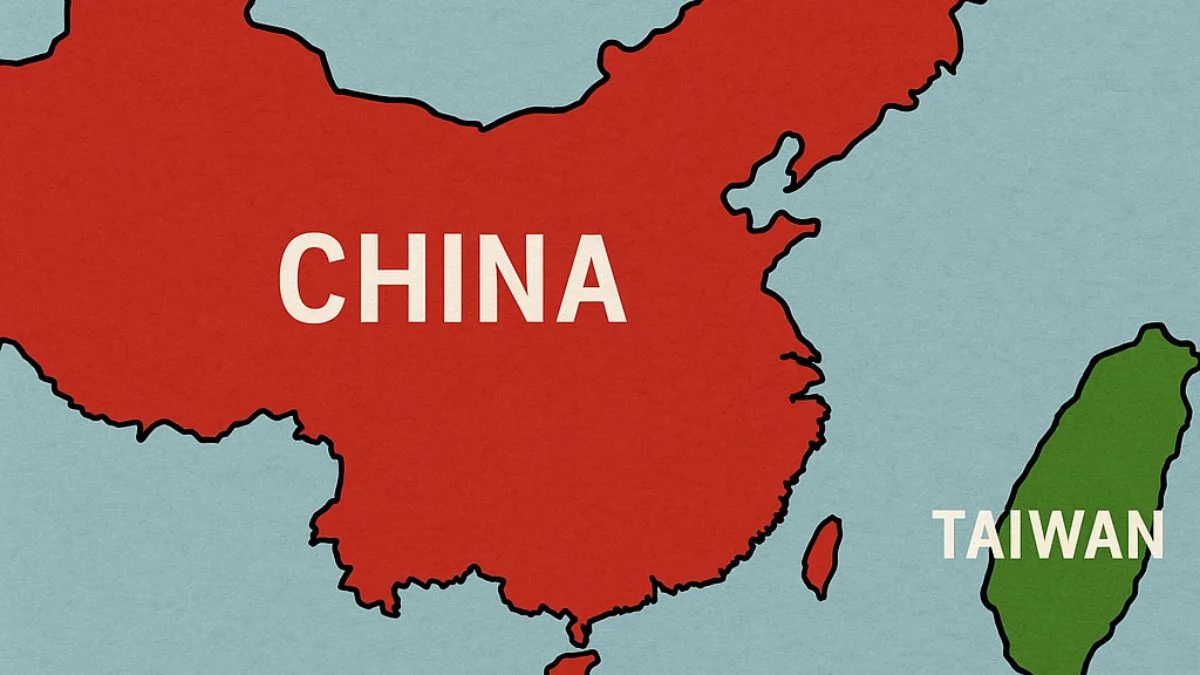
Over the past decade, China’s rhetoric, military build-up, diplomatic pressure, and policy strategy surrounding Taiwan have intensified—leading many to question whether a full-scale capture of Taiwan is inevitable. This analysis explores China’s motivations, what would change if control is established, and the dominant geopolitical narratives discussing this issue.
1. Historical and ideological roots
- Civil War legacy: Taiwan is governed by the Republic of China (ROC), which emerged victorious in a 1912–1949 civil war. China’s Communist Party established the People’s Republic of China (PRC) in 1949 and has never renounced the use of force to bring Taiwan under Beijing’s jurisdiction. Article 8 of China’s 2005 Anti‑Secession Law formalizes this.
- National reunification principle: The PRC’s official policy—“one China” and Xi Jinping’s “peaceful reunification” under the “one country, two systems” framework—frames Taiwan as a breakaway province rather than a separate international entity.
- Political legitimacy: Taiwanese unification is a powerful domestic symbol for the CCP, often used in propagating nationalism and consolidating Xi’s political mandate internal to China.
2. Strategic and economic incentives
a. Strategic position and power projection
- Military anchoring in the First Island Chain: Taiwan sits on the so-called “first island chain,” providing strategic depth in the Western Pacific. Controlling it would significantly extend China’s naval and air capabilities, reducing US forward-operating access.
- Maritime chokepoint control: The Taiwanese straits are adjacent to vital shipping lanes—roughly 60 per cent of Asian maritime trade flows through nearby corridors. Chinese dominance over Taiwan would strengthen its hold over the South China Sea’s commercial arteries.
b. Technological and economic gain
- Semiconductor supremacy: Taiwan is home to TSMC, the world’s largest semiconductor foundry, responsible for over 50 per cent of global chip fabrication. Full integration could accelerate China’s ambitions in semiconductor independence and technological parity.
- Supply chain control: Taiwan plays a central role in global supply chains—particularly in electronics and green technology manufacturing. Its absorption would give China a critical advantage in these sectors.
3. What would change if China controls Taiwan?
a. Shifts in global security and balances of power
- Decline of US strategic influence in Asia: Losing Taiwan would seriously weaken Washington’s ability to project force in the Western Pacific and could unravel alliances with Japan, Korea, and Australia.
- Expansion of China’s “kill‑chain” reach: Models show that with Taiwan under PRC control, air-and-missile denial coverage expands, forcing US bases like Guam or the Philippines to operate at reduced effectiveness.
b. Global economic fallout
- Unprecedented disruption: Even a brief conflict or aggressive blockade over Taiwan could cost the world economy over $10 trillion—short-term shocks similar to, or bigger than, the Ukraine war or 2008 financial crisis.
- Impact on capital and technology: Taiwan is a key conduit for foreign-invested capital and advanced microelectronics. Its loss could throttle foreign inflows, affecting Beijing’s broader innovation-driven growth strategy.
c. Political and cultural consequences
- Erosion of democratic autonomy: Taiwan’s integration would mean dissolving its democratic institutions, curtailing civil liberties, and subsuming it under the PRC’s authoritarian model—something sharply resisted by approximately 90 per cent of Taiwanese people.
- Continued “political warfare”: China would likely escalate its cognitive warfare campaigns—disinformation, political infiltration, propaganda—aimed at conditioning Taiwanese public opinion to accept Beijing’s supremacy.
4. Public and strategic theories on Beijing’s motivations
| Theory / Framework | Key Idea | Source |
|---|---|---|
| Great Power Assertion | Annexing Taiwan reinforces China’s self-declared status as a leading global power, challenging the U.S.-led world order. | Reddit, Wikipedia, Barron’s |
| “Cognitive Warfare” Mastery | Over time, China could annex Taiwan without force by eroding public will through propaganda and election manipulation. | TIME, Wikipedia |
| “Anaconda Strategy” | Beijing applies gradual diplomatic, economic, and military pressure to strangle Taipei’s autonomy before physically seizing control. | Council on Foreign Relations, Small Wars Journal |
| Premptive Window Strategy | Some Western analysts argue China might strike before U.S. internal political changes reduce deterrence or alliances weaken. | Reddit, ft.com, chinapower.csis.org |
| Domestic Consolidation | Taiwan serves as a rallying symbol at home, diverting attention from domestic issues and strengthening leadership legitimacy. | Reddit, Small Wars Journal |
5. Challenges and limits to a Taiwan takeover
- Massive military cost and human toll: Models show an amphibious invasion would be extraordinarily difficult—due to Taiwan’s terrain, US and allied intervention, and Taiwan’s own reserve mobilization plan.
- Economic blowback: China would face isolation from global markets, capital outflows, and loss of critical technology access—particularly in high-end semiconductors and foreign investment.
- Domestic risk amid PLA reforms: Xi’s ongoing military leadership reshuffle raises questions about the People’s Liberation Army’s readiness for such a complex operation.
6. What the international community is doing
- US deterrence doctrine: US policymakers advocate a “reassure and deter” framework—maintaining ambiguous support for Taiwan’s defense while discouraging aggressive PRC action.
- Allied formation in the Indo-Pacific: Countries like Australia and Japan have pledged closer defense cooperation. A US congressional delegation is visiting Taiwan to reaffirm support.
- Taiwan civilian readiness: Under the “Territorial Defense Force” model, Taiwan is enhancing its reserve system and investing in low-cost mobile defense weapons to make occupation prohibitively costly.
Conclusion
China views Taiwan as integral to its national identity and global power projection plan, but control requires overcoming immense global and domestic resistance.
Economic gain and strategic depth are key motivators, yet the full takeover presents massive economic and geopolitical costs, including undermining Beijing’s longer-term modernization strategy.
Multiple scholarly frameworks—from great power theory to cognitive and political warfare—explain why China may pursue Taiwan even short of war.
International deterrents and Taiwan’s own resilience planning are central to preventing conflict, although no one can accurately predict Beijing’s next move.
