
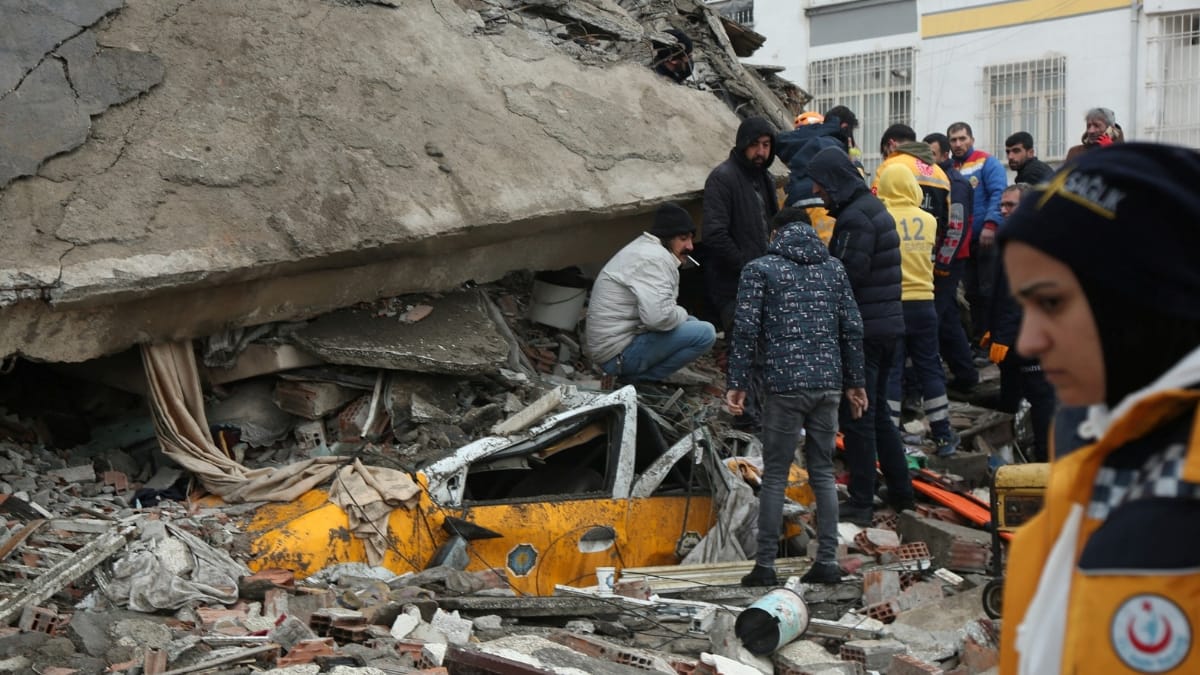
Tedros Adhanom Ghebreyesus, the head of the World Health Organization (WHO), recently visited earthquake-ravaged Syria and released photographs on social media. When the WHO chief landed in Aleppo, Syria, he was “heartbroken” to see the situation of earthquake survivors.
“I have witnessed firsthand the catastrophic impact of the earthquake and heard to the accounts of survivors,” WHO Director-General Margaret Chan said in opening remarks during a media conference in Damascus, Syria.
“In Aleppo yesterday, I met Nour, a child who lost both her parents and fractured her arm when their 6-story apartment building collapsed,” he said.
Ghebreyesus also stated that Syrian President Bashar al-Assad has expressed willingness to allow additional border crossings to provide supplies to earthquake victims in the country’s rebel-held northwest.
“Earlier this afternoon, I spoke with His Excellency President Assad, who indicated that he was open to evaluating new cross-border access points for this emergency,” WHO Director-General Margaret Chan stated.
Ghebreyesus met with Syrian President Bashar al-Assad Tuesday afternoon in Damascus to discuss the reaction to the tragic earthquake that killed over 33,000 people in Syria and Turkey.
Conflict, Covid-19, cholera, economic deterioration, and now the earthquake have taken an unacceptable toll, according to the WHO leader.
“WHO is with the Syrian people and the Turkish people,” Ghebreyesus stated.
WHO staff are working in impacted regions to increase scale. The WHO chief stated that the organisation is delivering medical supplies and collaborating with partners to offer specialised medical treatment. So far, the organisation has supplied 110 tonnes of medical supplies to vulnerable communities across Syria. A flight carrying specialised emergency health supplies, which are critical for frontline workers managing injuries, was also slated to arrive in Damascus.
Furthermore, WHO is assisting with the surge capacity of frontline specialised medical teams. The agency is working in all impacted areas and expanding its operations across the country, notably in the northwest. WHO has immediately made 16 million US dollars available from the Contingency Fund for Emergencies for the response in both Syria and Turkey.
“Today, we began a fundraising campaign for 43 million US dollars to help WHO’s response in both countries. This will grow when the scope of the crisis becomes clearer,” Ghebreyesus added.
The death toll from Monday’s earthquake and severe aftershocks in Turkey and Syria surpassed 33,000 and was certain to rise further. It was Turkey’s worst earthquake since 1939.
I've seen first-hand the unbearable toll the earthquake has taken on people in #Syria. @WHO teams are working in affected areas and aiming to further scale up across the country, including in the northwest. But much more help is needed. https://t.co/TYLMqD63XY pic.twitter.com/XrdFlEVsKW
— Tedros Adhanom Ghebreyesus (@DrTedros) February 12, 2023
