

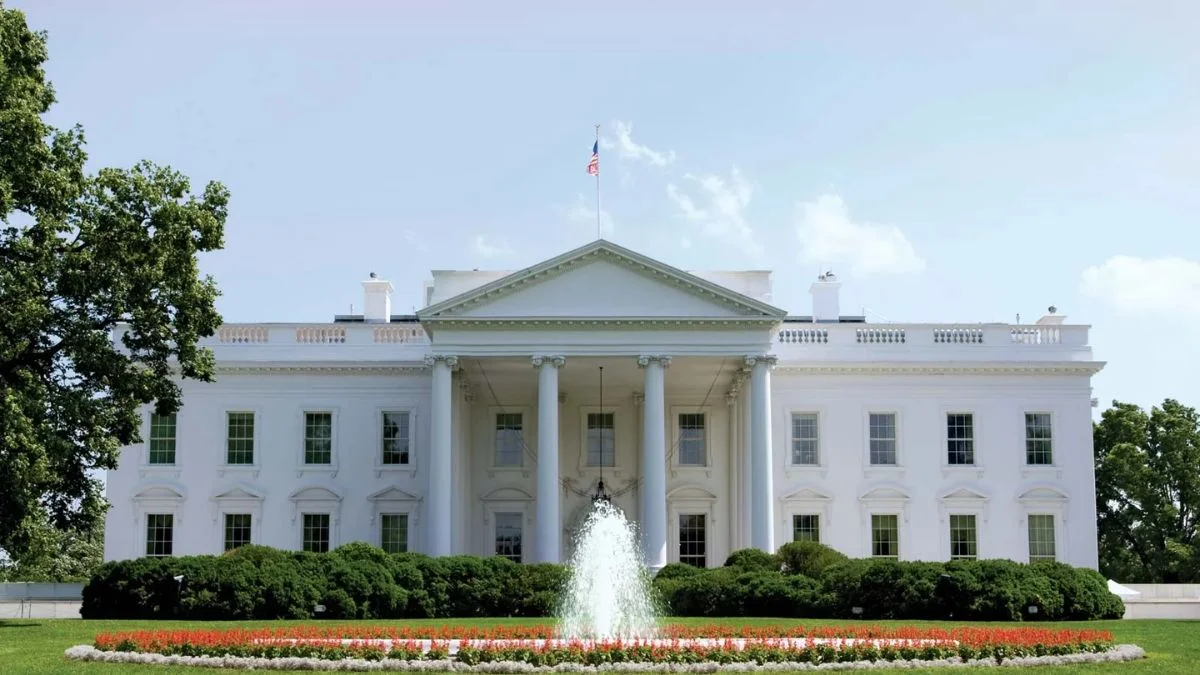
The White House is making a fresh push to get stalled crypto legislation moving again.
The main sticking point right now is stablecoin rewards. Officials are trying to narrow the debate and find middle ground.
At a third closed door meeting on Thursday, senior leaders from major crypto firms and banking trade groups met at the White House. The goal was to resolve one of the last major disagreements in a broader market structure bill.
White House crypto adviser Patrick Witt led the discussion. According to reporting from journalist Eleanor Terrett, Witt repeated a compromise idea that had been discussed before.
Under that proposal, third parties such as exchanges could offer rewards tied to certain activity. For example, incentives could be linked to transactions or platform use. However, fixed returns for simply holding stablecoins would not be allowed.
In simple terms, earning yield on idle balances appears to be off the table. That has been one of the crypto industry’s main goals.
Talks are now focused on whether companies can legally offer rewards that are directly connected to specific actions rather than just ownership. Bank trade groups are expected to brief their members and see if there is room for compromise.
One person involved in the talks suggested that reaching a deal by the end of the month is possible.
No final agreement was reached on Thursday. Still, participants described the session as serious and productive.
Stuart Alderoty said representatives worked through detailed legislative language. Paul Grewal called the tone constructive and cooperative, adding that discussions will continue.
The latest meeting follows earlier sessions held on February 2 and February 10. Lawmakers are trying to settle key issues before the Senate advances a larger bill that would define how digital assets are regulated in the United States.
A central part of the debate involves how authority will be divided between the Commodity Futures Trading Commission and the Securities and Exchange Commission. The legislation would also set clearer rules for trading platforms, token issuers, and other market players.
The dispute over rewards partly traces back to last year’s stablecoin law known as the GENIUS Act. That law blocked issuers from paying direct interest to holders. However, it did not clearly address whether third party platforms could offer incentives.
A follow up proposal, the CLARITY Act, was intended to fix those gaps and create a more unified regulatory framework.
Progress slowed in mid January 2026 when Tim Scott, chairman of the Senate Banking Committee, delayed a scheduled markup. He said bipartisan support was not yet strong enough.
Industry tensions have also played a role. Coinbase briefly pulled its support for the draft, arguing that strict limits on rewards could put US based stablecoins at a disadvantage compared with offshore competitors.
Banking groups, including the American Bankers Association, have pushed for tighter restrictions. They warned that allowing yield on stablecoins could draw deposits away from community banks and into digital wallets. That shift, they argue, could reduce funds available for mortgages and small business loans.
For now, negotiators appear focused on narrowing differences rather than expanding the debate. Whether the compromise on activity based rewards is enough to unlock broader agreement will likely determine how quickly the legislation moves forward.