

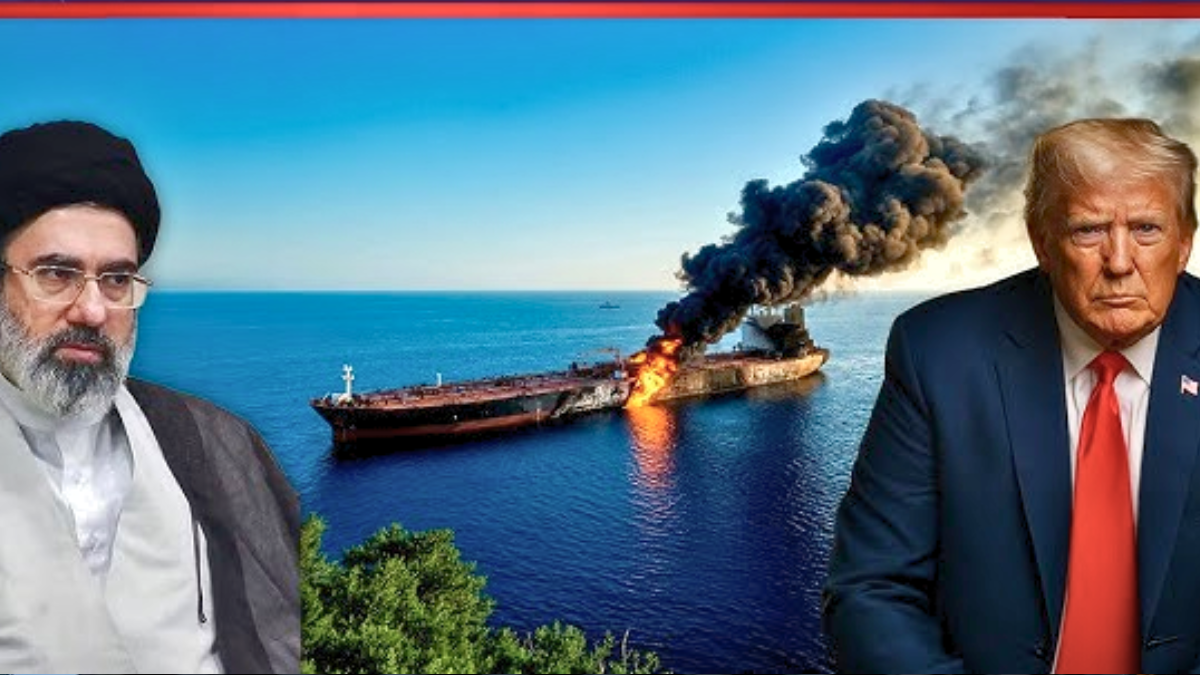
Donald Trump issued an ultimatum to Iran concerning the Strait of Hormuz; however, it quickly fell apart, raising more questions about how committed America is and the ongoing use of force by the White House for a solution to what is becoming an even longer conflict between the two nations.
Last week, President Trump tweeted that if Iran does not “FULLY OPEN- WITHOUT THREAT” this waterway in the next forty-eight (48) hours, the US will blow up all of their power plants (starting with their largest). Because the Strait of Hormuz carries one-fifth (1/5) of the world’s oil moved on ships, disruption in supplies has raised gas prices to all-time highs and will hurt the US economically.
Iran has not responded nor ceased operations disrupting the strait. Thus, rather than take action as was required of Iran to comply with this ultimatum imposed upon them, it had provided them with a continued five-day extension of said ultimatum, due to “very productive meetings” being held for “total peace reconstruction”. Iran denied that they have held any meaningful meetings regarding an end to this situation, and an agreement had not yet been reached. President Trump finally gave an additional 10 days beyond the five-day extension and continued to provide varying statements about the status, when, before that, said that the war is probably “very complete, about there,” and at the same time stated that “we haven’t won enough” and will continue without giving up until “absolutely winning.”
The recent episode has been compared to Obama’s red line in Syria with the use of chemical weapons in 2013. Trump and the Republicans have criticized Obama for failing to enforce his threat to attack Syria when the evidence of their use of chemical weapons came to light. They referred to it as a “disaster” that caused “reputational and generational damage” to the U.S.’s credibility. Rubio, Graham, and Hegseth were among those who called Obama’s policy an “incoherent maze.”
Many observers see the irony in the fact that Obama’s action of seeking congressional approval before he acted is now seen as far more measured than the rapid-fire statements and retractions of threats made by Trump. The Trump administration’s pattern of spontaneous and abrupt foreign policy decisions—based on market sensitivities and personal leverage—poses a risk to the deterrent effect of U.S. commitments.
Beyond the Persian Gulf, the stakes for the U.S. remain very high. Long-enduring uncertainty has created turmoil in energy markets, damaged alliances, and tested the loyalties of Trump’s base supporters, who were initially opposed to new U.S. military engagements in the Middle East but now support strong action against Iran. As Iran continues to resist U.S. demands, Washington finds itself in an even more difficult situation: its adversaries believe they can survive the U.S. bluster, and as a result, there are greater chances that the conflict will continue for an extended period of time at even higher costs to the U.S.