

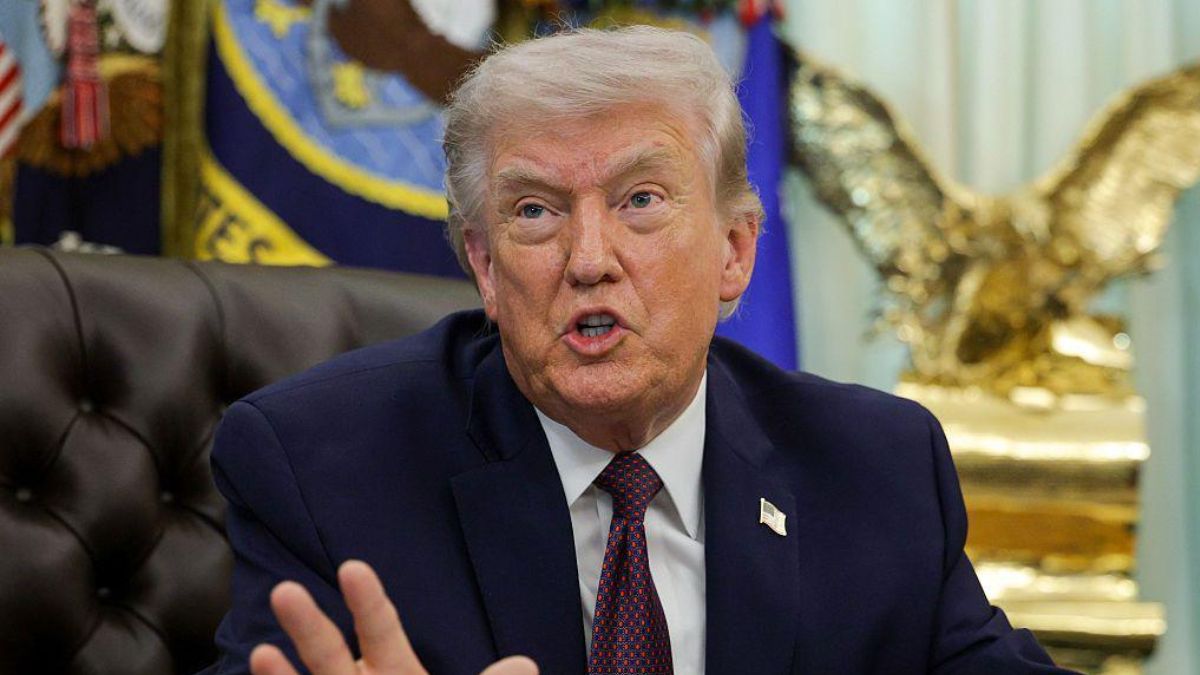
President Donald Trump held a rare Monday afternoon press briefing, his first public remarks since the war with Iran and Israel entered its sixth week. The conflict began after U.S. and allied strikes prompted Iranian retaliation that shut the Strait of Hormuz, a key oil chokepoint through which about 20 % of the world’s petroleum flows.
Trump opened by repeating that he expects the conflict to end “shortly,” a claim he first made in a national address last week. He defended U.S. actions and criticized foreign leaders without naming specific nations. He also said the task of reopening the strait was not solely an American responsibility.
The Strait’s closure has had real economic fallout. Gas prices in the U.S. climbed close to $4 per gallon last week, a major concern for voters as midterm elections approach.
Trump issues ultimatum over Strait of Hormuz by Tuesday evening
In statements over the weekend, Trump issued a dramatic ultimatum to Tehran. He said the U.S. would launch “power plant day and bridge day” strikes – a reference to targeting key civilian infrastructure, unless Iran reopened the strait by Tuesday evening.
The president used highly charged language on social media, warning Iran it would be “living in Hell” if it did not comply.
Diplomats and military analysts say this is one of the toughest threats Trump has made so far in the war. Iran has not backed down, and the standoff remains unresolved as the deadline nears.
Meanwhile, negotiations have continued behind the scenes. A 45‑day ceasefire proposal was presented to both sides on Sunday, and Trump called it a “significant step” toward peace. But Iran rejected the plan, demanding more than a temporary halt and insisting on broader terms, including economic compensation and security guarantees.
Americans grow weary of War as polls show slipping support
Public opinion appears to be turning against Trump’s strategy. Recent polling indicates that a majority of Americans want the war to end quickly, even if U.S. goals are not fully achieved.
Domestic support for the president has softened, especially among his own base. A CNN‑linked poll last week showed that the percentage of Republicans who “strongly approve” of Trump’s performance dropped from 52 % in January to 43 % currently. Economic issues like rising fuel costs are top concerns for voters.
Internationally, reactions to the conflict are tense as well. The Kremlin warned that the entire Middle East is “on fire,” underscoring how the war’s impacts extend far beyond Iran’s borders.
Uncertainty looms over the war’s end and broader goals
Trump has previously projected optimistic timelines, saying he expected the war to last about six weeks. With that mark now reached, there is still no clear end in sight. Goals such as dismantling Iran’s uranium stockpile remain uncertain, and Trump has even suggested that even if a ceasefire is reached, the U.S. could strike again later if Iran pursues nuclear capabilities.
Military actions continue alongside diplomatic efforts. U.S. and allied forces are engaged in strikes across the region, and Iran has responded with missile attacks and threats of broader retaliation.
Despite Trump’s public eagerness to declare progress, analysts note the ongoing closure of the Strait of Hormuz and absence of a comprehensive peace agreement make it unclear how or when the conflict will truly end.