

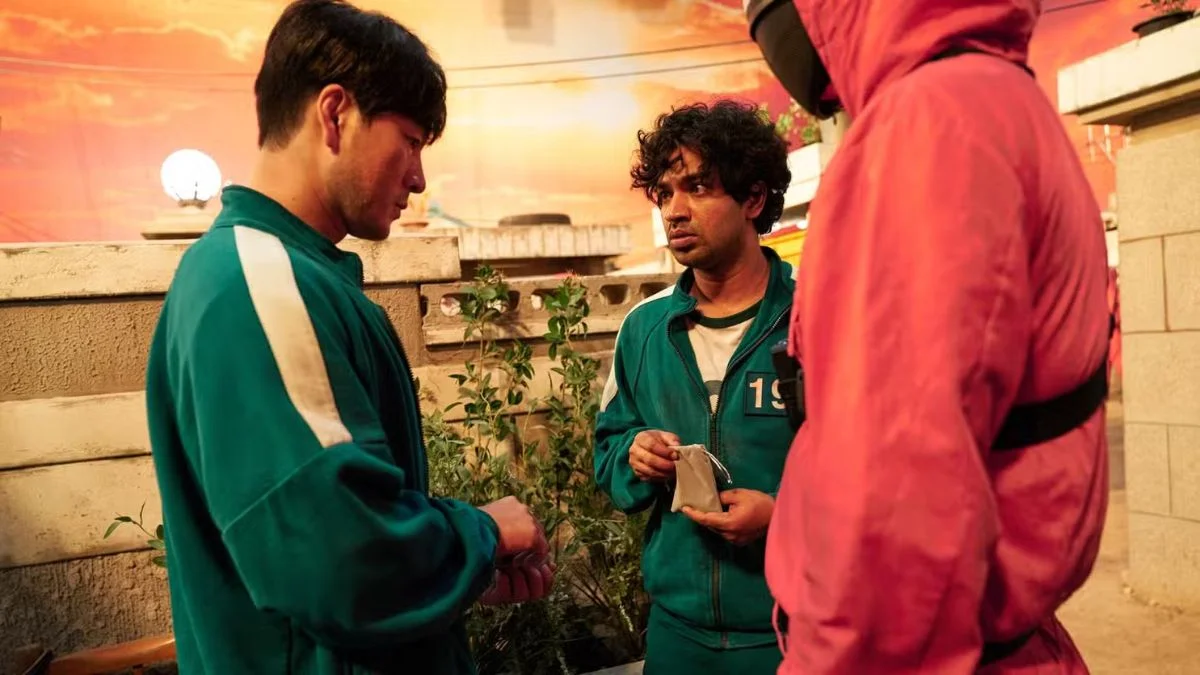
Squid Game is not only Netflix’s most-watched series of all time, it is also one of the platform’s most socially charged successes. The South Korean survival drama has amassed staggering viewership numbers, with season 1 reaching 265.2 million views, securing the top spot on Netflix’s all-time Top 10 non-English shows list. That figure even surpasses Wednesday season 1, which leads the English-language chart with 252.1 million views. Despite more mixed critical reactions to seasons 2 and 3, the franchise’s dominance has only grown, with season 2 drawing 192.6 million views and season 3 following closely at 145.8 million.
Behind the show’s dystopian spectacle lies a far more grounded inspiration. Although Squid Game’s deadly competition and its characters are fictional, creator Hwang Dong-hyuk has been explicit that parts of the story are rooted in real historical trauma, particularly South Korea’s labor struggles and widening economic inequality.
The series centers on Seong Gi-hun, a financially ruined man who agrees to participate in a secret contest offering 4.56 billion won to the sole survivor. While Gi-hun himself is fictional, his backstory directly references the SsangYong Motor Strike, one of the most violent labor disputes in modern South Korean history.
The crisis began in January 2009, when Shanghai Automotive Industry Corporation, the majority stakeholder in SsangYong Motor Company, filed for bankruptcy. The fallout was swift and devastating. According to reporting by The New York Times, around 2,000 workers resigned voluntarily in the initial weeks. Soon after, 36% of the workforce was laid off. At the Pyeongtaek plant alone, all 970 workers lost their jobs.
Workers responded by occupying the factory in a sit-in protest that lasted 77 days. What followed was an aggressive police crackdown. As detailed by Peoples Dispatch, the confrontation escalated into one of the fiercest labor conflicts South Korea had seen in nearly two decades. Thousands of riot police stormed the facility using helicopters, tear gas, and water cannons. Workers resisted with improvised weapons, including slingshots and Molotov cocktails. Many were severely injured, yet continued to hold their ground.
Hwang Dong-hyuk later confirmed that Gi-hun’s past as a laid-off factory worker was deliberately tied to this event. In an interview with AFP, he explained that the reference was meant to illustrate how quickly economic stability can collapse. By anchoring Gi-hun’s desperation in a real labor tragedy, Hwang sought to show that an ordinary middle-class life can unravel overnight in a system defined by inequality. That sudden fall, he argued, is what makes Gi-hun’s decision to enter the deadly games tragically believable.
The SsangYong reference is not the only real-world influence behind Squid Game. Hwang has also spoken about drawing from his own experiences of discrimination when creating the character Ali Abdul, a Pakistani migrant worker whose employer withholds his wages. Ali’s story reflects systemic exploitation of migrant labor, a theme Hwang says he understands personally. Recalling a trip to the UK at age 24, the creator described being subjected to dismissive and discriminatory treatment at airport immigration, an experience that stayed with him and informed Ali’s characterization.
At the same time, some rumored inspirations have been firmly denied. Social media claims linking Squid Game to Brothers Home, a notorious South Korean internment camp, have been widely debunked. Publications including The Korea Times have confirmed that the rumors were fueled by AI-generated images mixed with real photographs, and Hwang has never acknowledged any connection.
Taken together, Squid Game’s success is not just a product of shocking twists or high-stakes drama. Its emotional weight comes from how closely its fictional horrors mirror real economic and social pressures. By weaving labor unrest, migrant exploitation, and class collapse into its narrative, the series transforms spectacle into commentary, a key reason it continues to resonate with audiences worldwide long after its shocking games have ended.