

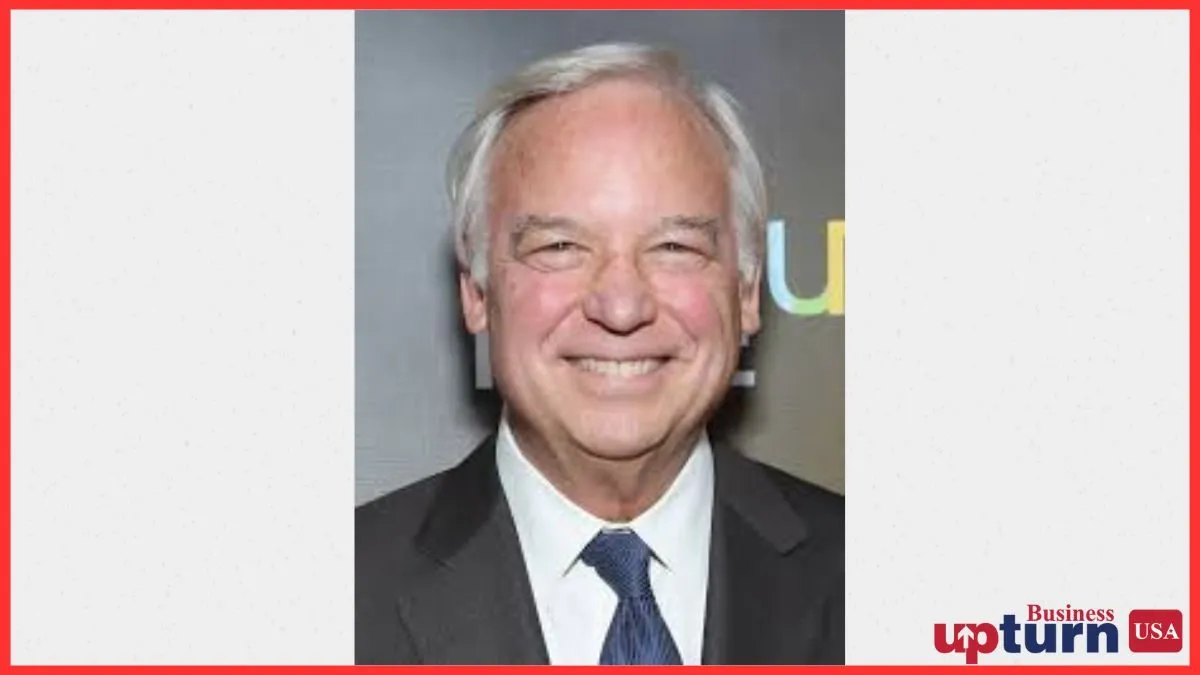
Few figures in American personal development have wielded as much silent power as Jack Canfield. While his name is often associated with Chicken Soup for the Soul, his true mastery lies not just in storytelling but in building a business machine that directly aligns with the evolving psyche of the American consumer. Behind the scenes, Canfield has crafted a robust business model—deeply embedded in the U.S. culture of self-help, entrepreneurship, and individual success—that continues to generate influence and income decades after his first breakout moment.
This article dissects Jack Canfield’s business model from a purely strategic lens—exploring how he earns, grows, and sustains his empire while delivering measurable value to U.S. citizens. We’ll examine revenue streams, audience segmentation, distribution mechanics, and how his model uniquely mirrors American consumer behavior. This is not just about motivation—it’s about monetization, and how Canfield turned self-help into a sustainable U.S. brand.
Core framework of Jack Canfield’s business empire
At the heart of Jack Canfield’s business lies a three-pronged ecosystem: content creation (books and courses), personal development training (live and digital), and certification/licensing. These pillars work in unison to form a vertically integrated brand designed to generate value across multiple price points and access levels, all optimized for American buyers ranging from high school students to CEOs.
The Chicken Soup for the Soul brand may have given him visibility, but Canfield’s long-term strategy is far more nuanced. He built The Canfield Training Group as the operational core—offering flagship programs like “Breakthrough to Success” and “Train the Trainer”—which feed a cycle of learning, certification, and evangelism. This model ensures that customers can transform into trainers, creating a self-sustaining and community-driven loop that continues to scale without geographic limits.
Revenue streams and U.S. market alignment
Canfield’s income is diversified across several strategic layers: book royalties, digital courses, live events, licensing agreements, speaking fees, and coaching certifications. What sets his revenue model apart is its alignment with U.S. consumer behavior—especially the rising demand for personal development during economic or psychological uncertainty.
Americans today are increasingly investing in self-improvement, with the U.S. personal development market projected to reach $15 billion by 2027. Canfield’s high-ticket events (some exceeding $5,000) meet affluent consumers’ desire for transformation, while low-cost books and free webinars capture the entry-level market. This funnel allows for lifetime customer value maximization, a strategy increasingly popular among American online education entrepreneurs.
Marketing strategies tailored for U.S. audiences
Jack Canfield’s marketing playbook is crafted to appeal to distinctly American aspirations: success, self-reinvention, and emotional resilience. His core branding revolves around transformation narratives—stories of ordinary individuals achieving greatness—which resonates with the U.S. ethos of upward mobility and reinvention.
He uses a tiered marketing funnel rooted in emotional psychology. Free resources—like webinars, eBooks, and YouTube content—serve as lead magnets, introducing users to his philosophy. From there, paid masterclasses, mid-level coaching, and ultimately high-end mentorship programs are offered. This approach mirrors the American consumer preference for “try-before-you-buy” models in online education, and he amplifies it using affiliate marketing, podcast guest appearances, and targeted email campaigns.
Leveraging books, seminars, and licensing deals
Jack Canfield’s success in the American market is also deeply tied to his ability to position content as both a product and a gateway. His books are not just stand-alone revenue generators—they function as entry points into higher-value offerings. The Success Principles, for example, doesn’t just sell in bookstores; it anchors an entire curriculum available in live and virtual formats, each tailored for the U.S. learner seeking results-based education.
His licensing strategy is equally strategic. Canfield allows certified trainers to teach his material under strict quality controls. This expands his reach across the U.S.—from schools and universities to corporate boardrooms—without requiring his physical presence. By decentralizing delivery but retaining ownership of content, Canfield scales his intellectual property much like a tech company would scale a digital product.
Partnerships, collaborations, and brand extensions in America
Canfield’s business expansion in the U.S. has benefited from smart partnerships with media, publishing, and educational platforms. Collaborating with major publishers like HCI Books and Health Communications, Inc., he ensured wide distribution while negotiating favorable terms that many authors never achieve—thanks in part to the consistent commercial performance of his titles.
He has also collaborated with motivational icons like Bob Proctor, Lisa Nichols, and Tony Robbins, aligning himself with a cohort that dominates the American transformational leadership space. These joint ventures often cross-promote products and share audiences, making them both financially lucrative and visibility-enhancing. Additionally, Canfield’s speaking appearances at Fortune 500 companies and universities give his brand academic and corporate legitimacy—key trust signals in the U.S. market.
Scaling personal development into a commercial powerhouse
What makes Canfield’s model commercially powerful is its built-in scalability. Through his Train the Trainer program, he empowers others to become licensed facilitators of his curriculum, turning passionate customers into revenue-generating advocates. Each trainer pays a certification fee and renewals, and many go on to sell seminars across U.S. cities, effectively multiplying his national footprint.
This decentralization allows for local customization—a critical feature for diverse American demographics—while maintaining brand integrity. Moreover, the recurring income from certification renewals and course licensing gives Canfield’s business a subscription-like revenue predictability, uncommon in the traditional self-help world.
How Jack Canfield’s business model impacts U.S. citizens daily
Unlike many motivational speakers whose influence remains abstract, Canfield’s model embeds itself in Americans’ daily routines. Whether through morning affirmations from his books, school programs adopting his success principles, or corporate training modules, his content often operates invisibly in the background of American life.
This passive yet persistent presence amplifies his relevance. By integrating his work into educational curricula, workplace development plans, and wellness practices, Canfield aligns with growing U.S. trends around emotional intelligence, leadership coaching, and holistic success. His model turns personal transformation into habitual behavior—one principle at a time.
Case studies of U.S.-based audience transformation
Take the case of a New Jersey public high school that implemented “The Success Principles” as part of its advisory curriculum. Within a year, faculty reported noticeable improvement in student goal-setting and emotional resilience. Or consider a Seattle-based startup founder who attributes her business turnaround to applying Canfield’s E+R=O formula (Event + Response = Outcome)—a foundational principle he teaches across all platforms.
These stories aren’t anomalies. From Kansas school districts to Silicon Valley accelerators, Canfield’s content is adapted and recontextualized to meet varying American needs. Each success story feeds the brand, creating real-world proof that supports the ongoing sale of his programs and licenses.
The unseen business advantage nobody talks about
One of the most underrated elements of Jack Canfield’s business model is his intellectual property modularity. Unlike many content creators who produce linear, fixed-value content, Canfield’s material is intentionally modular—designed to be broken down, repackaged, and redistributed across diverse platforms and contexts.
For example, a single principle from his book might appear as a podcast episode, a webinar chapter, a keynote talk, and a workbook module—all with slight variations tailored for different American audiences. This fractal content strategy allows him to maintain brand consistency while maximizing content lifespan. It’s a tactic more commonly seen in tech product design, yet Canfield uses it to elevate personal development into a monetizable, evergreen ecosystem.
Conclusion:
Jack Canfield didn’t just write a bestselling book—he built a replicable, sustainable business model rooted in American values of self-improvement, emotional intelligence, and entrepreneurial thinking. His ability to create modular content, scalable training, and emotionally resonant branding gives him a unique foothold in the U.S. self-help market.
As America continues to prioritize mental well-being, leadership training, and personal growth, Canfield’s model is positioned to remain not only relevant but foundational. For entrepreneurs looking to enter the personal development space, his business playbook offers both inspiration and instruction—proof that influence and revenue can go hand in hand when strategy meets substance.
(This article is intended for informational and editorial purposes only. It does not constitute endorsement or promotion of any individual, company, or entity mentioned. Business Upturn makes no representations or warranties regarding the accuracy, completeness, or reliability of the information provided.)