

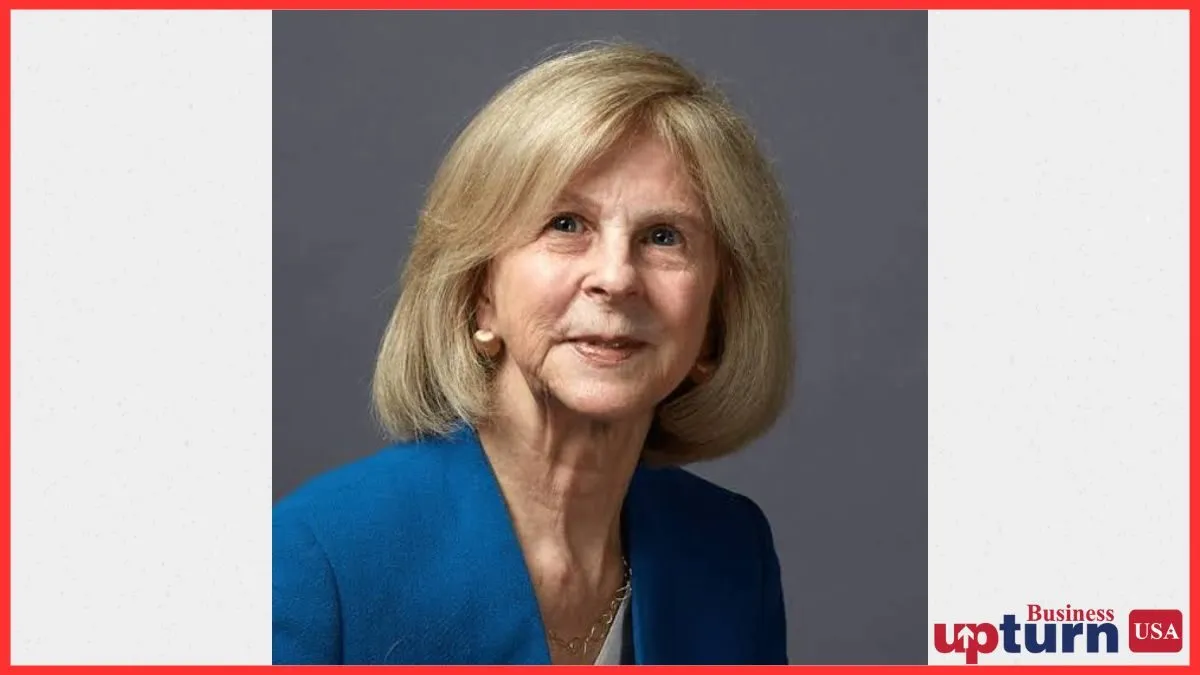
In an era dominated by tech startups, celebrity influencers, and fast-moving digital brands, few imagine that a historian could build an enduring business model from ideas alone. Elaine Pagels, one of America’s most respected scholars of religion, has done just that. Known for her groundbreaking work The Gnostic Gospels and a career rooted in Ivy League institutions, Pagels has crafted a sustainable “influence economy” built not on apps or consumer goods, but on intellectual capital. Through books, lectures, and institutional partnerships, she has managed to convert scholarly insight into a powerful cultural and economic force in the United States—reaching audiences from academic departments to living rooms across the country.
This article decodes how Pagels has turned deep religious history into a marketable and monetisable enterprise, showing that the business of ideas can be just as scalable—and arguably more enduring—than any physical product.
How Elaine Pagels turned niche religious history into a marketable intellectual asset
When Pagels first published The Gnostic Gospels in 1979, she was writing in a field few outside theology departments paid much attention to. Yet the book quickly became more than a scholarly text—it was a cultural event. It won the National Book Award and the National Book Critics Circle Award, drawing unprecedented attention to ancient Christian writings long overlooked in mainstream religious discourse.
The success of The Gnostic Gospels was not accidental—it was the product of a strategic knowledge-to-market conversion. Pagels understood that academic work, to have real-world impact, needed to bridge the gap between the scholarly and the accessible. She distilled complex historical and theological debates into prose that was compelling without oversimplifying, allowing her work to resonate with both the professor in the seminar room and the curious reader in a local book club.
This approach transformed her publications into “intellectual products” with a unique shelf life. Reprinted multiple times, assigned in university syllabi, and recommended in interfaith circles, her works have remained relevant for decades. In doing so, she proved that academic research—when framed for public consumption—can function like a brand, generating cultural authority and recurring revenue.
Publishing as a strategic asset: Turning manuscripts into revenue-generating machines
Pagels’ books are more than contributions to scholarship—they are enduring commercial properties. Partnering with respected publishers such as Random House, she positioned her works for both academic prestige and mainstream distribution. This dual-market strategy ensured her titles would not be confined to university presses (and their limited audiences), but instead stocked in public libraries, airport bookstores, and online retail platforms.
The economic advantage lies in the evergreen nature of her subject matter. ISBN longevity means her works continue to sell decades after their first print run, supported by periodic reissues and updated editions. Because many of her titles are staples in religious studies courses, they generate steady institutional purchases alongside consumer sales. In essence, Pagels created a recurring revenue model rare in academia: a fusion of scholarly credibility and mass-market accessibility.
From Ivy League to influence engine: Building a reputation economy through institutions
Pagels’ career has been anchored at two of America’s most prestigious academic institutions—Harvard University and Princeton University. These affiliations function as more than employment; they serve as brand validation in the marketplace of ideas. In the same way a luxury fashion brand benefits from an association with Paris or Milan, a scholar’s connection to Ivy League institutions instantly signals authority and trust to the American public.
This institutional credibility opened doors to national platforms that amplify her reach. She became a sought-after voice for public forums, televised interviews, and national radio programs. Whether appearing on PBS specials about Christianity or contributing to NPR discussions, Pagels leveraged these opportunities not as fleeting publicity stunts, but as extensions of her brand—each appearance reinforcing her identity as the country’s foremost interpreter of early Christian history.
Intellectual property as an American soft power tool
Pagels’ ideas travel far beyond her own pen. Through citations in textbooks, inclusion in documentary scripts, and adaptation into open lectures and public courses, her intellectual property becomes part of the cultural commons. While these uses may not always generate direct royalties, they contribute to what could be called a “soft power economy” in scholarship—where influence translates into grants, consultancy roles for media productions, and invitations to high-paying speaking engagements.
This indirect monetisation ensures her work remains woven into the fabric of American religious discourse, influencing everyone from clergy to filmmakers.
High-impact media presence: Rethinking visibility in the age of silent thought leaders
Unlike many modern public intellectuals, Pagels has never relied on social media to spread her influence. Instead, she has embraced a high-impact, low-noise strategy—partnering with established media channels like PBS, NPR, and The New York Times to reach audiences that value depth over speed.
Her media appearances are curated rather than constant, each one aligning with her core expertise and reinforcing her brand as a serious historian rather than a pundit. This approach maximises longevity: a PBS special may be re-aired for decades, and an NPR interview archived for on-demand listening, creating a long tail of influence.
Monetising trust: Grants, fellowships, and endowments as recurring funding sources
Trust, in Pagels’ world, translates into funding. Her MacArthur Fellowship—often referred to as a “genius grant”—was not just a personal accolade, but an investment in her continued work. Over the years, she has secured institutional grants, research endowments, and stipends for speaking engagements, creating a funding ecosystem that allows her to pursue scholarship without commercial compromise.
These resources operate like venture capital for intellectual work—providing the runway to research, write, and lecture in ways that yield high cultural returns.
The unique market of spiritual scholarship in the USA
The American cultural landscape is unusually fertile for a scholar like Pagels. The country’s blend of religious curiosity, spiritual diversity, and a strong market for self-education creates demand for historical perspectives that challenge and enrich existing beliefs.
Pagels’ work reaches across demographic boundaries—appearing in church reading groups, secular university courses, women’s studies seminars, philosophy podcasts, and interfaith conferences. By blending the authority of a historian with the narrative pull of a bestselling author, she has effectively carved out her own category in the American marketplace of ideas.
Not just a scholar, a cultural translator
What truly distinguishes Pagels is her ability to act as a cultural translator. She takes ancient, often fragmented texts and renders them into narratives that resonate with contemporary American audiences. In doing so, she not only informs but also engages—encouraging critical thinking without alienating readers who approach her work from diverse worldviews.
This role as a translator has built a loyal consumer base that returns for each new publication, knowing they will encounter complexity presented with clarity.
Legacy monetisation: Creating a long-term ecosystem of influence
Pagels’ intellectual capital does not expire with her latest book release. Her research frameworks, interpretive methods, and public lectures continue to influence future historians, curriculum designers, and media producers. Many of her interpretations are embedded in digital archives, course syllabi, and even AI datasets, ensuring that her ideas remain active in academic and cultural discourse for generations.
This ecosystem of influence is self-perpetuating: students inspired by her work go on to become educators, journalists, and thought leaders themselves, extending her reach far beyond her own direct output.
Academic legacy as a revenue model
In economic terms, Pagels benefits from residuals—steady streams of income and recognition generated by past work. These include ongoing book sales, licensing of lecture recordings, honoraria for keynote addresses, and royalties from translations of her work. Even citations contribute to this cycle, keeping her name in circulation and reinforcing her market position.
Such a model demonstrates that intellectual work, when carefully packaged and disseminated, can generate returns long after the initial investment of time and research.
Hidden business intelligence in her work
Looked at through the lens of business strategy, Pagels has operated as a quiet entrepreneur. She has mastered what could be called “Idea-as-a-Service” (IaaS) decades before the term existed—creating high-value intellectual products that can be accessed, interpreted, and reapplied by others without diminishing their original worth.
Her approach offers a replicable blueprint for other knowledge creators:
-
Build trust through consistent, high-quality output.
-
Simplify complexity without diluting substance.
-
Leverage institutional partnerships for authority.
-
Let ideas compound over time rather than chasing constant visibility.
Why her model matters in today’s AI content age
In an era where algorithms reward speed and quantity, Pagels represents the counterexample: depth and durability. While AI-generated summaries and click-driven articles flood the internet, her meticulously researched works retain their market power precisely because they are not easily replaceable.
Her model underscores a truth that modern creators—academic or otherwise—should note: lasting influence is not built on trend cycles, but on the timeless appeal of well-crafted, well-delivered ideas.
In summary: Elaine Pagels’ career demonstrates that scholarship can operate as a sustainable business model when rooted in intellectual capital, institutional authority, and strategic dissemination. By treating her ideas as enduring assets, she has created an influence economy that not only reshapes American thought but also serves as a blueprint for monetising knowledge in a way that prioritises depth, trust, and cultural relevance over fleeting trends.
(This article is intended for informational and editorial purposes only. It does not constitute endorsement or promotion of any individual, company, or entity mentioned. Business Upturn makes no representations or warranties regarding the accuracy, completeness, or reliability of the information provided.)