
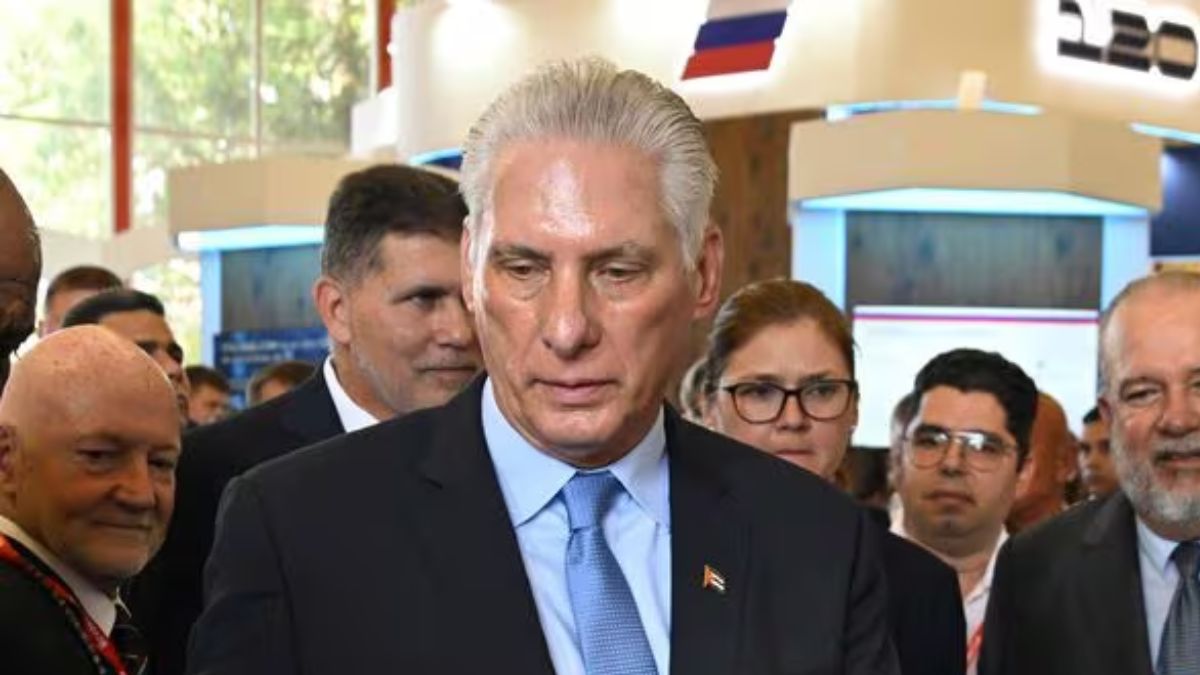
Cuban President Miguel Díaz-Canel has firmly denied that Havana is holding any talks with the United States, pushing back against growing pressure from Washington following recent US military action in Venezuela.
Speaking amid escalating regional tensions, Díaz-Canel said there have been “no conversations” with the US government, while reiterating that Cuba has always remained open to dialogue, but only on the basis of sovereign equality, mutual respect, and international law. He made it clear that Cuba would not engage in negotiations driven by threats or coercion.
The statement comes days after US President Donald Trump issued a stark warning to Havana, urging the island nation to “make a deal before it is too late.” In a sharply worded social media post, Trump declared that the United States would ensure “no more oil or money” reaches Cuba, directly targeting the country’s long-standing economic reliance on Venezuela.
Trump’s comments followed a major US military operation against Venezuela earlier this month. The strike resulted in the capture of former Venezuelan president Nicolás Maduro and marked a dramatic shift in power dynamics across the Caribbean and Latin America. Cuba, a close ally of Caracas for decades, has historically depended on subsidised Venezuelan oil supplies to sustain its economy.
Analysts warn that the sudden disruption of Venezuelan energy support could push Cuba into one of its most severe economic crises in years. Experts caution that fuel shortages, power outages, and supply chain disruptions could trigger widespread social unrest and renewed waves of migration if alternative arrangements are not found quickly.
While rejecting claims of diplomatic engagement, Díaz-Canel emphasised that Cuba has never closed the door to communication with Washington. However, he underlined that any talks must occur without pressure, sanctions, or threats to national sovereignty. Cuban officials have maintained that the only limited contact currently in place involves technical cooperation on migration matters, not political or economic negotiations.
The situation has further intensified political rhetoric in Washington. Trump has repeatedly accused Havana of supporting hostile regimes and has openly suggested extreme measures, including the possibility of reshaping Cuba’s political future. In recent remarks, he even floated the idea of US Secretary of State Marco Rubio leading Cuba, comments that were widely condemned by Cuban officials as provocative and unacceptable.
The Cuban government has framed the escalating pressure as an attempt to destabilise the country and undermine its independence. Officials argue that external interference will only deepen regional instability rather than resolve long-standing disputes.
As tensions continue to rise, there is little indication of an imminent diplomatic breakthrough. For now, both sides remain entrenched, with Cuba signalling defiance and the US escalating economic and political pressure. The unfolding standoff is being closely watched across Latin America, where fears are growing that further confrontation could have serious humanitarian and geopolitical consequences.
