

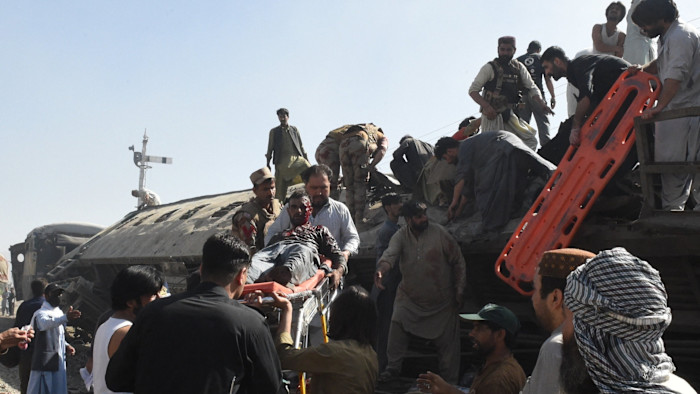
On Sunday, at least 24 people died, and more than 50 people sustained injuries as a result of a suicide car bomb targeting a train with military personnel in Quetta, the provincial capital of Balochistan, which has been troubled recently. The Balochistan Liberation Army (BLA) claimed responsibility for the bombing, which caused rail car derailments, fires along the track, and other damage.
As the attack occurred, Prime Minister Shehbaz Sharif was visiting China for the 75th anniversary of bilateral relations. Pakistan has condemned this terrorist act and expressed the Prime Minister’s commitment to defeating terrorism. Quetta’s hospitals have declared a state of emergency, with ongoing rescue operations.
In recent months, the BLA, a separatist organisation pursuing an independent Balochistan, has increased its activities. The BLA opposes Chinese investment in Balochistan through the China-Pakistan Economic Corridor (CPEC), particularly at Gwadar port and in Reko Diq and other mining operations. Despite Balochistan’s vast natural resources, including gold, copper, and rare earth minerals, it is still considered the poorest province in Pakistan.
Violence has risen sharply. Data from the Pakistan Institute for Peace Studies shows 254 attacks in Balochistan in 2025 — a 26% increase from 2024. The BLA’s dramatic hijacking of the Jaffar Express earlier this year highlighted its growing boldness.
Analysts link the surge to long-standing grievances over resource exploitation, marginalisation, and heavy military presence. The province has seen multiple insurgencies since 1948. While Pakistan accuses external forces of backing the militants, the BLA insists it is fighting for Baloch rights.
The latest attack raises fresh concerns about regional stability and the safety of Chinese workers and major infrastructure projects.