
President Trump is warning Britain and Canada that deepening trade ties with China is “very dangerous.” His comments come as both countries explore new economic partnerships to reduce reliance on the United States.
Trump targets the UK and Canada
Speaking in Washington, Trump first criticized the United Kingdom. He said it’s too risky for the UK to pursue closer trade with Beijing. He then turned to Canada, claiming that doing business with China is “even more dangerous” for them. Trump added that Canada is “not doing well” economically and looking to China for solutions is a mistake.
Trump also made an unusual prediction. He said China might forbid Canadians from playing ice hockey, jokingly warning, “That’s not good, Canada’s not going to like that.” Observers noted this bizarre logic may stem from Trump’s continued fixation on his unproven claims about the 2020 election.
Western leaders move ahead with China deals
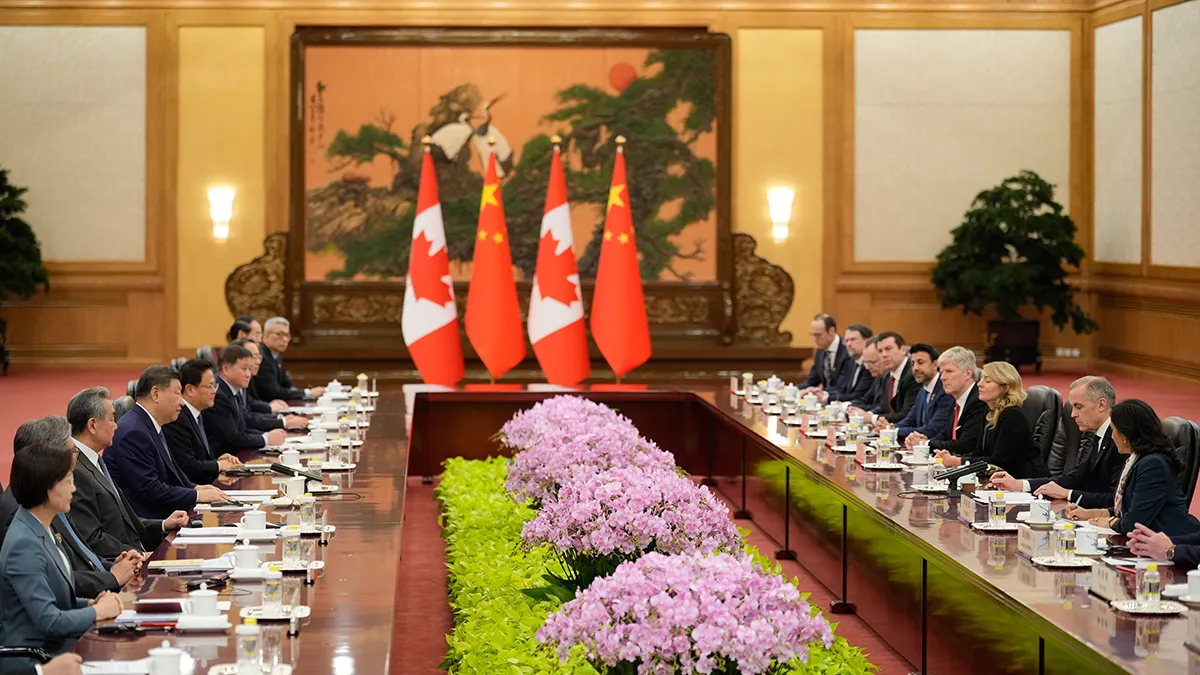
Trump’s warnings come after major visits by Western leaders to China. British Prime Minister Keir Starmer, the first British leader to visit since 2018, met Xi Jinping at the Great Hall of the People. Starmer emphasized the benefits of cooperation, while Xi presented China as a reliable global partner.
Canada’s Prime Minister Mark Carney also visited China recently. Canada agreed to lower tariffs on certain Chinese electric vehicles, while China reduced tariffs on Canadian canola products. Initially praised by Trump, the deal later drew threats of 100% tariffs in retaliation.
Many analysts say Britain and Canada are diversifying to reduce dependence on the U.S. Relations with Trump’s administration have been unpredictable, with frequent tariff threats and public disputes. Canada has faced multiple issues, including threats related to aircraft trade and even remarks about annexation.
At the Davos economic forum, Prime Minister Carney highlighted growing instability, saying there has been a “rupture” in Europe’s reliance on American leadership. Trump’s latest remarks appear to respond directly to that shift.
The tensions highlight the challenges U.S. allies face as they balance trade opportunities with China against political and economic pressures from the United States.
