

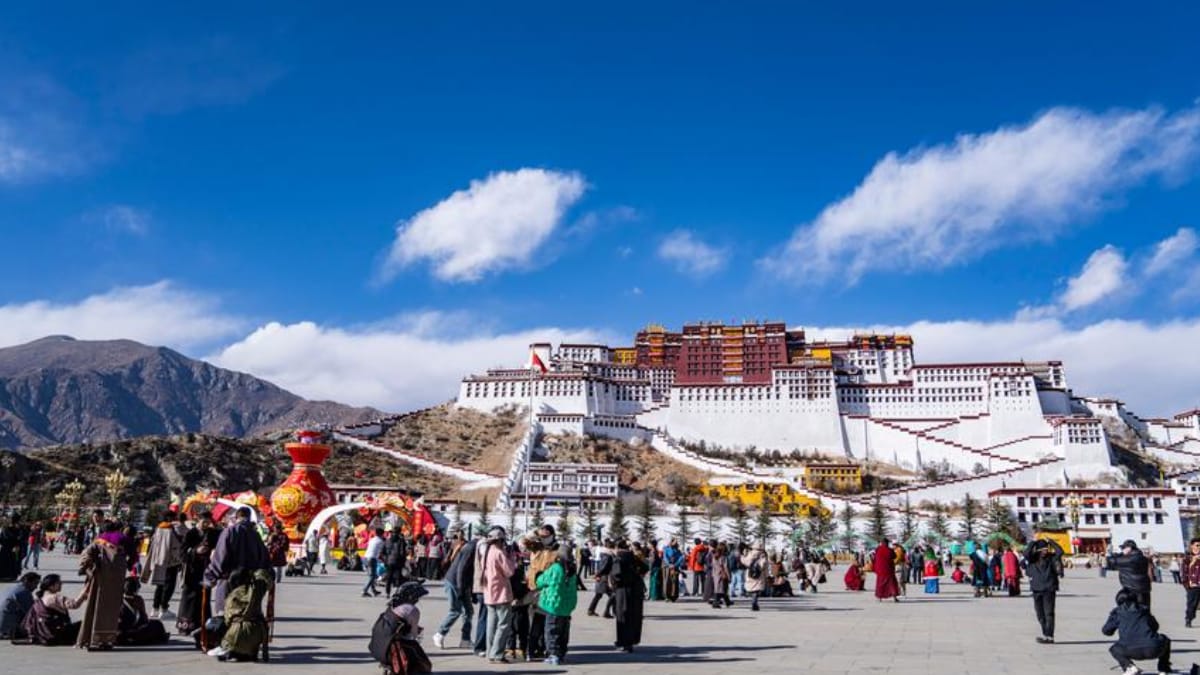
China’s Xizang Autonomous Region, widely known as Tibet, concluded 2025 with unprecedented tourism figures, welcoming over 70.7 million domestic and international visitors. This represents a notable 10.71% increase from the previous year. The surge has cemented the sector’s status as a vital economic engine, generating 81.68 billion yuan (approx. £9.2 billion) in revenue a 9.51% year-on-year rise that now accounts for nearly 30% of the region’s GDP. While this rapid expansion has brought undeniable prosperity to the “Roof of the World”, it has also ignited a fierce debate regarding environmental preservation and cultural integrity.
Unprecedented Growth: Economic Gains and Strategic Development
The transformation of Tibet from a remote destination to a modern tourism hub has been driven by strategic infrastructure improvements and targeted government campaigns. Since the opening of the Qinghai-Tibet Railway in 2006, accessibility has improved dramatically, allowing visitor numbers to multiply tenfold since 2010. Inbound tourism specifically saw a sharp rise in 2025, with foreign visitor numbers increasing by 36.5% to approximately 71,000, generating over $158 million (£124 million) in the first three quarters alone. The capital city, Lhasa, remains the primary draw, hosting 50.51 million tourists, while iconic heritage sites such as the Potala Palace and Jokhang Temple continue to attract vast crowds.
Beyond the major cities, the region’s appeal is bolstered by over 58,000 identified tourist resources, ranging from high-altitude treks near Mount Everest and Lake Namtso to rich cultural festivals. Initiatives like the “Winter Tour of Xizang” and digital platforms hosting 2.5 million virtual visits have successfully extended the tourism season. Proponents argue that this boom provides crucial economic support for local communities. The cultural industry’s output soared to 15.01 billion yuan, creating employment for 310,000 farmers and herders. Through rural tourism initiatives, personal incomes in these sectors have risen by nearly 5,000 yuan, with visitor satisfaction rates reported at over 87%.
The Cost of Expansion: Ecological Strain and Cultural Preservation
Despite the economic headlines, the sheer scale of human traffic has raised serious concerns. With over 70 million visitors descending upon a region with a local population of just 3.65 million, the ratio of tourists to residents is nearly 20 to 1. Critics warn that this level of “overtourism” threatens the fragile ecosystem of the Himalayas. The influx has exacerbated water shortages, pollution, and habitat disruption, while activists highlight that infrastructure projects, such as dams and mining associated with development, risk causing irreversible damage to the local environment.
Furthermore, there are growing fears that sacred sites are becoming akin to “theme parks”, diluting authentic Tibetan identity. Critics argue that assimilation policies and strict controls on foreign access further erode local heritage. The pressure on historic sites has led to calls for UNESCO to list the Potala Palace as “World Heritage in Danger” due to the strain of mass tourism and rapid modernisation. As Xizang targets 78 million tourists in 2026 under the 14th Five-Year Plan, the region faces a delicate balancing act to sustain economic momentum without sacrificing the unique environment and cultural heritage that make Tibet extraordinary.