

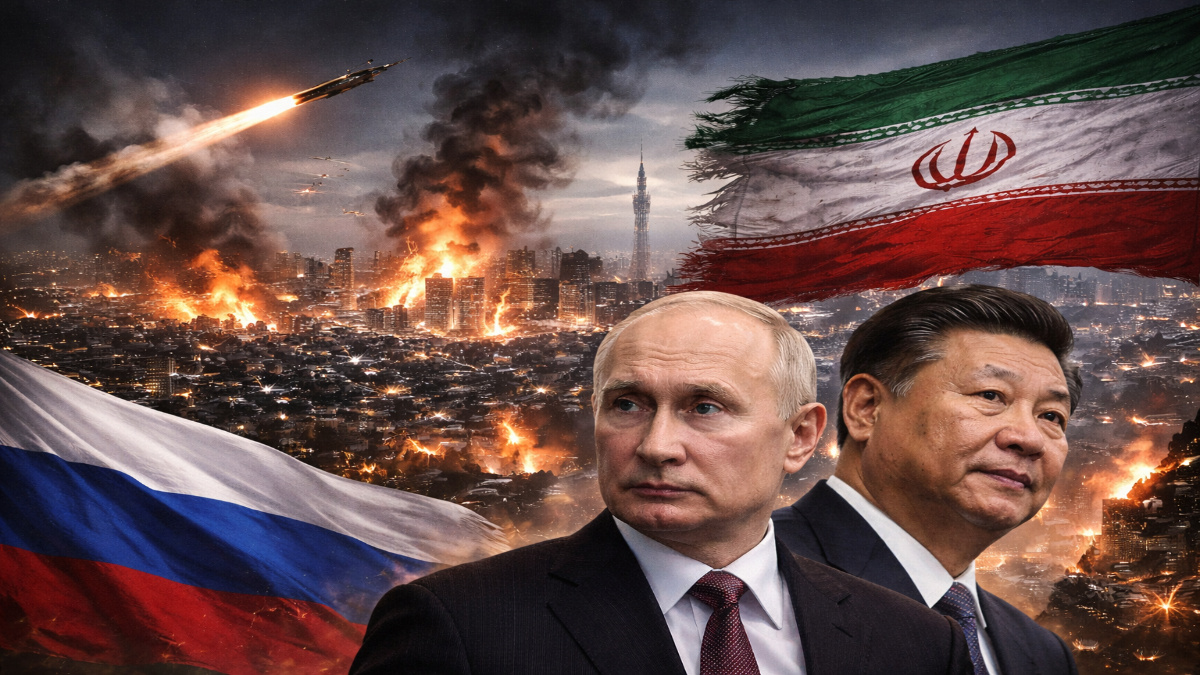
The increasing tension between Iran, the United States, and Israel has put Tehran in one of the most dangerously strategic positions in its recent history. As Iranian Supreme Leader Ali Khamenei is allegedly assassinated in the escalating hostilities and the military infrastructure of the country is continually targeted by organized attacks by the U.S. and Israel, Iran is becoming more and more isolated in the international arena. Although Iran has had enduring strategic alliances with the world superpowers like Russia and China, the attacks have been met with little, other than diplomatic denunciation of the Iranian government by the world, instead of a real military reinforcement. The reserved reaction of Moscow and Beijing is based on a geopolitical calculation and not on a break-up of alliances.
Iran has reacted to the strikes in a very swift and far-reaching manner. Tehran has worked towards taking the conflict outside the immediate theatre of the Middle East through its missiles and drones which have been able to travel way farther than its borders. Projectiles have been reported to have landed or been intercepted in and around territories such as Cyprus, Azerbaijan, Turkey and various Gulf states, thus bringing the conflict close to the doorstep of various regional players. The Iranian forces have also attacked the energy infrastructure, oil facilities and U.S military installations in the region. These attacks have not only contributed to the increase in military tension, but also caused massive shocks in the world energy markets.
Among the short-term effects of the escalating war has been the interference of shipping via the Strait of Hormuz. This is a very small maritime passage through which two-thirds of the global oil passes making it one of the most important energy transit routes in the planet. The global crude prices have shot up drastically as shipping traffic has been seriously disrupted and insurance rates of ships have soared. Washington to Beijing energy markets have been shaken by the fear of protracted shortages of supply. The consequential volatility has forced governments and financial institutions to scramble in the eventualities thus highlighting how the globe is deeply exposed to instability in the Gulf region.
Russia and China have been quite restrained despite their strategic relationship with Iran. Analysts generally view this wary policy as the outcome of a calculation of coldness by the two powers. The direct involvement in a war between the United States and Israel would be associated with tremendous military and financial risks and insignificant strategic advantages. In the case of Moscow especially, such a confrontation would be most inappropriate in terms of timing. Russia is still heavily involved in the current war against Ukraine which since 2022 has consumed colossal military resources and political focus.
According to experts, the Kremlin is still heavily concentrated on the Ukrainian battlefield. The regional analysts are of the opinion that Russian President Vladimir Putin has no reason to engage in open confrontation with the United States when his army is fulfilled in other regions. In fact, even the Russian officials admit privately that the crisis in the Middle East can even have some indirect benefits to Moscow. With the United States shifting diplomatic focus and military resources to deal with the Iran crisis, the global attention is bound to turn a blind eye on Ukraine.
This is the same strategic restraint that was observed in the response of China. Over the years, Beijing has been able to develop influence in the Middle East by trading, energy relations, and diplomatic missions. Nevertheless, the regional involvement of china has never been accompanied with commitment to security that could subject it to expensive wars. The Chinese alliances are not the same as the ones of the United States which are usually based on formal mutual defense agreements. Rather, Beijing is more likely to focus on economic relationships based on the trade, investment in infrastructure, and weapons sales.
This strategy represents larger strategic interests of China. Although the city of Beijing is still worried about home-based security issues such as tensions in Taiwan and conflicts in the South China Sea. Shifting military interest to a large-scale Middle East war would spread out strategic Chinese interests in Asia, which Chinese policy makers will not take. Consequently, China has mostly reduced itself to diplomatic work, demanding de-escalation and promoting dialogue among regional players.
This has created an impressive geopolitical paradox. Iran is also a strategic asset to Russia and China as a larger alliance against the influence of the West. However, the ongoing crisis shows that there are constraints to that alliance. Although Tehran is a valuable regional balancing force to U.S. influence, neither Moscow nor Beijing seems to be ready to engage in a military conflict on its behalf. Basically, Iran is convenient to both parties- but not convenient to war on.
Simultaneously, there are complicated economic consequences of the conflict to the great powers of the world. As a major importer of its oil via the Strait of Hormuz, China is especially exposed in the event of continuing shipping disruptions. Almost half of Chinese crude imports will pass through the Gulf region and this prolonged instability can pose a threat to the energy security of China. Nonetheless, observers observe that Beijing has established significant levels of strategic petroleum reserves as well as already stored tremendous volumes of Iranian crude in storage and tanker fleets.
In the meantime, both Russia and China can have strategic benefits that are indirectly related to the crisis. In the view of Moscow, the world oil prices may skyrocket, which will give the Russian oil exports a boost in revenues and relief to the economy facing sanctions in the West. In the perspective of Beijing, the war enables the Chinese planners to monitor the American military activities and the logistics reactions on the spot. This information would be useful in contingency planning in future especially in situations involving Taiwan or other regional conflicts.
At the diplomatic level, Russia and China have tried to establish themselves as potential mediators and not as fighters. Wang Yi, the Chinese Foreign Minister has also been reported to have had discussions with the European and Arab representatives to promote dialogue and de-escalation. Likewise, President Vladimir Putin has held talks with the Gulf leaders and the Iranian government offering Moscow as a possible mediator that can be used to negotiate.
Such diplomatic efforts have various strategic functions. Through dialogue, the two nations will be seen as responsible international actors who promote stability. Meanwhile, they do not incur the political and military expenses of direct intervention. The strategy enables Moscow and Beijing to have ties with as many regional actors as possible such as the Gulf states that may respond adversely to open support of Iran.
Finally, the constant crisis is used to highlight the changing nature of the world in terms of geopolitics. The antagonisms that Iran has had with the United States and Israel have not only contributed to the tension in the region, but they have also shown the constraints of the international relations of Tehran. Despite the fact that Russia and China still show political empathy towards the position of Iran, their responses are always aimed at the national interests rather than an ideological unity.
Currently the two forces appear to be adhered to the strategy of restrained observation, diplomatic participation and strategic patience. The possibility of this equilibrium being maintained will depend largely on what will transpire in the course of the conflict in the next several weeks. In case the hostilities escalate further or involve more regional players in the conflict, geopolitical calculations of Moscow and Beijing will be questioned again.