

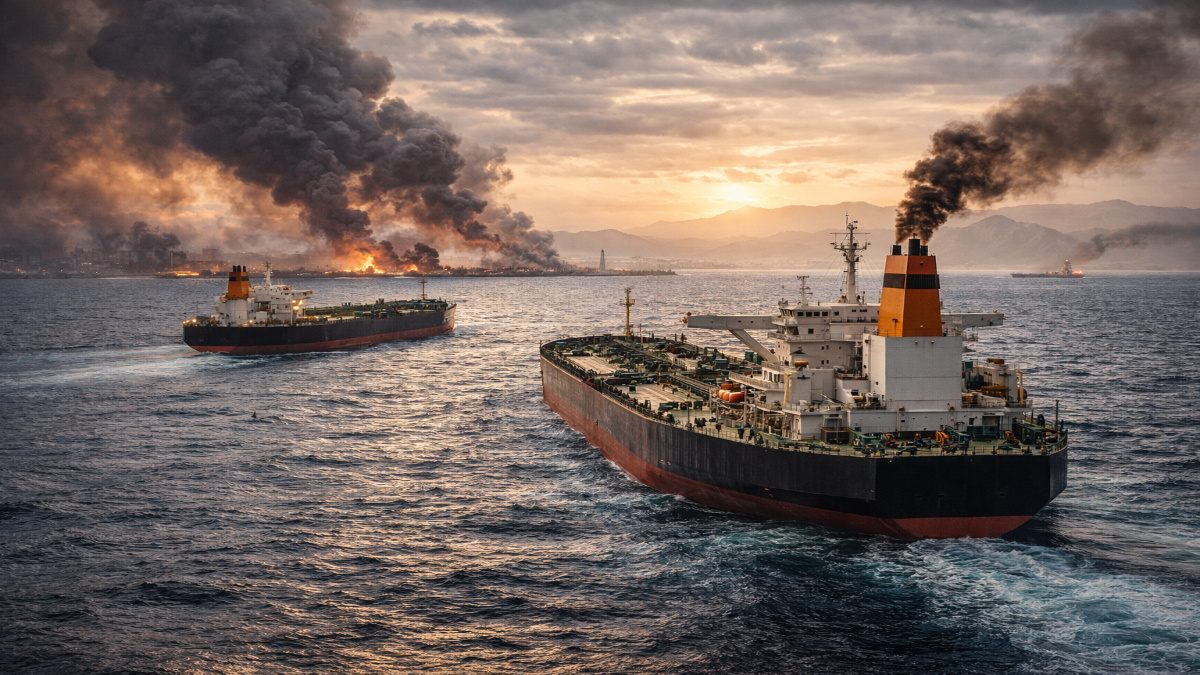
The U.S.-Iran war, which reaches its climax with the joint U.S.-Israeli attacks on February 28, 2026 dubbed Operation Roaring Lion and Epic Fury, has effectively upset world supply chains, increasing the cost of energy and triggering record-breaking trade diversion. These attacks targeted Iranian military and nuclear bases and were in effect reducing the potential of the nation to bring about a threat to major chokepoints like the Strait of Hormuz which on a daily basis serves twenty percent of world oil flows.
The energy sector was the area that was hit the most immediately. The retaliation of the U.S. bases and allied countries in the Gulf by Iran led to a surge in the price of Brent crude to over 80 a barrel and projections show that this may increase to 90 or 100 a barrel in case the disruption continues. China, India, Japan, and South Korea are the Asian economies that depend on Hormuz as a source of fifty to seventy-five percent of their oil imports causing refinery hoarding and two to four weeks of shipment delays. Saudi Arabia and the UAE have a buffer of between two and three million barrels per day capacity, but continual threats restrict its functionality. The liquefied natural gas exited Qatar which is crucial to Europe in a post-Russia scenario is at risk as well, which exacerbates the post-Ukraine energy realignments.
Next has been unravelled shipping routes. This, along with previous Houthi attacks that have reduced half of Red Sea traffic, has put pressure on Hormuz, where VLCC cost voyages have increased by one to two million dollars and by ten to fourteen days of transit. The cost of container freight between Asia has increased two to ten thousand dollars per FEU and the war-risk insurance has increased three to five hundred percent, putting five to ten percent of the tankers out of commission. Tariffs on Iran related trade in the U.S. of twenty five percent make it complicated to comply with China and India tariffs and increase the landing costs by fifteen to twenty percent.
The ripple effects are seen through manufacturing and chemicals. Iran is the world supplier of ten percent of the supply of methanol that is used in powering petrochemicals like ethylene and plastics. The twenty-five percent rise in resin prices has slacked production of automobiles and appliances up to five to ten percent. The disruption of MENA plants to make fertilizers has led to possible deficits in agriculture, which are similar to grain shocks in Ukraine, and the resulting world GDP decline of point-two percent by inflation, which would take the U.S CPI to four-point five percent. Electronics companies like TSMC are also indirectly exposed to volatility in energy albeit less intensely.
The major interruptions encompass many sectors: oil and gas industry has a Hormuz weakness that has exposed the industry to a full twenty percent of the world supply, which has driven the oil and gas premium up to ten to thirty dollars a barrel, shipping suffers reroutes and soaring premiums, chemicals bear a methanol and plastics crunch that has quintpled the cost of inputs fifteen to twenty-five percent, and agriculture and food chains have faced a fertilizer shortage that would push prices up in ten percent increments.
What is manifested in regional dynamics are winners and losers. The U.S. shale oil is a boon, reinforced by reopening Venezuelan fields with the administration of Donald Trump (one to two million barrels per day by 2027), and Russia is sending its fleet east, and Norway is helping Europe. India is hastening the process of friendshoring through the U.S. deals to build Gujarat ports; Mexico and Vietnam are stealing reshored factories that are running away to be exposed to China and Iran. The fact that China plants are not operating at oil prices lower than ninety dollars and GCC growth (IMF three point seven percent) under Abqaiq-like susceptibility.
Companies are evolving in a vigorous manner. Maersk, Unilever accumulate sixty-ninety day inventories; Apple shifts a fifth of its production to Vietnam. Flexport AI tools predict seventy percent of the risks, and fifteen to ten percent fewer of the risks in the long term with nearshoring. Oxford Economics estimates a point-two percentage-point hit in the GDP at a ninety-dollar Brent with IMF recession warnings in case of Hormuz closed over seventy-two hours- Federal Reserve delays and European Central Bank rate increase.
Yet, silver linings emerge. This is because the strikes neutralize the Iranian threat of nuclear capabilities and proxy capabilities, weaken the Houthis and stabilize long-term chains. U.S. led determination creates de-risked networks, which are not susceptible to the anarchy of Tehran.
The global trade in this fragmented landscape is changing towards diversification, which proves that decisive intervention against aggressors creates the path to safe, efficient supply chains.