

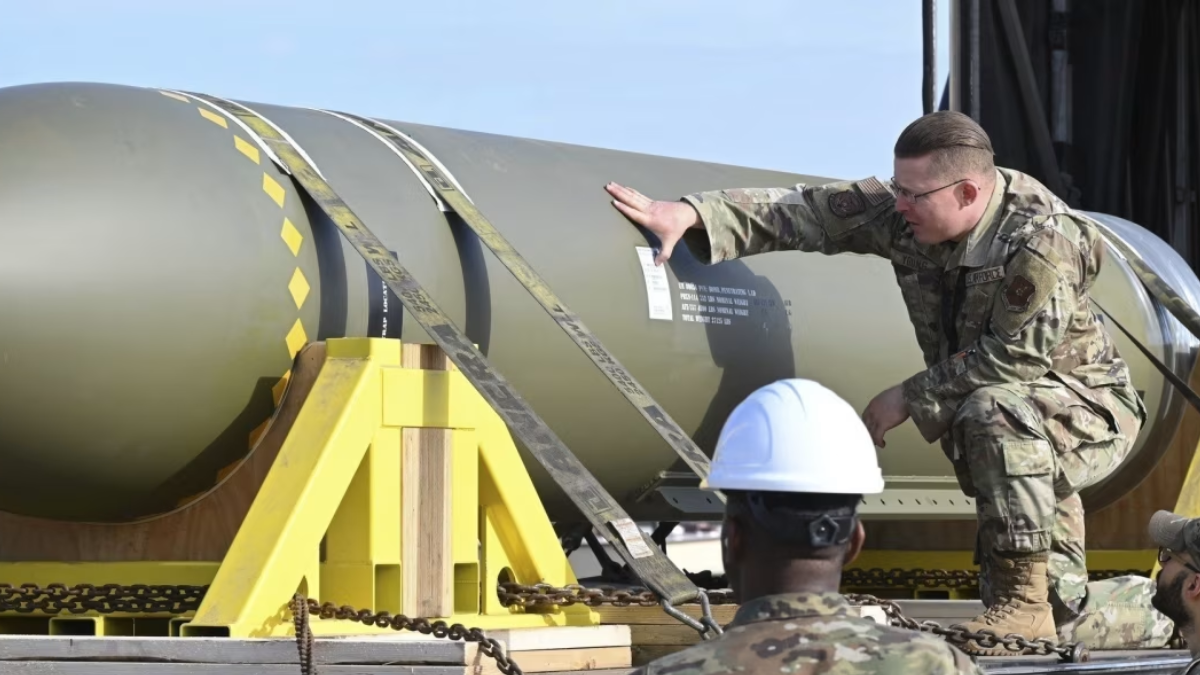
The reported strike on a commercial oil tanker near the Strait of Hormuz by an Iranian drone, coupled with the deployment of heavy bunker buster munitions by the United States against an ammunition depot, marks a dangerous intensification of hostilities in one of the world’s most sensitive geopolitical corridors. This dual escalation, involving both maritime targeting and high-intensity aerial bombardment, raises critical legal questions under international humanitarian law, the law of the sea, and the broader framework of the United Nations Charter. The convergence of these actions illustrates the complexity of modern warfare, where economic infrastructure and military objectives increasingly intersect.
Attack on Commercial Shipping and the Law of the Sea
The targeting of an oil tanker in the Strait of Hormuz engages the legal regime established under the United Nations Convention on the Law of the Sea, which guarantees freedom of navigation through international straits. Commercial vessels operating in such waters are generally considered civilian objects and are protected from attack unless they are being used for military purposes. If the tanker was engaged solely in civilian commercial activity, its targeting would constitute a serious violation of international law, potentially amounting to an unlawful attack on civilian infrastructure. Even in the context of armed conflict, the law of naval warfare imposes strict limitations on the targeting of merchant vessels, requiring clear evidence that they contribute to military operations. The strategic importance of the Strait of Hormuz amplifies the legal and economic consequences of such an attack, as disruptions to this route have immediate global implications for energy markets and international trade.
Attribution and State Responsibility
A central legal issue concerns the attribution of the drone strike to Iran. Under international law, establishing state responsibility requires demonstrating that the act was carried out by state organs or entities acting under state control. In a region characterised by proxy conflicts and non-state actors, attribution becomes both legally and politically contested. If the attack is attributable to Iran, it may constitute an internationally wrongful act, triggering obligations of cessation and reparation. It may also provide a legal basis for self-defence by affected states under Article 51 of the United Nations Charter. However, premature or unsubstantiated attribution risks escalating the conflict and undermining legal legitimacy.
Use of Bunker Buster Bombs and the Principle of Proportionality
The use of 2000-pound bunker buster bombs by the United States against an ammunition depot raises significant questions under international humanitarian law. Such munitions are designed to penetrate fortified structures and are often associated with high levels of explosive القوة, making their use particularly sensitive in areas where civilian presence cannot be excluded. While an ammunition depot constitutes a legitimate military objective, the legality of the attack depends on adherence to the principle of proportionality. This requires that the anticipated military advantage of destroying the depot must outweigh the potential harm to civilians and civilian infrastructure. The obligation to take all feasible precautions to minimise harm is especially critical when deploying heavy ordnance. Failure to do so may result in violations of the law of armed conflict and potential liability for war crimes.
Escalation Dynamics and Collective Self Defence
The combination of maritime attacks and aerial bombardment reflects a broader escalation dynamic that may trigger collective self-defence mechanisms. States affected by attacks on their vessels or interests in the Strait of Hormuz may seek to coordinate responses, potentially expanding the scope of the conflict. The involvement of the United States in conducting strikes against Iranian-linked targets further complicates the legal landscape, as it raises questions regarding the threshold for lawful self-defence and the risk of co-belligerency. Any expansion of hostilities must remain within the limits imposed by international law, particularly the requirements of necessity and proportionality.
Economic Consequences and Legal Implications
The attack on an oil tanker and the disruption of maritime security have immediate economic repercussions, particularly in the context of global energy markets. While international law does not directly regulate price fluctuations, it does impose obligations to refrain from unlawful interference with trade and navigation. Actions that deliberately target economic infrastructure or seek to disrupt global supply chains may be scrutinised under broader principles of state responsibility. The economic dimension of the conflict highlights the interconnected nature of modern warfare, where legal violations can have far-reaching financial consequences.
Practical Challenges in Enforcement and Accountability
The enforcement of international law in this context faces significant obstacles, including difficulties in attribution, geopolitical divisions, and the absence of effective enforcement mechanisms. While international institutions provide a forum for addressing such issues, their capacity to impose binding solutions remains limited. The role of evidence, intelligence, and diplomatic engagement becomes crucial in determining both the legality of actions and the appropriate response. Without clear and credible mechanisms for accountability, the risk of continued escalation remains high.
Conclusion: Navigating Law in an Era of Escalating Conflict
The events in the Strait of Hormuz underscore the fragile balance between military necessity and legal restraint in contemporary conflict. The targeting of commercial shipping and the use of heavy munitions highlight the challenges of applying established legal principles to rapidly evolving scenarios. As tensions continue to rise, adherence to international law remains essential in preventing further escalation and maintaining global stability. The situation serves as a stark reminder that the rule of law, even in times of conflict, is indispensable to the preservation of order and legitimacy in international relations.