

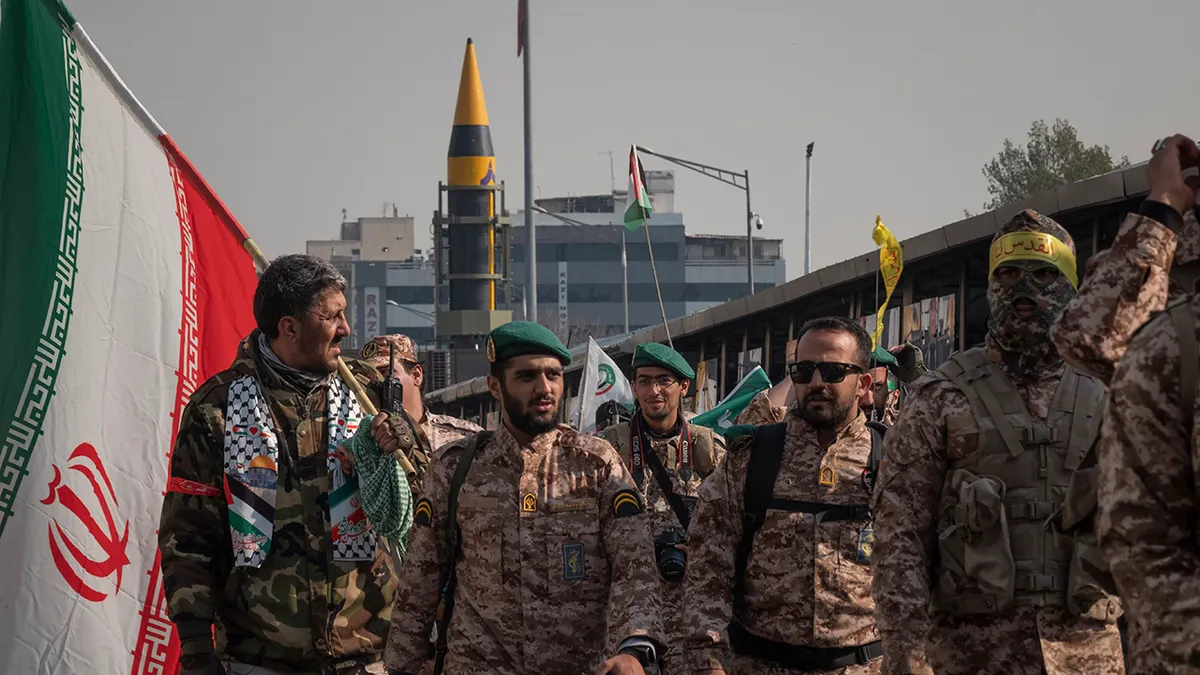
The declaration of victory by Ali Khamenei following hostilities with the United States, coupled with demands for reparations, represents a complex intersection of political narrative and international legal doctrine. Such statements, regardless of their factual accuracy, carry implications for the legal characterisation of the conflict, the attribution of responsibility, and the potential pathways for post conflict settlement. The framing of victory and entitlement to reparations must therefore be assessed against the established principles of international law rather than rhetorical positioning.
The Legal Framework of War Termination and Victory Claims
International law does not formally recognise unilateral declarations of victory as determinative of legal outcomes. The conclusion of armed conflict is typically marked by ceasefire agreements, peace treaties, or mutual cessation of hostilities. In the absence of such instruments, the legal status of the conflict remains ambiguous, and claims of victory retain primarily political significance. The assertion of victory by Iran must therefore be understood as part of a strategic narrative rather than a legally binding determination. However, such narratives may influence diplomatic negotiations and public perception, thereby indirectly shaping the legal and political landscape.
Reparations in International Law: Principles and Preconditions
The demand for reparations engages the doctrine of state responsibility, which holds that a state responsible for an internationally wrongful act is obligated to make full reparation for the injury caused. This principle, articulated in the Articles on State Responsibility developed under the auspices of the United Nations, requires the establishment of several key elements. First, there must be a breach of an international obligation attributable to the respondent state. Second, there must be a causal link between the breach and the injury suffered. Third, the form and extent of reparation must correspond to the damage incurred. In the context of the Iran United States conflict, establishing these elements presents significant challenges. Both parties are likely to assert competing claims regarding the legality of their actions, including arguments based on self defence under Article 51 of the United Nations Charter.
Attribution and Competing Legal Narratives
A central issue in assessing Iran’s reparations claim is the attribution of unlawful conduct. The United States may argue that its actions were justified as self defence in response to threats or attacks emanating from Iranian territory or affiliated groups. Conversely, Iran may contend that United States operations constituted unlawful use of force. The resolution of such competing narratives requires an objective assessment of facts and legal standards, often through international adjudication or arbitration. However, in the absence of mutual consent to such processes, the likelihood of a definitive legal determination remains limited. This dynamic underscores the difficulty of translating political claims into enforceable legal outcomes.
The Role of the International Court of Justice
The International Court of Justice provides a forum for the adjudication of disputes between states, including claims for reparations. However, its jurisdiction depends on the consent of the parties involved. Without such consent, Iran cannot unilaterally compel the United States to submit to the Court’s jurisdiction. Even where jurisdiction is established, proceedings before the Court are complex and time consuming, requiring detailed evidence and legal argumentation. The enforcement of judgments also depends on compliance by the parties or action by the United Nations Security Council, which may be constrained by political considerations.
Political Messaging and Strategic Leverage
The demand for reparations must also be viewed through the lens of strategic communication. By asserting entitlement to compensation, Iran positions itself as a victim of unlawful aggression, thereby seeking to shape international opinion and gain diplomatic leverage. Such messaging may influence negotiations, particularly if it resonates with broader concerns about the use of force and the protection of sovereignty. However, without a clear legal foundation, these claims are unlikely to translate into tangible outcomes.
Economic Implications and the Feasibility of Compensation
Even if a legal basis for reparations were established, the practical feasibility of obtaining compensation remains uncertain. The United States, as a major global power, is unlikely to agree to substantial reparations absent compelling legal and political pressure. Economic sanctions, asset freezes, and other financial measures further complicate the situation, as they may offset or negate potential compensation claims. The interplay between legal entitlement and economic reality highlights the limits of international law in enforcing reparations.
Conclusion: Between Law, Politics, and Post-Conflict Accountability
The declaration of victory by Iran and the accompanying demand for reparations illustrate the complex relationship between political narrative and legal principle. While international law provides a framework for addressing state responsibility and compensation, its application depends on clear evidence, mutual consent, and effective enforcement mechanisms. In the absence of these elements, such claims remain largely symbolic, serving as instruments of political positioning rather than enforceable rights. The situation underscores the broader challenge of ensuring accountability in international relations, where legal norms often intersect with strategic interests and power dynamics.