

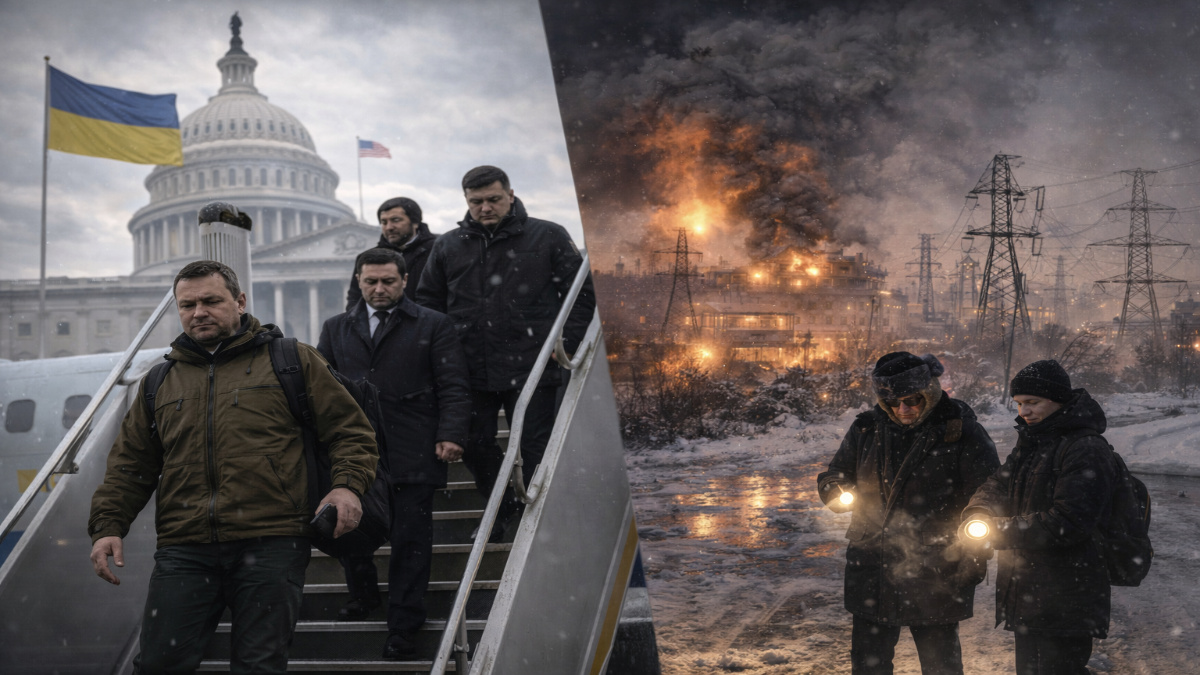
On Saturday, a Ukrainian delegation came to the United States to discuss a U.S. diplomatic initiative to end the war, which is almost four years old, and Russia continued to attack Ukraine, disrupting the power supply of many people, who now had no electricity and heating in the freezing temperatures. Kyrylo Budanov, who is the chief of staff of President Volodymyr Zelenskyy, reported that the delegation came to negotiate the specifics of the peace agreement. Budanov will also hold a meeting with the U.S. envoy Steve Witkoff, President Donald Trump son-in-law Jared Kushner, and U.S. Army Secretary Dan Driscoll alongside negotiators Rustem Umerov and Davyd Arakhamia. Zelenskyy indicated on Friday the delegation is planning to sign papers on an envisaged peace settlement on postwar security assurances and economic restoration.
In case the U.S. goes through with the proposals, Ukraine and the U.S. may sign the documents next week in the World Economic Forum in Davos, Switzerland, where Trump will also be present. Russia would still have to consult on the proposals. In the meantime, Russia attacked energy infrastructure in Kyiv and Odesa regions in Ukraine overnight on Saturday, the Ministry of Energy reported. Over 20 settlements were also left without power in the Kyiv region. Russian military operations against the power grid in Ukraine have continued, especially during winter in an operation Kyiv officials refer to as weaponizing winter. New energy minister Denys Shmyhal of Ukraine stated that Russia had made more than 612 attacks on energy infrastructure in the previous year, and the attacks had been becoming more frequent in recent months with the temperature dropping to minus 18 degrees Celsius (0 Fahrenheit) at night.
As a reaction to this, Ukraine has adopted emergency steps, such as temporarily lifting curfew restrictions in order to allow people to visit public heating facilities. Electricity and heat are of first priority to hospitals, schools, and other critical infrastructure. Energy firms in the state, Ukrzaliznytsia, Naftogaz and Ukroboronprom have been asked to immediately buy imported power to meet at least half the demand. The work of the delegation and the current Russian strikes help to highlight the two-fold pressures experienced by Kyiv, developing diplomatic options and defending civilians in the face of a bitter winter and endless assaults.