
- 10:19 AM (IST) 22 Jan 2026Latest
Trump announces “framework of future deal” on Greenland after tariff threat withdrawn
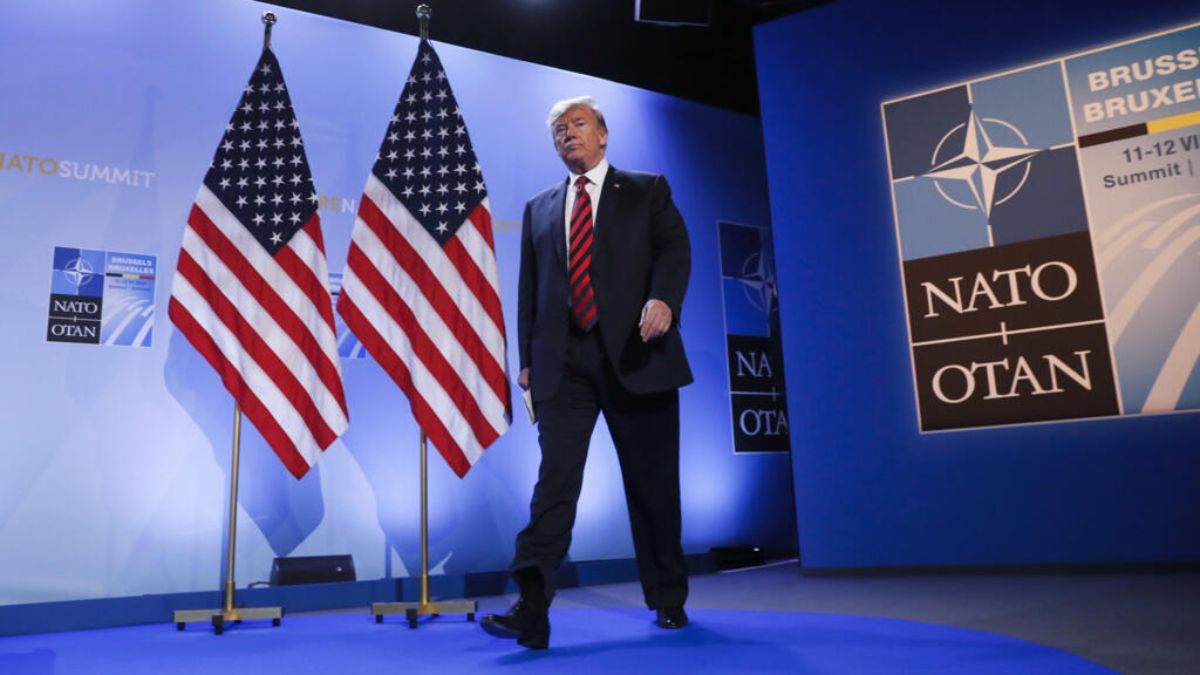
Following his decision to step back from threatened tariffs on countries supporting Greenland, US President Donald Trump said a framework for a future deal concerning Greenland has been established. Posting on Truth Social after his World Economic Forum speech in Davos, Trump stated that he and NATO Secretary‑General Mark Rutte “formed the framework of a future deal with respect to Greenland and, in fact, the entire Arctic Region.” He confirmed that the tariffs scheduled to take effect on February 1 would not be imposed.
Trump also indicated that further discussions are ongoing regarding his proposed “Golden Dome” defence system as it relates to Greenland, and additional details are expected as negotiations continue.
From a legal perspective, any framework or proposed arrangement concerning Greenland would require formal participation and consent from Greenland’s authorities and Denmark under international law, including principles of sovereignty and self-determination, and has no binding effect until formally ratified by the relevant governments.
- 10:09 AM (IST) 22 Jan 2026
Australian shares rise as Trump backs off Greenland tariff threat
Australian shares climbed on Thursday, recovering part of recent losses, after President Donald Trump withdrew a threatened tariff on European allies amid his campaign to gain control of Greenland. The easing of tensions sparked a global market rally that extended to Australia, briefly pushing the S&P/ASX 200 above 8,860 points before a modest pullback.
The US president’s retreat again rewarded investors following the so-called “Trump Always Chickens Out” (Taco) trade strategy, which relies on markets anticipating that he will back down from trade threats. Trump has described a “framework of a future deal” on Greenland but has provided few details. Danish MP Sascha Faxe called the claimed deal “not real,” noting that Greenland itself was not involved in the negotiations.
Market commentators highlighted both opportunities and risks. Veteran analyst Michael McCarthy said geopolitical tensions and other factors, including inflation and a potential US bond sell-off, could trigger corrections, while Chris Weston of Pepperstone observed that investors will want clarity on the details of Trump’s Greenland framework before discounting European risk.
Australia’s share market benefited from strong commodity prices, particularly iron ore, gold, and copper, though gains were tempered by inflation pressures and the prospect of a near-term interest rate hike. A jobs report showing employment growth increased expectations of a rate rise, which can limit stock market performance. By afternoon, the ASX 200 had risen roughly 0.6%, adding about AUD 17 billion in market value, while the Australian dollar reached a 15-month high against the US dollar at around 68 US cents.
From a legal perspective, any US-imposed tariffs must comply with World Trade Organization rules, including obligations against unilateral or discriminatory trade measures, and any announcements regarding Greenland remain non-binding unless formally agreed with Denmark and Greenland under international law.
- 10:07 AM (IST) 22 Jan 2026
French presidency rejects Trump’s claims on drug prices
The French presidency has dismissed President Trump’s remarks suggesting that Emmanuel Macron raised medicine prices, calling the claims “fake news.” In an official statement, it clarified that Macron does not set drug prices in France, which are regulated by the social security system and have remained stable. The statement added that anyone visiting a French pharmacy would be aware of this.
From a legal perspective, the regulation of medicine prices in France is governed by national health and social security law, and individual political leaders do not have unilateral authority to alter pricing, making Trump’s claims factually and legally inaccurate.
- 10:00 AM (IST) 22 Jan 2026
Trump praises US-Egypt ties in Davos meeting
President Donald Trump described the relationship between the United States and Egypt as “fantastic” during a pull-aside meeting with Egypt’s president, adding that the ties have been “very strong from the beginning.”
From a legal perspective, bilateral relations such as these operate within the framework of international law and diplomatic norms, including the Vienna Convention on Diplomatic Relations, which governs the conduct of official interactions between sovereign states.
- 9:58 AM (IST) 22 Jan 2026
“Board of Peace” to be launched in Davos
President Donald Trump is scheduled to unveil his new “Board of Peace” and hold talks with Ukraine’s leader in Davos on Thursday, following his retreat from threats over Greenland.
During his second day at the Swiss ski resort, Trump plans to promote the organisation, which is intended to address global conflicts, through a signing ceremony for the group’s charter.
From a legal perspective, any international body aiming to mediate or resolve conflicts has no formal authority under international law unless established through multilateral treaties or recognised by the United Nations and participating states. Unilateral initiatives, such as the “Board of Peace,” carry no binding legal status.
- 9:54 AM (IST) 22 Jan 2026
Oil prices goes up!
Oil prices edged higher on Thursday after President Donald Trump eased tensions with Europe by withdrawing his threatened tariffs over Greenland. Prices were also supported by supply disruptions at two major oil fields in Kazakhstan and a stronger demand outlook for 2026.
Brent crude rose nine cents, or 0.14 percent, to $65.33 per barrel by 0320 GMT, while West Texas Intermediate for March delivery increased 13 cents, or 0.21 percent, to $60.75 per barrel, according to Reuters.
From a legal perspective, while market movements are not directly governed by international law, any tariffs or trade restrictions imposed by one country on another must comply with World Trade Organization rules, including obligations against discriminatory or unilateral trade measures.
- 9:49 AM (IST) 22 Jan 2026
Trump’s Greenland “framework deal” met with scepticism amid market and diplomatic relief
President Donald Trump’s claim to have reached a “framework of a future deal” over Greenland has been met with widespread scepticism in the Arctic territory, even as financial markets rebounded and European leaders welcomed a reprieve from threatened US tariffs.
Hours after asserting at the World Economic Forum that he sought “ownership” of Greenland while stepping back from military threats, Trump posted on social media that he had agreed a framework following talks with NATO secretary general Mark Rutte and withdrew tariff threats against eight European countries. Speaking later to CNBC, he described it as “a concept of a deal.”
Denmark’s foreign minister, Lars Løkke Rasmussen, said the day “ended better than it started” and emphasised the need to address US security concerns in the Arctic while respecting Denmark’s red lines. Italy’s prime minister, Giorgia Meloni, welcomed the decision, but Rutte cautioned that “a lot of work” remained. When asked whether Greenland would remain part of the Kingdom of Denmark, Rutte said the matter was not discussed, and NATO spokesperson Allison Hart said the talks would focus on Arctic security “through the collective efforts of allies.”
Danish MPs, including Sascha Faxe, expressed anger at Greenland’s exclusion. Faxe told Sky News, “It’s not real negotiations; it’s two men who have had a conversation. There can’t be a deal without Greenland being part of the negotiations.”
Media reports have suggested the framework could grant the US sovereignty over limited areas for military bases, comparable to UK bases in Cyprus, and possibly allow mining of rare earth minerals without Danish approval. Greenlandic MP Aaja Chemnitz Larsen rejected any NATO role in sovereignty or resource issues, calling such suggestions “completely out of the question.”
European leaders, including Sweden’s foreign minister Maria Stenergard and Dutch prime minister Dick Schoof, welcomed the apparent de-escalation and indicated that allied pressure had influenced Trump’s decision. Market analysts noted that US stock markets rebounded after Trump announced the framework and cancelled tariffs, reflecting reduced geopolitical uncertainty. Observers also linked the president’s retreat to the potential financial risks posed by European allies holding trillions in US assets.
In Greenland, public scepticism was strong. One resident in Nuuk told AFP, “He’s lying,” while care worker Anak stated, “Greenland belongs to the Greenlanders.”
From a legal perspective, any agreement affecting Greenland’s sovereignty or mineral rights would require formal consent from both Greenland’s government and Denmark under the self-government act, in line with international law on territorial integrity and the right to self-determination. Informal discussions or frameworks announced unilaterally by third parties, including NATO, carry no binding legal authority.
- 9:48 AM (IST) 22 Jan 2026
Scepticism in Greenland as Trump claims “framework deal”
President Donald Trump’s announcement that he had reached a “framework of a future deal” to resolve the issue of Greenland, after weeks of escalating threats, has been met with deep scepticism in the Arctic territory, even as financial markets recovered and several European leaders welcomed a pause in further US tariffs.
Only hours after telling the World Economic Forum that he still wanted “ownership” of Greenland but would not use military force, Trump posted on social media that he had agreed a framework following talks with NATO secretary general Mark Rutte and was withdrawing tariff threats against eight European countries.
Denmark’s foreign minister, Lars Løkke Rasmussen, said the day had “ended better than it began”, and Italy’s prime minister, Giorgia Meloni, also welcomed the decision. Rutte, however, warned that “a lot of work” remained to be done.
Asked by Fox News whether Greenland would stay part of the Kingdom of Denmark under the proposed arrangement, Rutte said the question had not been discussed. A NATO spokesperson added that any talks would centre on Arctic security through “the collective efforts of allies”.
Some Danish politicians reacted angrily. Sascha Faxe, a member of parliament, criticised the fact that Greenland was not involved in the discussions, saying it was not genuine negotiation but simply “two men who have had a conversation”.
From a legal perspective, any arrangement affecting Greenland would require the direct participation and consent of Greenland’s authorities and Denmark, and must comply with international law on sovereignty and self-determination, making informal discussions between third parties legally insufficient to create a binding deal.
- 9:48 AM (IST) 22 Jan 2026
Russia weighs joining Trump’s proposed “Board of Peace”
After spending Wednesday evening in Davos claiming he had reached a deal on Greenland, President Donald Trump is set to announce the charter of his proposed “Board of Peace” in the Swiss resort on Thursday morning.
The body was initially described as a temporary group to oversee the reconstruction of Gaza, but its purpose is now uncertain after leaked draft documents suggested it could be positioned as a rival to the United Nations, funded by a USD 1 billion entry fee from each member state and potentially led by Trump even after his presidency ends in 2029. Asked earlier this week whether the new organisation might replace the UN, Trump said it “might”.
It remains unclear which countries will attend the launch. Bloomberg has reported that the United Kingdom, France, Sweden, the Netherlands, Germany and Canada do not plan to participate. Hungary and Morocco, however, have confirmed through their foreign ministries that they have accepted invitations to join.
Trump told reporters on Wednesday that Russia had agreed to take part, despite its ongoing war in Ukraine. Russian President Vladimir Putin said separately that Moscow was still reviewing the proposal, but added that if it did join, Russia would be prepared to pay the USD 1 billion fee using Russian assets frozen in Europe following the invasion of Ukraine.
From a legal standpoint, the use of frozen Russian state assets would raise serious issues under international sanctions law and sovereign immunity rules, while the creation of any body intended to rival or replace the UN would have no standing under international law without broad treaty-based recognition by states.
- 9:45 AM (IST) 22 Jan 2026
Jens-Frederik Nielsen will hold a press conference on Thursday
As uncertainty continues over what, if anything, was agreed in Davos after President Donald Trump said he had a “concept of a deal” following talks with the NATO secretary general, Greenland’s prime minister, Jens-Frederik Nielsen, has announced he will hold a press conference on Thursday at 2 pm local time in Nuuk.
Greenland forms part of the Kingdom of Denmark but has its own parliament and government. Nielsen, who was elected last year and leads a party that supports a gradual move towards independence from Denmark, has previously made clear that the territory is not interested in becoming part of the United States.
Speaking alongside Denmark’s prime minister last week, he said Greenland did not want to be owned, governed by, or incorporated into the US, and instead chose to remain within the Kingdom of Denmark. On Tuesday, he also told Greenlanders that a US military attack was unlikely, though not impossible.
Thursday’s briefing will take place in the Naalakkersuisut press conference room, which has capacity for 45 people.
From a legal standpoint, Greenland’s status can only be changed through decisions taken by its own elected institutions and Denmark, in line with self-government legislation and international law on self-determination, making any external claims or “deals” legally ineffective without its consent.
- 9:44 AM (IST) 22 Jan 2026
Danish MP dismisses Trump’s Greenland claim as “not a deal”
Sascha Faxe, a member of Denmark’s parliament, said in an interview with Sky News on Wednesday that the agreement President Donald Trump says he reached with NATO over Greenland is “not real”.
She said that no genuine deal could exist without Greenland itself being directly involved in any talks. Referring to earlier remarks by Aaja Chemnitz Larsen, a Greenlandic MP in the Danish parliament, Faxe said Greenlandic representatives had made it clear that neither NATO nor its secretary general, Mark Rutte, had the authority to negotiate issues such as security or underground resources on Greenland’s behalf.
Faxe added that Greenlanders had been explicit that the territory was not for sale and was not open to negotiations, describing the situation as no more than a conversation between two men rather than formal negotiations. “It’s definitely not a deal,” she said.
From a legal standpoint, any agreement affecting Greenland would require the participation and consent of Greenland’s own authorities and Denmark’s government, and would have to comply with international law principles on sovereignty and self-determination.
- 9:42 AM (IST) 22 Jan 2026
Greenland MP rejects NATO role in sovereignty or mineral talks
Aaja Chemnitz Larsen, a Greenlandic member of the Danish parliament, said on Facebook on Wednesday night that NATO has no authority to negotiate anything concerning Greenland, despite President Donald Trump’s claim that he had reached an agreement with the alliance over the territory. “Nothing about us, without us,” she wrote.
Amid speculation that President Trump and NATO secretary general Mark Rutte may have discussed a possible minerals arrangement in Davos, Chemnitz Larsen said it was “completely out of the question” for NATO to have any role in decisions about Greenland’s sovereignty or natural resources.
She also described Trump’s recent statements about Greenland as “absolutely crazy”. Chemnitz Larsen noted that she had met last week in Copenhagen with a bipartisan group of US senators led by Chris Coons of Delaware and Lisa Murkowski of Alaska.
After that visit, the Danish newspaper Politiken reported that the American lawmakers had privately said they felt “terrible” about Trump’s threats.
From a legal perspective, control over Greenland’s territory and mineral resources rests with the Kingdom of Denmark and Greenland’s own authorities under self government arrangements, and cannot be negotiated by NATO or any third party under international law.
- 9:41 AM (IST) 22 Jan 2026
Sovereignty was "NOT" discussed with Trump
NATO secretary general Mark Rutte has said that the question of Greenland’s sovereignty was not raised in his recent conversation with President Donald Trump, despite the US president’s claim that the two had reached a “deal” addressing his demand for the territory to become part of the United States.
Speaking to Fox News, Rutte was asked whether Trump’s so called “framework deal” meant that Greenland would remain within the Kingdom of Denmark. He replied that the issue “did not come up” during his discussion with the president.
Rutte said their talks instead concentrated on how NATO members could protect the wider Arctic region, which he described as an area undergoing rapid change and facing increasing activity from China and Russia. He added that ensuring security in that region had been the central focus of the meeting.
From a legal perspective, Rutte’s comments underline that NATO has no authority to negotiate or decide questions of territorial sovereignty, which remain matters for the states directly concerned under international law and domestic constitutional procedures.
- 9:38 AM (IST) 22 Jan 2026
White House denies Trump mixed up Greenland and Iceland
During his speech at the World Economic Forum in Davos on Wednesday, President Donald Trump mistakenly referred to Greenland as “Iceland” on four occasions, despite the fact that Greenland is the Arctic territory he has recently threatened to seize.
As video clips of the remarks circulated online, including on the White House’s own YouTube channel, the administration rejected claims that he had misspoken. The White House press secretary, Karoline Leavitt, accused a NewsNation correspondent, Libbey Dean, of lying after she posted that Trump appeared to have confused the two places.
Leavitt responded from her official account that Trump had not mixed them up, arguing instead that his written speech referred to Greenland as a “piece of ice”. However, she pointed to the prepared text rather than the words he actually delivered aloud.
Trump had made a similar error the previous day at the White House, when he cited “Iceland” while discussing tariffs and security in a context that appeared to relate to Greenland.
From a legal standpoint, the episode has no direct effect on the status of Greenland, whose sovereignty is governed by Danish constitutional law and international law, but it underlines the sensitivity of official statements when territorial claims and diplomatic negotiations are involved.
- 9:37 AM (IST) 22 Jan 2026
Gore links Trump’s Greenland retreat to market slump
Former US vice-president Al Gore told CNN in Davos that President Donald Trump’s decision to step back from threats to use force to take Greenland may have been driven by the sharp fall in US stock markets.
Gore said that, following the market drop the previous day, Trump appeared to abandon his earlier talk of military action, adding that this was a positive development and that the idea of seizing Greenland by force had been “crazy” to begin with. He stressed that he was only speculating and could not know what the president was thinking, joking that it would be remarkable if he could see inside Trump’s mind.
Gore went on to say that many observers believe Trump is highly influenced by movements in the bond and equity markets, and suggested that a fall of nearly 900 points, which some interpreted as a “sell America” signal, may have been a decisive factor in his change of tone.
A similar view was expressed by Robert Kelly, a political scientist based in South Korea, who wrote on social media that the market slump likely explained Trump’s reversal. Kelly said that the stock market was Trump’s only clear economic success and that politically he depended on share prices remaining strong.
From a legal perspective, any use of military force to acquire territory would violate the United Nations Charter’s prohibition on aggression, while market reactions, however influential politically, have no bearing on the legality of territorial acquisition or the sovereignty of states.
- 9:36 AM (IST) 22 Jan 2026
Denmark welcomes tariff pause, stresses sovereignty over Greenland
Denmark’s foreign minister, Lars Løkke Rasmussen, said the day had “ended on a better note than it began” after President Donald Trump ruled out taking Greenland by force and halted the threatened trade measures.
In a statement, Rasmussen said Copenhagen welcomed the US president’s decision to abandon the use of force and to pause what he described as the emerging trade war. He added that Denmark was ready to enter talks on how to address American security concerns in the Arctic, but only within what he called the “red lines” of the Kingdom of Denmark.
Speaking to Denmark’s public broadcaster DR, Rasmussen said the key priority for his government was to ensure that any outcome respected Denmark’s territorial integrity and sovereignty, as well as the right of the Greenlandic population to self-determination.
He also confirmed that he had spoken with NATO secretary general Mark Rutte, whom Trump met earlier, but declined to say whether any concrete understandings had been reached.
Separately, unnamed officials told the New York Times that military representatives from NATO countries have discussed a possible compromise under which Denmark would allow the United States to exercise sovereignty over limited areas of Greenland to establish additional military bases.
The United States already maintains at least 750 overseas military bases in roughly 80 countries, including a space force base in Greenland, where it is often described as exercising de facto control, alongside US embassies abroad that are treated as sovereign US territory.
From a legal standpoint, any transfer of sovereignty, even over small areas, would require Denmark’s constitutional approval and the consent of Greenland’s authorities, and would have to comply with international law principles on territorial integrity and self-determination.
- 9:34 AM (IST) 22 Jan 2026
Republicans applaud, Democrats ridicule Trump’s Greenland “deal”
Republican lawmakers were quick to commend President Donald Trump after he indicated he would not pursue military action over Greenland, while Democrats argued that he had merely eased a standoff of his own creation by settling for continued US involvement in the island’s security through NATO, a role Washington has held for decades.
Senator John Cornyn of Texas, who is seeking re-election, described Trump on social media as “the dealmaker-in-chief”, adding that The Art of the Deal was “working in America’s best interest”, referring to the book that helped shape Trump’s reputation as a negotiator.
Democrats responded more sceptically. Congressman Brendan Boyle of Pennsylvania mocked Trump’s statement that “we have a concept of a deal”, congratulating him for “achieving the status quo” and sarcastically calling him “an amazing dealmaker”.
From a legal perspective, the episode has not altered the existing framework under which the United States participates in Greenland’s defence through NATO arrangements with Denmark, and no new rights or powers can arise without formal agreements approved by the relevant governments and legislatures under international law.
- 9:33 AM (IST) 22 Jan 2026
NATO plays down Greenland deal, stresses Arctic security talks
There are growing signs of a diplomatic effort to present President Donald Trump’s apparent step back from his demand for US ownership of Greenland as a mutually beneficial outcome, in part to avoid provoking further tension with the US president.
That approach is reflected in the wording of a statement given by a NATO spokesperson, Allison Hart, to the US broadcaster MSNBC, issued “following President Trump’s announcement of a ‘concept of a deal’ related to Greenland”.
The statement did not confirm that any deal, or even a formal concept of one, had been reached. Instead, it said NATO secretary general Mark Rutte had held “a very productive meeting” with Trump, during which they discussed the importance of security in the Arctic region for all allied countries, including the United States.
According to the statement, the talks centred on the “collective security” of NATO members. It added that negotiations between Denmark, Greenland and the United States would continue, with the aim of preventing Russia or China from gaining an economic or military foothold in Greenland.
From a legal standpoint, NATO has no authority to decide questions of sovereignty or territorial ownership, and any future arrangements would have to be negotiated directly between the relevant governments and comply with international law on state sovereignty and self-determination.
- 9:31 AM (IST) 22 Jan 2026
Trump calls Greenland deal to be a fantasy for US
Footage released by Danish state broadcaster DR shows President Donald Trump expanding on what he described as a “deal” on Greenland following talks with NATO secretary general Mark Rutte, despite the fact that Rutte has no authority over the sovereignty of the Danish territory. Trump’s comments were imprecise and at times contradictory, giving the impression that the proposal remains closer to an outline or early concept than to a finalised agreement.
He told reporters that it was “a deal that people jumped at”, calling it “really fantastic for the USA” and saying it would deliver everything Washington wanted, particularly in terms of US national security and wider international security. When asked to explain further, Trump said the deal would be made public soon, that it was still being worked on but already well advanced, and that it would secure “everything that we needed to get”.
He also suggested that Rutte had been “representing the other side”, while adding that the United States itself was effectively part of that side because of its role as a major NATO member, and said it was an agreement “everybody’s very happy with”.
When pressed on whether the arrangement would give the United States ownership of Greenland, as he has previously demanded, Trump hesitated before replying only that it would be “a long-term deal” and “the ultimate long-term deal”.
From a legal perspective, NATO officials have no mandate to negotiate territorial sovereignty, and any agreement affecting Greenland would require the formal consent of Denmark and Greenland’s own authorities and would have to be concluded through binding treaties consistent with international law on self-determination and territorial integrity.
- 9:30 AM (IST) 22 Jan 2026
Trump calls Greenland framework an “ultimate long-term deal”
Speaking to CNN at the World Economic Forum in Davos, President Donald Trump said that the “framework of a future deal” he has announced on Greenland would be “the ultimate long-term deal”.
He said he believed the arrangement would leave “everyone in a really good position”, particularly in relation to security issues and access to minerals. Asked how long such a deal would last, the president replied: “Infinite.”
In legal terms, any agreement of this kind would still require formal treaties approved by the relevant authorities in Denmark and Greenland and would be subject to international law, which does not recognise agreements of unlimited duration as binding without clear termination clauses or sovereign consent.
- 9:27 AM (IST) 22 Jan 2026
Sweden welcomes retreat from tariff threat
Sweden’s foreign minister, Maria Stenergard, said on Tuesday that it was positive that President Donald Trump had stepped back from imposing tariffs on NATO countries that had expressed support for Denmark and Greenland.
In a statement, she said that calls for shifting national borders had rightly been met with strong criticism and added that Sweden had repeatedly made clear it would not accept being pressured or coerced. She said it now appeared that coordinated efforts with allied countries had helped to influence the outcome.
From a legal standpoint, her comments reflect established principles of international law, particularly the prohibition on altering borders through coercion and the obligation on states to respect territorial integrity, which is central to both the United Nations Charter and the NATO treaty framework.
- 9:25 AM (IST) 22 Jan 2026
Greenland deal involves 'Golden Dome' and 'mineral rights' for US
President Donald Trump has still not disclosed any concrete details of the “framework” for a future Greenland deal that he announced earlier on social media. However, speaking in an interview with CNBC, he said the arrangement would involve NATO participation in his proposed missile defence project, known as the “Golden Dome”, and would also grant the United States access to mineral rights in Greenland.
When asked by interviewer Joe Kernen how long such an agreement would last, Trump replied: “Forever.” He again stressed that he does not intend to use military force to pursue the plan.
From a legal perspective, any arrangement involving mineral rights would require the consent of Greenland’s authorities and Denmark under existing self-government and constitutional arrangements, while NATO has no treaty mandate to negotiate resource ownership or territorial matters. Any long-term defence cooperation would also need to comply with international law on sovereignty and the North Atlantic Treaty framework.
- 9:18 AM (IST) 22 Jan 2026
Dissection of Trump’s “Framework Deal”
On 21 January 2026, President Donald Trump abruptly announced that he would withdraw threatened tariffs on multiple European states after asserting that he had “formed the framework of a future deal with respect to Greenland and, in fact, the entire Arctic Region” following a meeting with the Secretary-General of NATO. The United States will not proceed with the planned tariffs on Denmark, France, Germany, the United Kingdom, Norway, Sweden, the Netherlands and other allies that had been scheduled to take effect on 1 February. The president framed this retreat as diplomatic progress, but a granular legal and international relations analysis reveals a cascade of unresolved legal obstacles, diplomatic contradictions and normative infringements at the heart of the episode.
On 21 January 2026, President Donald Trump abruptly announced that he would withdraw threatened tariffs on multiple European states after asserting that he had “formed the framework of a future deal with respect to Greenland and, the entire Arctic Region” following a meeting with the Secretary-General of NATO. The United States will not proceed with the planned tariffs on Denmark, France, Germany, the United Kingdom, Norway, Sweden, the Netherlands and other allies that had been scheduled to take effect on 1 February. The president framed this retreat as diplomatic progress, but a granular legal and international relations analysis reveals a cascade of unresolved legal obstacles, diplomatic contradictions and normative infringements at the heart of the episode.
At its surface, the announcement appears to resolve a looming transatlantic trade confrontation sparked by the administration’s unusual use of sovereign territory as bargaining leverage in macroeconomic diplomacy. Yet beneath the rhetoric of a “future deal framework”, there is no evidence of a legally viable agreement that could transfer sovereignty over Greenland or bind Denmark, the Kingdom of Denmark, Greenlandic authorities or NATO to any transfer of territory. Indeed, the entire proposition raises fundamental questions about sovereignty, treaty law, alliance governance, and the rule of law in international affairs.
Greenland’s status under international law is clear. It is not, and has never been, a territory subject to unilateral sale or transfer by the United States under current law. Greenland constitutes an autonomous territory within the Kingdom of Denmark, enjoying internal self-government under the Home Rule Act and Self-Government Act, while Denmark retains authority over foreign affairs and defence. Any change in sovereignty or transfer of territory would require constitutional consent from the Danish state, democratic approval by the Greenlandic government and people, and conformity with the Vienna Convention on the Law of Treaties, which governs treaty formation and interpretation. There is no recognised mechanism under NATO’s founding North Atlantic Treaty (Article 10 or Article 13) that empowers the alliance, its Secretary-General, or its collective decision-making bodies to broker territorial transfers between sovereign states.
Indeed, NATO’s secretary-general, Mark Rutte, publicly acknowledged that the question of Greenland’s political status was not even discussed in detail during his meeting with President Trump. That alone should have ended any meaningful claim to the existence of a coherent “framework” capable of effecting a legal change in status. NATO’s core mandate, articulated in Article 5 of the North Atlantic Treaty, is collective defence, not territorial restructuring. The alliance has no institutional competence to alter the sovereignty of member states’ territories. Such a proposal, if seriously entertained, would conflict with the foundational norms of international law, including the principle of territorial integrity, which forbids the threat or use of force against the territorial integrity or political independence of any state.
President Trump’s retreat from both the tariff threat and the suggestion of “ownership” of Greenland followed intense diplomatic backlash and public denials of any such concession by Danish and Greenlandic officials. Legal experts have stressed that the only internationally recognised precedent for the cession of Danish overseas territory to the United States arose from the 1916 Treaty of the Danish West Indies, in which Denmark sold the Virgin Islands to the United States for monetary compensation. That transaction was governed by express treaty and subject to exhaustive consent processes on both sides. No similar instrument exists for Greenland.
The administration’s invocation of tariff threats as leverage also raises complex issues under international trade law. The threatened imposition of punitive tariffs of up to 25 per cent on goods from allied states unless Denmark acceded to cede territory would, if implemented, have violated fundamental obligations under the World Trade Organization (WTO) Agreements, including the Most-Favoured-Nation treatment obligation enshrined in Article I of the General Agreement on Tariffs and Trade (GATT). The WTO rules permit tariffs only under narrow exceptions, such as national security, and even then, subject to scrutiny. Importantly, the United States could not unilaterally invoke a territorial concession dispute as a legitimate national security justification for tariffs without exposing itself to serious legal challenges in WTO dispute settlement.
Equally troubling from a legal standpoint is the use of economic coercion to compel sovereign decisions about territorial sovereignty. International jurisprudence since the League of Nations and the United Nations Charter has repeatedly affirmed that the threat of economic sanctions or punitive trade measures cannot be wielded to force cessions of territory. Doing so would contravene the UN Charter’s prohibition on the threat or use of force, whether military or economic, against the territorial integrity of a state. Article 2(4) of the Charter obliges all states to refrain from “the threat or use of force against the territorial integrity or political independence of any State”, and customary international law confirms that coercive diplomacy undermining sovereign territorial decisions is impermissible.
From a diplomatic strategy perspective, this episode has broader repercussions for NATO cohesion and the future of multilateral security arrangements. Trump’s rhetoric linking Greenland’s status to contributions to NATO and alleging that allies have failed to meet their financial obligations has undermined the unity of an alliance that has endured since 1949. A coherent alliance strategy must balance member states’ legitimate concerns about burden sharing with respect for collective defence obligations, as outlined in Article 5, and respect for the sovereignty of fellow member states. The Greenland gambit threatened to erode that balance by injecting bilateral territorial demands into a multilateral framework whose whole purpose is mutual defence, not territorial redistribution.
The announcement of a “framework of a future deal” on Greenland and the Greater Arctic also intersects with evolving concerns over climate change, resource extraction and Arctic governance. As global warming accelerates polar melting and opens new shipping routes and opportunities for resource development, the Arctic has become a site of intense competition among major powers, including the United States, Russia, China, Canada and Nordic states. Any credible international agreement on the future of Greenland would need to align with the United Nations Convention on the Law of the Sea (UNCLOS) and related regional frameworks that govern maritime boundaries, resource rights, and environmental protections. Without such alignment, any purported deal would lack legal defensibility.
The absence of detail in the Trump administration’s declaration suggests that what was announced is far more accurately described as a diplomatic concept rather than a legally binding framework. The statement itself admitted that further negotiations “will go forward” among Denmark, the Government of Greenland and the United States, and emphasised collective security objectives rather than sovereignty restructuring. NATO’s own communications note that discussions will focus on ensuring that Russia and China do not gain a foothold in the region, reaffirming that any future arrangements must respect existing sovereignty and international legal norms.
In concluding this analysis, it is essential to recognise that while the tariff threat appears to have been shelved, the underlying legal and normative challenges remain unresolved. The administration’s deployment of economic threats in pursuit of territorial aims violated long-standing principles of international law and alliance governance, and although the president has publicly backed away from the most extreme implications of his rhetoric, the diplomatic and legal aftershocks will continue. This episode will be studied as a cautionary case in how not to leverage international economic instruments for territorial ambitions and how essential robust legal frameworks are to the stability of multilateral alliances in an increasingly contested geopolitical environment.