

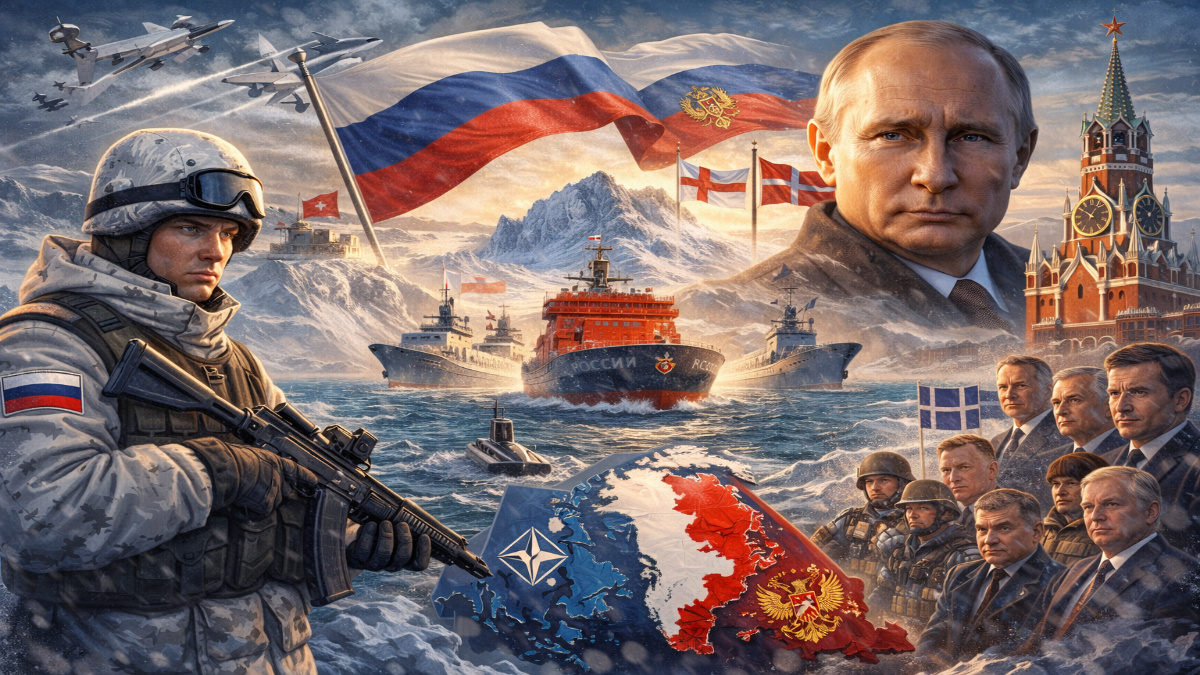
Russia has been very concerned about increasing geopolitical tensions in the Arctic, with NATO deploying more troops and the Trump administration discussing the strategic future of Greenland. The Russian embassy in Belgium described the moves of NATO as counterproductive and highly perilous, claiming that the alliance was hastening its militarization at the expense of increasing danger of Moscow and Beijing.
Russia also stressed on its desire to go the way of peace, cooperation and dialogue and condemned the members of NATO who had no intention of solving problems constructively. The tensions coincide with debates in Washington between the U.S., Danish and Greenlandic officials on the topic of the repeated suggestions of the former U.S. President Donald Trump to include Greenland into the U.S. territory. The White House used the idea of the strategic need to control Greenland due to the possibility of Russian and Chinese control, although it has been firmly opposed by Denmark, its European allies, and Greenland government. According to Denmark the foreign minister, there are still some basic differences, but the negotiations are going on. EU leaders noted that the U.S. had security issues but focused on dialogue and cooperation.
Denmark has also intensified its military drills in Greenland through the coordination of NATO allies to prepare the troops to work in the unique conditions of the place and enhance the presence of the alliance. A small force of European troops has already been deployed: Germany is deploying 13 personalities, Finland and the Netherlands are deploying liaison officers, and France has a small force, with further reinforcements to come. French President Emmanuel Macron emphasized the need to protect Greenland and remarked on the need to prepare and be flexible in the case of threats to the Europeans. Representatives of Greenland were pleased with the top-level talks with the U.S. and Europe. According to Aaja Chemnitz, the tensions between local issues, especially in children and elderly, were increased, and the dialogue was a significant initial step in overcoming fears and preserving the Greenland-Denmark relationships. Lars-Christian Brask of Denmark has pointed out that communication is the center of solving the disputes and positioning the situation as a long-term process, not a negotiation.
As Russia claims that NATO is being aggressive, European countries claim that they are only acting in self-defense and in order to secure the Arctic. Most of the military operations and diplomatic negotiations will define the future of tensions in the Greenland and the Arctic region with global consequences to the stability in the region, the alliances between the transatlantic and the future of one of the most strategic regions in the world.