

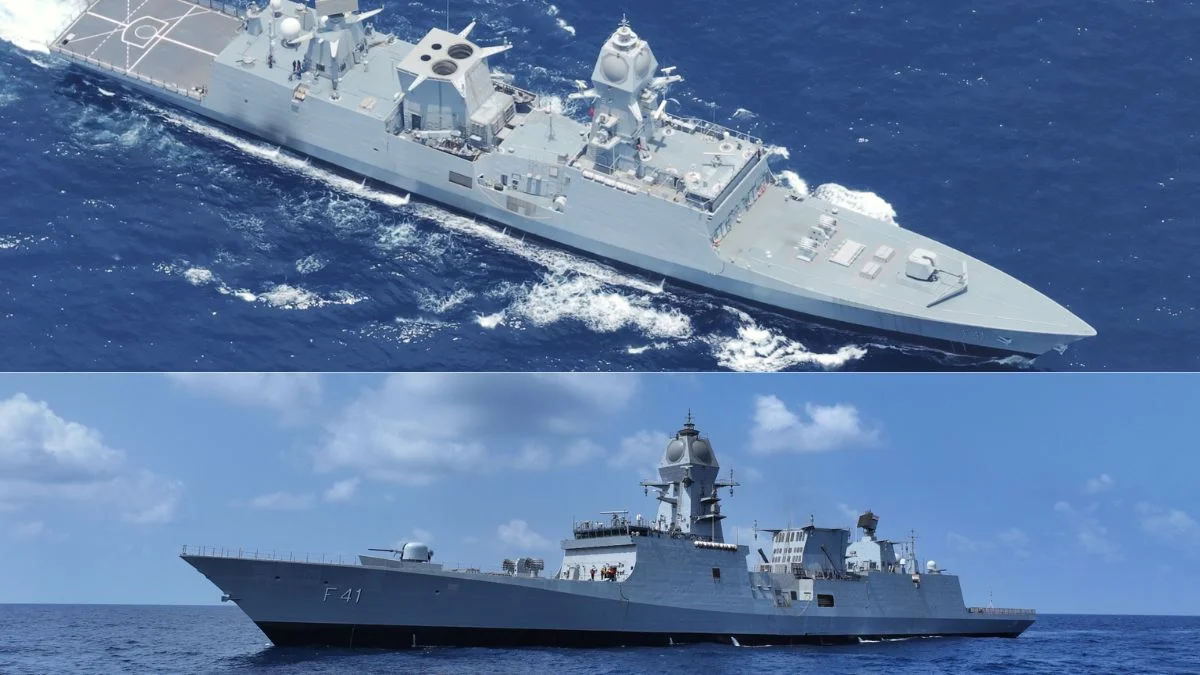
As the Indian Navy prepares to commission its latest stealth frigate, INS Taragiri (F41), on 3 April 2026 at Visakhapatnam, analysts say the advanced warship’s propulsion and mission flexibility could help expand India’s marine trade footprint, boost defence exports and drive new regional service pacts worth billions of dollars. The 6,670‑tonne frigate, the fourth vessel in the Project 17A Nilgiri class and built with over 75 % indigenous content involving more than 200 MSMEs, represents a significant leap in high‑end shipbuilding capability.
Taragiri’s Combined Diesel or Gas (CODOG) propulsion system, consisting of diesel engines and gas turbines linked to controllable pitch propellers, offers high speed, endurance and operational flexibility that appeals to both military and commercial customers. CODOG configurations strike a balance between fuel economy and sprint capability, making them attractive for navies and auxiliary fleets that operate across vast littoral and open‑sea theatres.
With India’s growing defence export numbers hitting record levels, ₹23,622 crore (nearly $2.8 billion) in FY 2024‑25 and government goals of reaching ₹50,000 crore by 2029, platforms like Taragiri could become key showcases for Indian propulsion and maritime systems in foreign markets.
Dual‑Use Propulsion: From Navy Decks to Global Trade Routes
Industry insiders highlight that the sophistication and reliability of propulsion systems similar to those on Taragiri could form a core export item for India’s marine engineering sector. While certain high‑speed gas turbines are still imported and indigenous production is expanding gradually, partnerships with public‑sector firms like Bharat Heavy Electricals Limited (BHEL) and research support from establishments such as the Defence Research and Development Organisation’s Gas Turbine Research Establishment could accelerate local development of marine turbines and related technologies.
This potential indigenisation would reduce reliance on imported propulsion systems, a longstanding cost factor for shipbuilders, and could help undercut European OEM pricing in markets such as Africa and Southeast Asia, where many navies seek cost‑effective propulsion solutions. Analysts say adapting CODOG technology for dual‑use applications, such as LNG carriers and commercial vessels, could unlock an estimated $3 billion in orders over the next decade amid global fuel cost pressures and the need for efficient engines that balance endurance with sustainability.
HADR Leasing and Regional Partnerships as Trade Catalysts
Beyond propulsion exports, Taragiri’s extensive Humanitarian Assistance and Disaster Relief (HADR) profile capable of responding to natural disasters and crises, positions it as a candidate for long‑term leasing arrangements with neighbouring countries. Policy frameworks and international guidelines support India’s proactive HADR diplomacy, which plays into broader foreign policy and regional cooperation goals.
Under these arrangements, India could offer “lease‑a‑frigate” packages combining operational deployment, training, maintenance support and periodic upgrades. Defence analysts project 10‑year service pacts with disaster‑prone regional partners, such as Bangladesh, Sri Lanka and Myanmar, potentially valued at up to $500 million or more each. These agreements would help embed Indian systems in partner navies’ operational structures, building long‑term commercial ties while enhancing maritime security collaboration.
Complementary to leasing, joint venture shipyard proposals offer another avenue for trade‑oriented economic engagement. By establishing maintenance, refit and co‑construction facilities in partner countries, India could capture a larger share of lifecycle support revenue — an area increasingly lucrative as defence customers look for sustainable cost models for complex platforms.
Policy Backdrop: Making India a Defence Export Powerhouse
These emerging opportunities align with broader Indian policy objectives. The Make in India and Atmanirbhar Bharat initiatives have sought to strengthen indigenous defence manufacturing and export competitiveness. Indigenous equipment such as the BrahMos cruise missile and naval vessels are already part of India’s global export portfolio, while government targets envision defence exports growing significantly in the coming years.
The creation of dedicated export promotion cells and easing of foreign investment norms in defence are part of a larger export‑promotion strategy aimed at attracting global partnerships and market access. These strategic policy shifts recognize that complex systems like advanced propulsion, sensors and integrated combat suites, demonstrated on platforms like Taragiri, can form core export products in a future where defence trade is a key driver of high‑technology manufacturing growth.
Synergistic Trade Outcomes: Engine + Service = Integrated Revenue Network
Taragiri’s synergistic potential, combining propulsion export prospects with service pacts for HADR and operational deployments, offers a template for an integrated maritime trade network valued in the multi‑billion‑dollar range. This network would not just export hardware but also lock in long‑term service, training and maintenance revenue streams, fortifying India’s footprint in global naval markets and underpinning its vision for a robust blue‑economy trade ecosystem.
As the Indian maritime sector evolves, leveraging Taragiri’s capabilities for both goods and services trade could help unlock new pathways for economic engagement, bolster diplomatic ties, and validate India’s growing role as a supplier of advanced naval technology.