

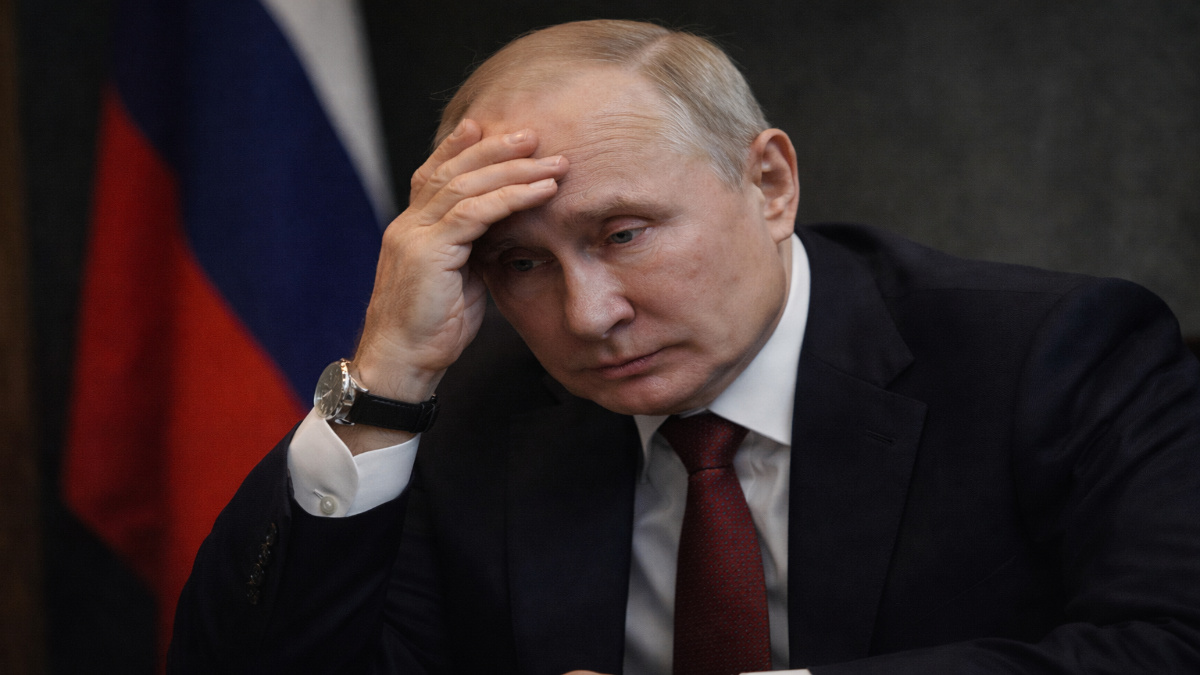
With the fifth year of the war in Ukraine, there is an increasing demand in the Western capitals to utilize frozen Russian sovereign funds to aid the defense and reconstruction effort of Kyiv. As the U.S. Senator Michael F. Bennet claims, Russian leader Vladimir Putin considers that he is winning the war and has little motivation to quit. In this respect, Bennet suggests that the Western government must go beyond sanctions and instantly use the frozen financial reserves of Moscow to help Ukraine.
Since the full-fledged invasion of Ukraine in 2022, the United States, the European Union, and their allies have frozen hundreds of billions of euros of Russian state assets. A large part of it, approximately EUR210 billion, is concentrated in the EU financial structure, specifically in the financial services firm Euroclear based in Brussels. These resources comprise central bank reserves as well as other sovereign funds which were frozen by international sanctions.
These funds have however been slowed down by political differences within the European region. It is said that Belgium has blocked an EU suggestion of using the frozen funds directly to fund the defense and rebuilding of Ukraine. In the meantime, the Hungarian Prime Minister Viktor Orban has criticized a backup plan, which would give a loan to Kyiv of EUR90 billion, using these assets. Consequently, there are those who have supported Ukraine by claiming that such unanimity might take too long to offer financial aid that is much-needed.
According to Bennett and other policymakers, it would be appropriate to form a coalition of willing states, which might include the United States, the United Kingdom, France, Germany, and Canada, to utilize the Russian assets, which were in their jurisdictions. These countries are said to control approximately EUR68 billion of frozen Russian sovereign funds. According to its supporters, the diversion of this money would keep Ukraine afloat with its economy and military efforts going on throughout the war.
Legally, there are complicated issues which the proposal raises under the international law. Conventionally, sovereign assets owned by a state have good protections under the concept of sovereign immunity especially central bank reserves. This doctrine usually denies the foreign governments the opportunity to confiscate state property of another country. Nevertheless, its supporters believe that the invasion of Ukraine by Russia is a blatant act of the violation of international law which can be a reason to develop exceptional countermeasures.
In the United States, Congress enacted in 2024 the Rebuilding Economic Prosperity and Opportunity for Ukrainians Act which gave the president the power to seize some Russian sovereign assets in the United States. Bennet has also sponsored other bills, the REPO Implementation Act, to transfer such funds to Ukraine on a weekly basis.
There is still debate, among legal scholars, on whether mass expropriation of sovereign assets would stand up to international legal standards or set precedents that would upset the international financial systems. Critics fear that this might make international financial institutions less trusted and it will discourage nations to keep their reserves in the Western jurisdictions.
However, the advocates believe that the unparalleled character of the actions of Russia deserves like unprecedented financial reactions. With the war still redefining international politics and security, the question on whether to use frozen Russian assets to finance Ukraine or not has emerged as one of the most impactful legal and economic issues in the politics of Western governments to date.