
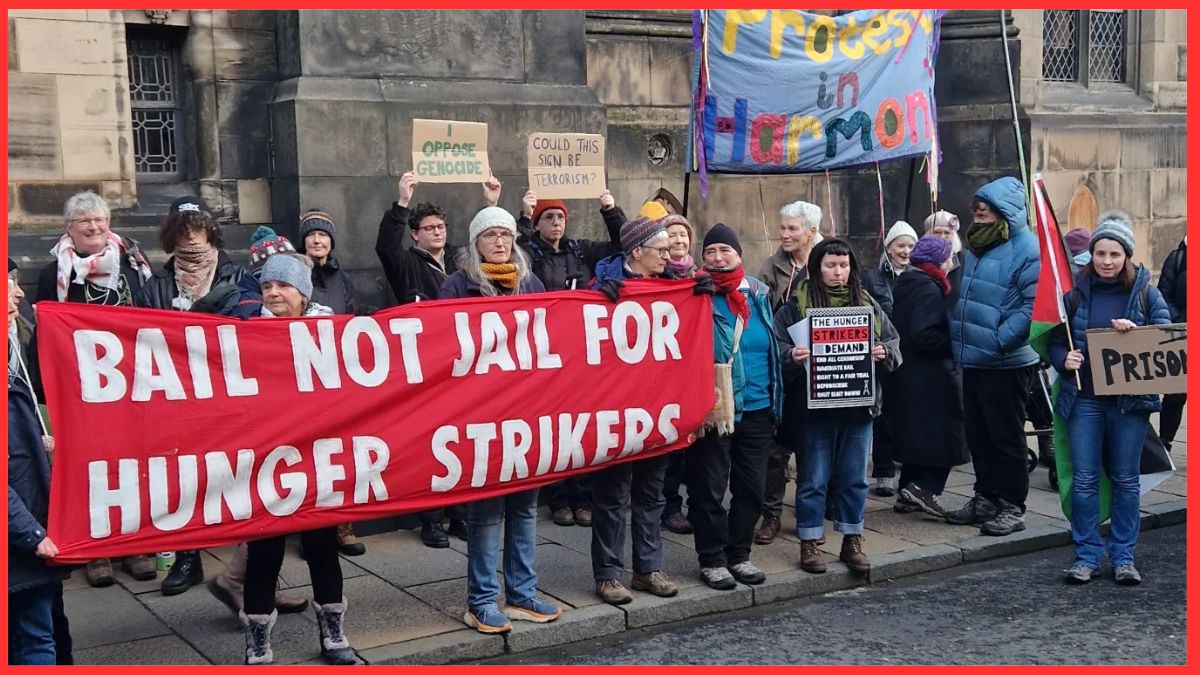
Scottish judges have approved plans for a judicial review of the UK government’s decision to proscribe the direct action group Palestine Action, a development that adds a distinctive Scottish legal dimension to an already complex UK-wide case. The Court of Session, Scotland’s supreme civil court, granted permission for the challenge to proceed following a procedural hearing held on 23 February, with substantive consideration scheduled for 17 and 18 March. The decision concerns an order issued in July by former Home Secretary Yvette Cooper, who banned Palestine Action under terrorism legislation. A separate judicial review contesting the same proscription is currently under way in England and Wales, making the Scottish ruling particularly notable for its constitutional implications.
Court of Session Judicial Review Tests Scope of UK Terrorism Proscription Powers
The Scottish proceedings stem from a petition lodged by former British diplomat Craig Murray, who asked the court to declare the ban ultra vires, meaning beyond the legal authority of the home secretary. During the hearing, UK government lawyers raised two preliminary objections: first, that Murray lacked sufficient standing because he is not a member of Palestine Action, and second, that a Scottish challenge should not proceed while related litigation is ongoing south of the border. According to court documents viewed by The National, the judge rejected these arguments and concluded that it was appropriate for the judicial review to move forward in Scotland despite the more advanced English proceedings.
Political Reaction and Scotland-Specific Context Surrounding the Palestine Action Ban
Campaign group Defend Our Juries said the decision opened the possibility that the proscription could be overturned in Scotland while remaining in force elsewhere in the UK, a scenario it said could amount to a constitutional crisis. The group also pointed to Freedom of Information disclosures published in October, which showed that the Scottish counter-terrorism board concluded at a meeting in May that Palestine Action’s activities were not close to meeting the statutory definition of terrorism. In her parliamentary statement justifying the ban, Cooper had cited a May 2022 occupation of a Thales arms factory in Glasgow. Defend Our Juries argued that the former home secretary had misrepresented how that action was assessed in Scotland and maintained that determinations of terrorism north of the border fall within Scotland’s own legal framework. The group further said that the ban had created legal inconsistency in Scotland, citing uneven enforcement against protesters. The Scottish judicial review will now examine these issues within Scotland’s courts, adding a significant chapter to the broader UK debate over protest, security law, and devolved legal authority.