
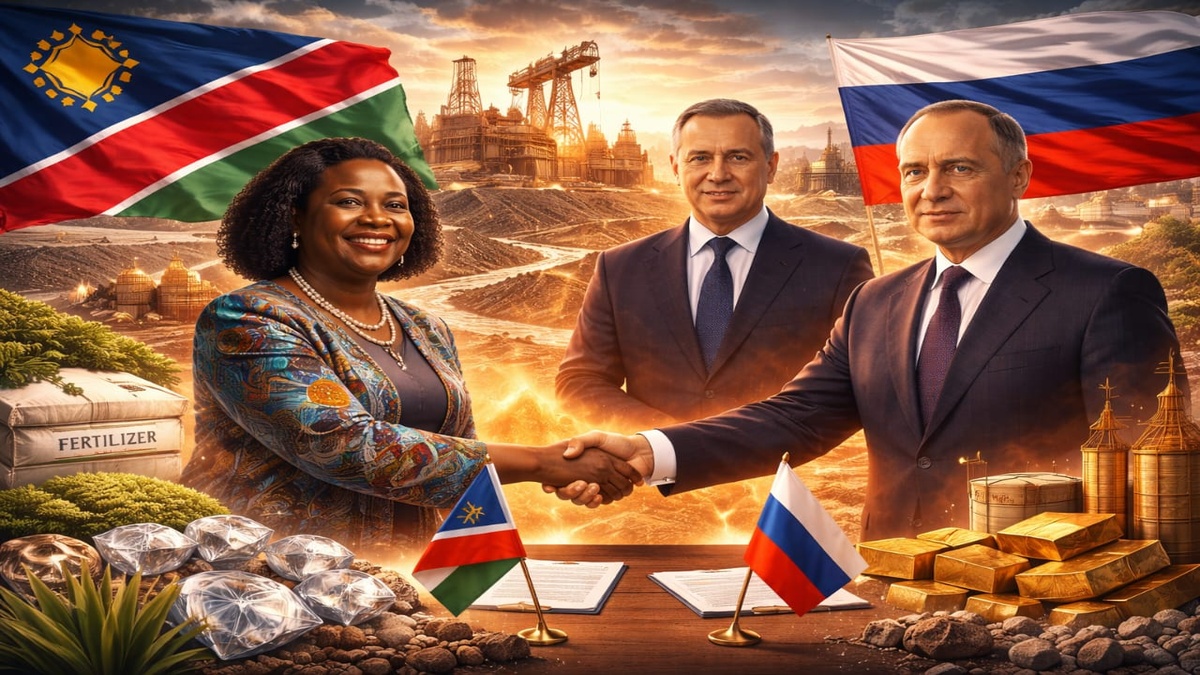
Namibia’s top diplomat, Selma Ashipala-Musavyi, touched down in Russia this week for a three-day mission that signals a major push to move beyond “polite diplomacy” and into hard economic results. At the invitation of Foreign Minister Sergei Lavrov, the visit is a clear attempt to breathe new life into an old partnership, specifically focusing on how the two nations can scale up industrial cooperation at a time when global trade routes are shifting fast.
Despite years of “fraternal bonds” dating back to Namibia’s liberation struggle, the actual trade numbers between the two countries have remained surprisingly low. Current estimates put bilateral trade at just around $17 million, mostly consisting of Russian fertilizer exports. However, there is a massive untapped potential that both sides are now eager to exploit, and they are finally getting serious about the logistics.
The centerpiece of the visit is a high-level sit-down with Yuri Trutnev, Russia’s Deputy Prime Minister and the co-chair of the Namibia-Russia Intergovernmental Commission. The goal is to take stock of stagnant projects and find a way to replicate the growth of 2024, which saw trade turnover nearly double. The commission is essentially the engine room for these deals, and both sides know it needs a jumpstart if they want to see real numbers on the board.
The real weight in this partnership comes from the energy sector. Namibia currently sits as the third-largest uranium producer on the planet, a fact that has kept Russia’s state-owned giant, Rosatom, knocking on Windhoek’s door for a long time. After hitting some road blocks with water permits for their “Project Wings” in the Omaheke region, it looks like both sides are finally finding common ground again. Moscow isn’t just looking to dig holes in the ground; they are pitching the kind of high-level technical training and industrial support that could help Namibia process its own ore rather than just shipping it out raw.
There is also the diamond factor to consider. Namibia provides about 30% of the world’s gem-quality diamonds. As Western sanctions on Russian stones create a rift in the global market, Moscow is likely looking for ways to integrate more closely with other top-tier producers like Namibia to maintain its influence over global supply chains.
For Ashipala-Musavyi, this trip is about way more than just balancing the trade books. It’s a loud statement about Namibia’s “economic sovereignty” and its refusal to be put in a box. By leaning back into a shared history with Moscow, Windhoek is essentially saying it won’t be bullied by outside pressure when it comes to choosing its friends. It is a strategic move to keep Namibia at the center of a shifting global order where being “non-aligned” means having the freedom to talk to everyone.
The mission wraps up on January 14, and the real test will be whether we see concrete contracts in the mining and agricultural sectors by mid-2026. With Russia already vowing “uninterrupted” shipments of essential goods like fertilizer and grain, the focus will now shift to whether Rosatom can finally secure the permits needed to begin large-scale operations in Namibia’s eastern subsoil.