

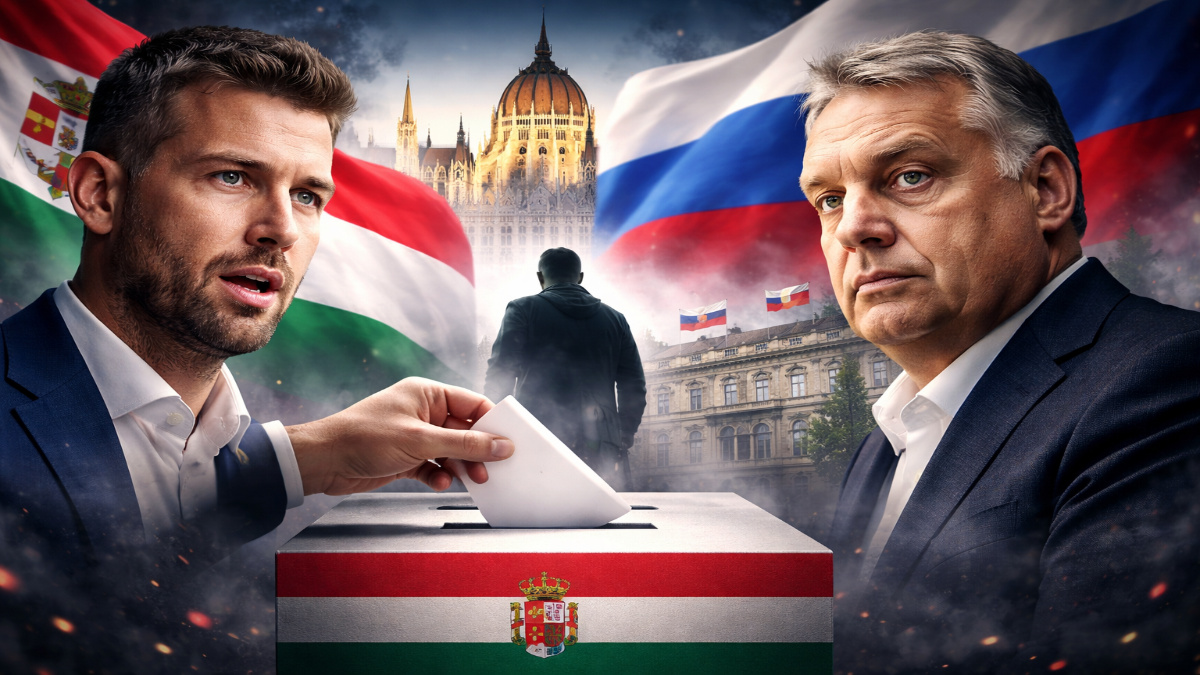
The following parliamentary elections scheduled in Hungary have become one of the most closely followed political events in Europe, as the vote is widely regarded as one of the most significant challenges to the rule of Prime Minister Viktor Orban since he first assumed power in 2010. The election has developed into a politically charged contest shaped by a growing opposition wave, rising geopolitical tensions, and concerns over possible foreign influence. At the center of the political discussion is opposition figure Péter Magyar, whose rising popularity has made the upcoming vote more competitive and introduced significant changes to Hungary’s domestic political landscape.
Magyar, the leader of the Tisza Party, has emerged as a strong contender in the election. Recent opinion polls have shown growing support for his movement, making the race one of the most competitive political contests Hungary has experienced in more than a decade. As the campaign intensified, allegations surfaced claiming that Russia had attempted to influence Hungary’s electoral environment. These claims were brought to public attention through an investigative report published by VSquare, which alleged that a covert Russian team had been operating from the Russian embassy in Budapest in an effort to influence the political atmosphere surrounding the election.
According to the report, the alleged group consisted of three individuals and was said to be led by Vadim Titov, who was reportedly operating under diplomatic cover. The investigation suggested that the objective of the group was to create conditions favorable to the re-election of Prime Minister Viktor Orbán. The report also claimed that the operation was overseen from Moscow by Sergei Kiriyenko, a senior Russian official and a close ally of Russian President Vladimir Putin. Kiriyenko has also been linked in various reports to political activities connected with elections in Moldova, where concerns were raised about attempts to undermine the position of pro-Western President Maia Sandu.
The allegations quickly gained attention both in Hungary and across Europe, raising questions about the possibility of external involvement in the country’s democratic processes. Russian officials, however, firmly rejected the accusations. The Russian embassy in Budapest responded with a statement dismissing the report as false and describing it as fake news. According to the embassy, no Russian delegation led by Sergei Kiriyenko or Vadim Titov was operating at the embassy. The statement also questioned the basis of the claims and suggested that opposition leader Péter Magyar had been responsible for spreading the allegations.
Magyar later responded by urging Russia not to interfere in Hungary’s political affairs. In a public statement, he called on the Russian leadership to refrain from influencing Hungary’s parliamentary elections or taking actions that could be interpreted as interference. At the same time, he emphasized that if his party were to come to power it would pursue balanced relations with Russia while strengthening Hungary’s position within the broader European community. His remarks appeared aimed at addressing concerns about electoral integrity while maintaining a pragmatic approach to international relations.
The ongoing war in Ukraine has also played an important role in shaping the broader political context of the election. The conflict has influenced the positions taken by political leaders and has become a central topic in debates about Hungary’s foreign policy orientation. Prime Minister Viktor Orbán remains one of the few European leaders who has maintained communication with Russian President Vladimir Putin. Hungary has also continued to import significant volumes of Russian fossil fuels despite pressure from the European Union for member states to reduce their dependence on Russian energy supplies. These policies have placed Hungary in a distinctive position within the European political landscape and have contributed to ongoing debates about the country’s strategic direction.
Recent diplomatic developments have also highlighted the continuing relationship between Budapest and Moscow. Russia previously released two Hungarian-Ukrainian prisoners of war following diplomatic discussions involving the Hungarian government. The development drew attention because it appeared to demonstrate the continuing channels of communication between Hungary and Russia despite the broader geopolitical tensions resulting from the war in Ukraine. The episode was viewed as an example of the diplomatic engagement that has continued between the two countries even as political divisions across Europe have deepened since the conflict began.
At the same time, Hungary’s relationship with Ukraine has become increasingly strained, adding another layer of complexity to the political environment surrounding the election. Budapest has previously blocked or delayed a €50 billion European Union financial assistance package intended to support Kyiv. Hungarian officials cited several concerns during the negotiations, which contributed to tensions within the European Union over the issue.
Disagreements related to energy infrastructure have also played a role in the dispute. The Druzhba Pipeline, an important route for Russian oil supplies reaching Central Europe including Hungary, has been affected by disruptions during the war, creating concerns about regional energy security. The situation has added further pressure to the already strained diplomatic relations between Budapest and Kyiv.
The tensions between the two countries have occasionally been reflected in sharp exchanges of statements between their leaders. Ukrainian President Volodymyr Zelenskyy has criticized Hungary’s stance on several occasions, particularly regarding its position on European Union assistance to Ukraine and broader policy differences related to the war.
Relations were further complicated by a security incident involving Ukrainian nationals in Hungary. Hungarian authorities carried out an operation involving two Ukrainian cash-courier vehicles that were traveling through the country. During the raid, officials seized a large quantity of cash and gold and detained several Ukrainian citizens while opening a money-laundering investigation related to the case. The development triggered a diplomatic dispute between the two countries, with Ukrainian officials criticizing Hungary’s actions and tensions escalating further.
These developments have contributed to a complex and highly charged political environment as Hungary moves closer to its parliamentary elections. The campaign has become intertwined with broader geopolitical issues, including relations with Russia, the ongoing war in Ukraine, and Hungary’s position within the European Union. Allegations of foreign influence, diplomatic disagreements, and security incidents have all added to the intensity of the political debate.
For Prime Minister Viktor Orbán, the election represents a pivotal moment that could determine whether his long-standing political dominance continues. Since 2010, Orbán has maintained a strong position within Hungarian politics, shaping the country’s domestic and foreign policy direction. The upcoming vote now presents a significant test of his leadership and the political system that has developed during his years in power.
For opposition leader Péter Magyar, the election represents an opportunity to convert growing public support into electoral success. His campaign has attracted attention both within Hungary and across Europe, reflecting the broader significance of the vote for the region’s political future.
As the election approaches, Hungary’s political landscape continues to evolve under the influence of both domestic and international factors. The interaction between internal political competition and wider geopolitical dynamics has turned the upcoming vote into an event that is being closely watched across Europe and beyond, with potential implications for Hungary’s future political direction and its role within the international community.