

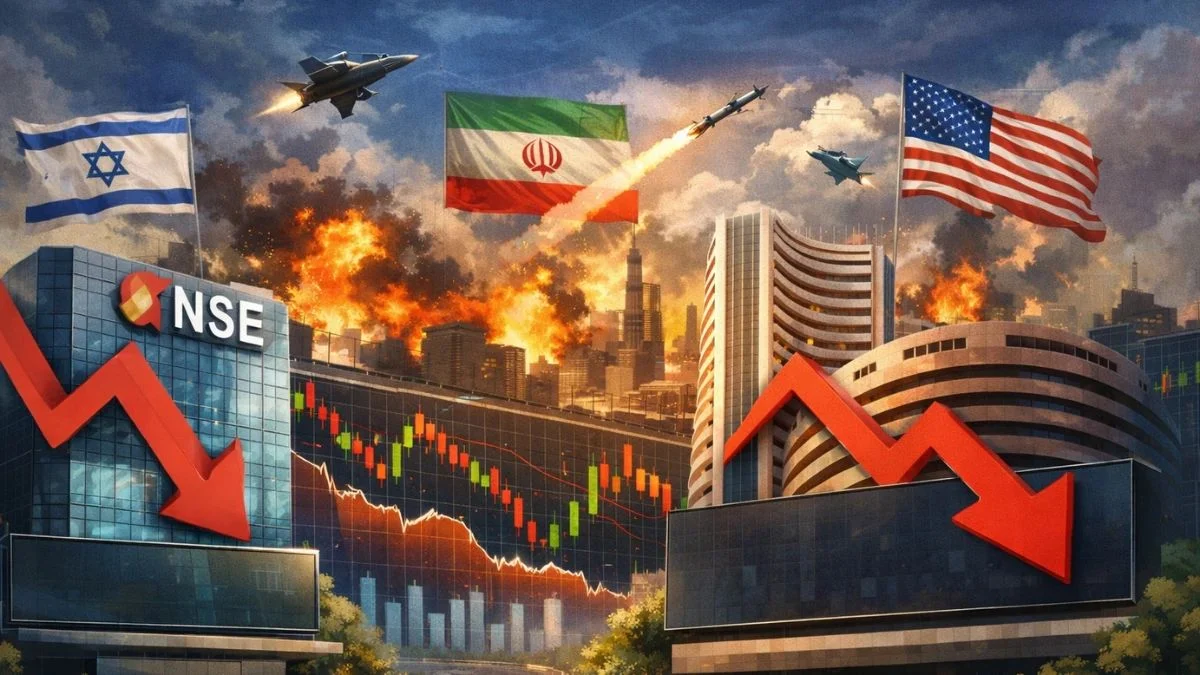
The stability of the modern Indian economy rests upon a structural reality that policymakers in New Delhi have wrestled with for decades yet have never fully escaped. India is one of the largest energy importing nations on the planet, and its economic expansion over the past thirty years has been powered primarily by crude oil transported across some of the most geopolitically fragile maritime corridors in the world. As geopolitical tensions intensify across the Gulf region and the security environment surrounding the world’s most critical energy shipping lanes becomes increasingly volatile, India finds itself exposed to a potentially severe economic shock. Rising crude oil prices driven by instability near the strategic maritime artery known as the Strait of Hormuz could unleash a complex inflation crisis capable of destabilising India’s currency, straining its fiscal balance and unsettling financial markets that have long celebrated the country as one of the most promising growth engines of the global economy.
The Indian economy today represents one of the largest and fastest growing major economies in the world, yet its energy foundation remains deeply dependent on imported hydrocarbons. Domestic oil production supplies only a small fraction of the country’s enormous consumption requirements. As a result India imports the vast majority of the crude oil required to fuel its transport sector, power generation infrastructure, petrochemical industry and manufacturing ecosystem. Much of this imported crude originates from producers across the Gulf region including Saudi Arabia, Iraq, United Arab Emirates and historically also from Iran before sanctions altered the trading landscape. The overwhelming majority of these shipments must pass through the narrow waters of the Strait of Hormuz before reaching global markets, making this single maritime corridor one of the most strategically sensitive elements of India’s economic security architecture. The importance of this chokepoint cannot be overstated. A significant share of globally traded oil moves through the Strait of Hormuz every single day. Tankers carrying crude destined for refineries across Asia, Europe and beyond must navigate this corridor before entering the wider Indian Ocean. For India the corridor represents not merely a logistical pathway but an economic lifeline. Any disruption to the flow of energy through this channel has immediate and direct implications for the country’s macroeconomic stability. Rising insurance premiums for shipping, increased freight costs, delayed cargo deliveries or outright physical disruptions to tanker movements can all translate rapidly into higher crude prices for Indian importers.
The impact of rising oil prices on the Indian economy operates through several interconnected channels. The most immediate effect is inflation. India remains highly sensitive to energy price fluctuations because fuel costs influence nearly every component of the consumer price basket. Transportation costs rise as diesel prices increase, which in turn affects the distribution of agricultural produce, manufactured goods and essential commodities across the vast geography of the country. Higher logistics costs inevitably push up retail prices, creating inflationary pressure that spreads across food markets, construction materials, consumer goods and industrial inputs.
Inflation has historically been one of the most politically and economically destabilising forces within India. When fuel prices surge, the ripple effects extend far beyond petrol stations. Agricultural producers face higher input costs for fertilisers and diesel powered irrigation pumps. Urban households confront rising transport expenses and increased electricity tariffs. Manufacturing firms experience cost escalation in raw materials and freight. These pressures collectively feed into the consumer price index monitored closely by the Reserve Bank of India, which is responsible for maintaining inflation within a targeted range while simultaneously supporting economic growth.
The challenge confronting the Reserve Bank of India during periods of oil driven inflation is exceptionally complex. When crude prices rise sharply due to geopolitical instability the central bank faces pressure to tighten monetary policy by increasing interest rates in order to prevent inflation from spiralling out of control. However higher interest rates can slow economic growth by making borrowing more expensive for businesses and households. For an economy such as India’s which relies heavily on credit expansion to finance infrastructure development, industrial investment and consumer spending, the consequences of aggressive monetary tightening can be substantial. The inflationary consequences of rising oil prices also place enormous strain on the government’s fiscal position. India has historically attempted to shield consumers from extreme fuel price volatility through a mixture of tax adjustments, subsidies and administrative interventions. When global oil prices surge the government often faces pressure to reduce fuel taxes or increase subsidies in order to prevent domestic retail prices from rising too sharply. While such measures can provide short term relief to consumers, they also reduce government revenues and increase fiscal deficits. The fiscal balancing act becomes particularly difficult during periods of sustained energy price inflation.
Beyond inflation and fiscal stress lies another critical vulnerability in the form of currency stability. The value of the Indian rupee is closely linked to the country’s energy import bill because crude oil purchases represent one of the largest components of India’s external payments. When oil prices rise sharply the total cost of importing crude increases dramatically, leading to a larger trade deficit. A widening trade deficit places downward pressure on the national currency as more foreign exchange is required to pay for imports.
Currency depreciation can amplify the inflation crisis even further. When the rupee weakens against the United States dollar, the cost of purchasing oil denominated in dollars becomes even higher for Indian importers. This creates a feedback loop in which rising oil prices weaken the currency and a weaker currency increases the domestic price of oil imports. Such cycles have historically forced Indian policymakers to intervene in currency markets or adjust monetary policy in order to stabilise exchange rates.
Financial markets closely monitor these dynamics because energy driven macroeconomic instability can rapidly influence investor sentiment. Equity markets often react negatively to sustained oil price increases because higher energy costs erode corporate profitability across multiple sectors. Industries such as aviation, logistics, manufacturing and chemicals are particularly vulnerable because fuel expenses constitute a significant share of their operating costs. Companies listed on the National Stock Exchange of India and the Bombay Stock Exchange can therefore experience substantial valuation pressure when energy prices rise sharply. The aviation sector provides a clear example of how energy inflation affects corporate performance. Airlines operating in India already face thin profit margins due to intense competition and regulatory constraints. Aviation turbine fuel represents one of the largest operating expenses for airlines, and any surge in crude oil prices translates directly into higher fuel costs. Airlines must either raise ticket prices or absorb financial losses. Both outcomes have broader economic consequences because higher airfares can reduce passenger demand while financial losses can destabilise companies operating within the sector. The transportation and logistics industries confront similar pressures. India’s vast domestic distribution networks rely heavily on diesel powered trucking to move goods across thousands of kilometres of highways connecting manufacturing centres, ports and urban markets. Rising diesel prices increase freight costs, which ultimately feed into consumer prices. The cumulative effect across the economy can be substantial because logistics expenses influence the cost structure of nearly every product sold within the country.
The strategic dimension of the problem becomes even more apparent when considering the geopolitical environment surrounding Gulf energy exports. The ongoing tensions involving Iran and regional actors have repeatedly raised fears of maritime disruptions in the Strait of Hormuz. Military confrontations, sanctions disputes, drone attacks on energy infrastructure and naval incidents have all occurred within this region over the past decade. Each episode has triggered volatility in global oil markets as traders attempt to assess the risk of supply disruptions. For India these geopolitical developments are not distant diplomatic concerns but immediate economic threats. A prolonged disruption to tanker traffic through the Strait of Hormuz could remove significant volumes of oil from global markets and drive prices sharply higher. Even temporary disruptions could cause speculative spikes in crude prices that filter rapidly into domestic fuel costs. Given India’s heavy reliance on imported oil, such price movements would transmit quickly into inflation metrics, fiscal balances and currency markets.
The strategic vulnerability created by this dependence has not gone unnoticed by Indian policymakers. Over the past decade the government has pursued several initiatives designed to reduce exposure to energy shocks. These efforts include expanding strategic petroleum reserves, diversifying crude suppliers and investing in renewable energy infrastructure. India has also attempted to increase domestic exploration and production, although geological constraints and economic challenges have limited the impact of these efforts.
Despite these initiatives the structural reality remains unchanged. India’s rapid economic growth continues to drive rising energy consumption, and domestic production remains insufficient to meet demand. The country therefore remains deeply reliant on imported oil transported through geopolitically sensitive regions. As long as this dependency persists the Indian economy will remain vulnerable to the fluctuations of global energy markets and the strategic uncertainties of Middle Eastern geopolitics. The stakes are exceptionally high because India occupies a pivotal position in the global economic landscape. As one of the world’s largest consumer markets and a major manufacturing hub, India’s economic stability influences supply chains, financial flows and investment decisions across the international system. A severe energy driven inflation crisis within India would not remain confined within national borders but would reverberate across global markets. Foreign investors who have poured billions of dollars into Indian equities, infrastructure projects and technology ventures closely monitor macroeconomic indicators such as inflation rates, currency stability and fiscal deficits. If rising oil prices were to trigger sustained economic turbulence, investor confidence could weaken. Capital outflows would place additional pressure on the rupee while stock markets could experience heightened volatility. Such developments would complicate India’s ambitions to position itself as a stable destination for global investment during an era of shifting geopolitical alliances.
Ultimately the energy inflation threat facing India illustrates the profound interconnectedness of modern geopolitics and economic stability. Events unfolding in distant maritime corridors can influence the daily lives of millions of people through changes in fuel prices, food costs and employment prospects. The strategic vulnerability embedded within India’s energy import structure serves as a reminder that economic growth cannot be separated from the security of global supply chains and the stability of international relations.
As tensions across the Gulf continue to simmer and the risk of disruption in the Strait of Hormuz remains a persistent concern, India confronts a difficult strategic reality. The country’s remarkable economic ascent has been fuelled by imported energy moving through one of the most volatile regions of the world. Should that corridor become unstable, the resulting surge in crude prices could ignite an inflationary crisis capable of destabilising the currency, straining government finances and unsettling financial markets that have long celebrated India as a pillar of global economic growth. The coming years may therefore determine whether India can successfully navigate this energy dependency or whether the volatility of geopolitics will once again expose the fragile foundations beneath one of the world’s most dynamic economies.