

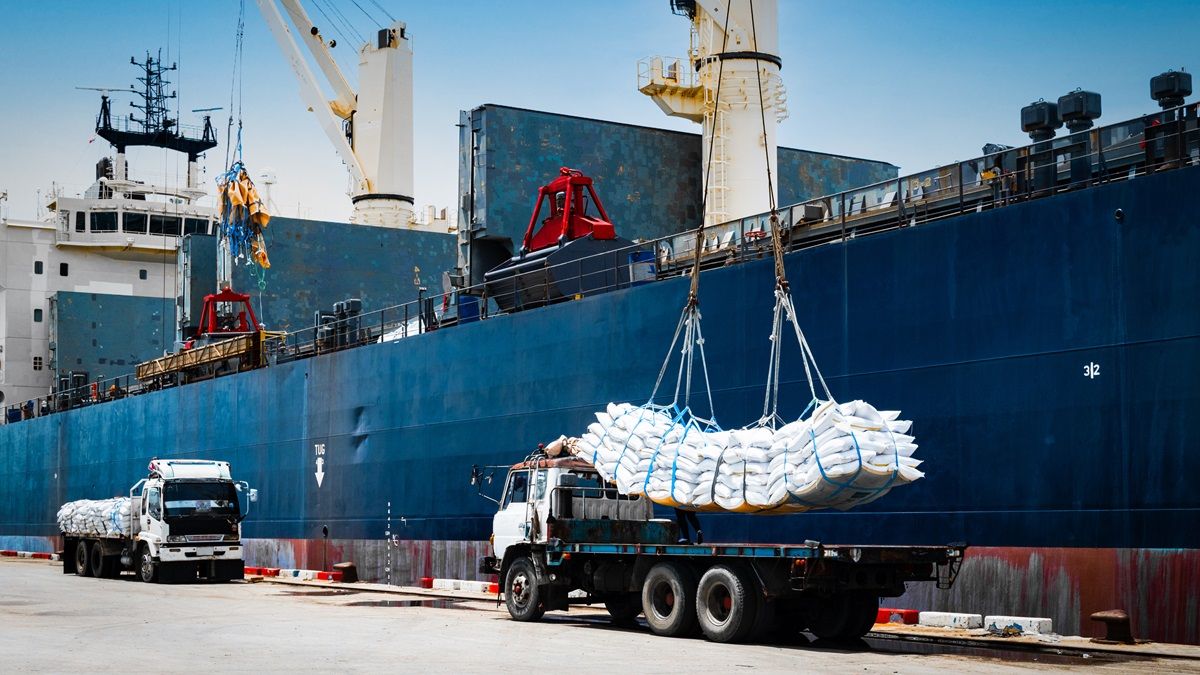
A sharp disruption in Gulf-based urea supplies, triggered by rising fiscal stress signals in key hydrocarbon economies, is sending shockwaves through global agricultural trade, raising concerns of a cascading crisis across fertilizer availability, crop production, and food exports.
Market indicators, including recent spikes in sovereign bond yields in countries such as Iraq and Bahrain, are being closely tracked by analysts as early warning signs of fiscal strain that could constrain fertilizer exports. Urea, a primary nitrogen-based fertilizer derived from natural gas, is heavily dependent on Gulf supply chains. Any disruption in this corridor directly impacts global agricultural cycles.
According to assessments aligned with data trends from UNCTAD, the transmission mechanism is already visible: surging natural gas prices have historically driven fertilizer costs upward, with a doubling in gas prices translating into nearly 30% increases in nitrogen fertilizer prices. This, in turn, forces farmers worldwide to alter planting decisions—often shifting away from fertilizer-intensive crops—leading to reduced yields and tightening global grain supplies.
Unlike oil, where countries such as India maintain strategic reserves covering approximately two months of consumption, no comparable buffer exists for fertilizers. This structural gap exposes global agriculture to immediate shocks, particularly if supply through critical maritime chokepoints such as the Strait of Hormuz is disrupted. The region accounts for a significant share of globally traded fertilizers, making it a potential single point of failure.
Major agricultural exporters are already recalibrating strategies. Brazil is reportedly prioritizing domestic food security, with shifts from corn to soy cultivation amid constrained urea imports. In North America, both the United States and Canada are witnessing similar acreage adjustments, which could erode their export competitiveness in global grain markets.
Meanwhile, ongoing instability in the Black Sea region continues to strain Ukraine’s export capacity, compounding supply-side pressures. The convergence of fertilizer shortages and logistical bottlenecks risks amplifying disruptions in already fragile trade corridors.
India, with merchandise trade exposure estimated in the hundreds of billions, is leveraging trade diversification strategies. Commerce Minister Piyush Goyal has accelerated bilateral trade negotiations, including advanced-stage agreements with the European Union and partners in Latin America, to offset vulnerabilities in physical goods trade. Parallel investments in domestic energy production, including offshore exploration initiatives led by ONGC, aim to reduce dependence on imported inputs linked to fertilizer production.
Experts draw parallels with the 2022 Russia-Ukraine War, during which fertilizer prices surged dramatically, contributing to global food inflation spikes. However, analysts warn that a Hormuz-linked disruption could be more severe due to the concentration of supply routes.
The implications are unevenly distributed. While countries with diversified trade networks and domestic production buffers may absorb the shock, import-dependent regions particularly in parts of Africa face heightened risks of fiscal distress and food insecurity.
Trade analysts emphasize that this evolving crisis underscores a broader shift: control over agricultural inputs is becoming as critical as energy security. As fertilizer supply chains tighten, global trade patterns in food commodities may undergo a structural realignment, with long-term implications for both exporters and importers.