

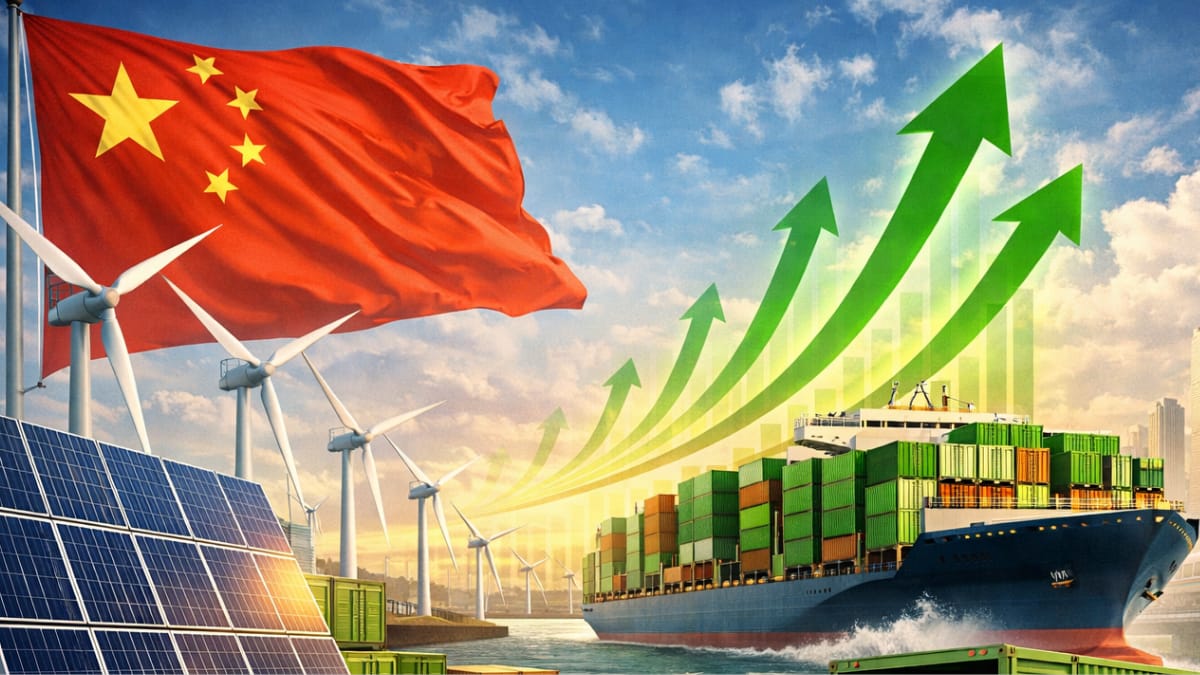
Accelerating the global transition to low-carbon energy. Advances across renewables, green mobility, and clean manufacturing underpinned a surge in shipments of batteries, solar components, electric vehicles, and wind equipment, reinforcing China’s leading position in cleantech. Data from the energy think tank Ember shows cleantech exports hit about $20 billion in August alone, driven by a 26 per cent year-on-year rise in EV shipments and a 23 per cent increase in battery exports over the first eight months. Over that period, EV exports generated roughly $52 billion, a rise of some 1,600 per cent since 2019. The expansion of these sectors has bolstered China’s economy clean industries accounting for more than 10 per cent of GDP in 2024, around 13.6 trillion yuan ($1.9 trillion), while also helping to cut global emissions by making affordable green technologies available to many emerging markets.
An aftermath of the 2015 Paris Agreement and the Made in China plan:
China’s climb in green exports has deep policy roots dating back to the aftermath of the 2015 Paris Agreement. The twin carbon pledges to peak emissions by 2030 and reach carbon neutrality by 2060 spurred heavy investment in renewables, and the 2015 Made in China 2025 plan prioritised energy-efficient and new energy vehicles, plus electrical equipment for solar and wind, backed by subsidies and research funding. By 2024, investment in clean energy had topped $625 billion, roughly double the 2015 level, and China reached its 2030 wind and solar capacity target six years early with about 1,200 GW installed. That industrial base has translated into manufacturing dominance: China now supplies around 41 per cent of global renewable equipment exports, ahead of Germany and South Korea. Since 2022, Chinese companies have pledged more than $210 billion for overseas green tech projects across 54 countries, extending supply chains for solar, batteries and EVs. Strong solar and wind shipments in 2025 built on $242 billion of solar exports since 2018, while green mobility continued to expand EV production reached 13 million units in 2024, representing 40.9 per cent of domestic car output and overseas investment, including about $58 billion in clean energy projects in 2023–24, has further cemented China’s central role in global low carbon supply chains.
China is also scaling up its waste-free city programme: under a new action plan for solid waste treatment, it aims to bring roughly 200 cities into the scheme over the next five years.