

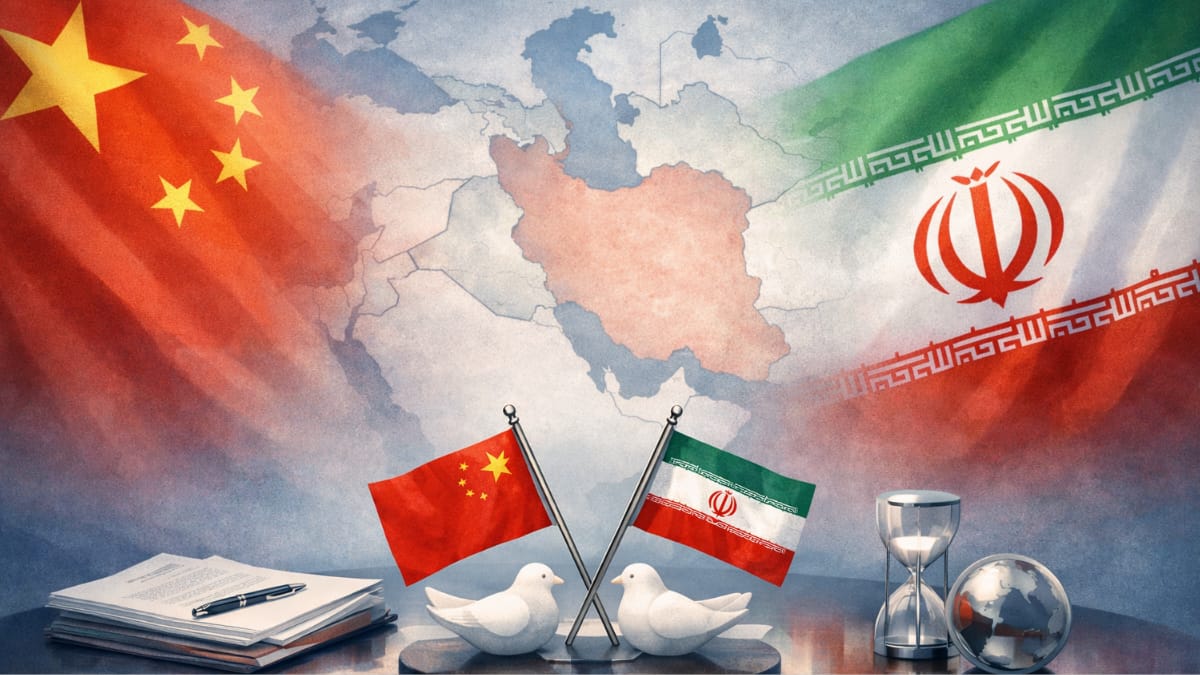
In a fresh turn of events, China’s Foreign Minister Wang Yi spoke over the phone with Iran’s Minister of Foreign Affairs Seyed Abbas Araghchi on 15 January 2026, stressing that everyone involved should put peace first, exercise self-control, and sort out disputes via talks instead of resorting to aggression. Wang voiced Beijing’s firm stance against outsiders meddling in Iran’s domestic matters or wielding threats of military force on the global stage, while expressing faith in Tehran’s capacity to keep things steady at home. He further noted China’s eagerness to contribute positively towards calming the region. For his part, Araghchi briefed Wang on recent developments, saying order had been re-established and that Iran was keen on discussions, alongside a wish for Beijing to step up its role in steadying the area.
This conversation echoes China’s wider position, as voiced by spokesperson Mao Ning from the Foreign Ministry earlier that week, rejecting external interference and urging steps that bolster stability across the Middle East.
Context of the Iran Situation:
The protests that began as economic grievances at Tehran’s Grand Bazaar in late December 2025 rapidly morphed into nationwide calls for regime change, spreading to all 31 provinces and drawing a broad cross‑section of society; in response, Iranian authorities imposed a near‑total internet blackout from around 8 January and launched a brutal crackdown in which rights groups report an estimated 2,000–3,000 or more killed and over 18,000 arrested, with fast‑tracked trials and threats of executions as the government brands demonstrators “terrorists” and shows little tolerance even for economic complaints.
Internationally, the protests have provoked sharp reactions, notably from the United States, where President Trump has warned of “very strong options,” including the possibility of military action, while urging Iranians to keep demonstrating and asserting that executions have been halted; the UN Security Council has held briefings and the G7 has signalled readiness to impose further sanctions. By mid‑January 2026 protest activity appears to have waned under intense repression, yet the situation remains fraught, with some analysts warning that the regime could face instability if the crackdown falters or external pressures intensify. China’s intervention reflects its strategic interest in Iran as a partner in energy and regional influence, and Beijing has urged de‑escalation to prevent wider Middle East instability that might unsettle global markets.