

China and Canada have both moved to clarify their positions after US President Donald Trump warned that he would impose 100 per cent tariffs on Canadian goods if Ottawa deepened trade engagement with Beijing.
Speaking at a regular press briefing on 26 January, Chinese Foreign Ministry spokesperson Guo Jiakun said the recent China–Canada trade understanding “is not aimed at any third party”. He stressed that the arrangement is based on cooperation and mutual benefit, adding that Beijing prefers a win-win approach to trade relations rather than confrontation or zero-sum competition.
Guo’s remarks came after heightened tensions triggered by Trump’s public comments over the weekend. On 24 January 2026, Trump threatened to levy 100 per cent tariffs on Canadian imports, arguing that closer economic ties between Canada and China could allow Beijing to use Canada as a gateway into the US market. His comments were widely reported and quickly drew reactions from both Ottawa and Beijing.
The trade framework at the centre of the dispute was announced on 16 January 2026, during Canadian Prime Minister Mark Carney’s visit to Beijing. Under the arrangement, China agreed to reduce tariffs on key Canadian agricultural exports, including canola, and to consider easing visa requirements for Canadian travellers. In return, Canada agreed to scale back its previously high tariffs on a limited number of Chinese-made electric vehicles, allowing them to enter under a fixed annual quota at standard tariff rates.
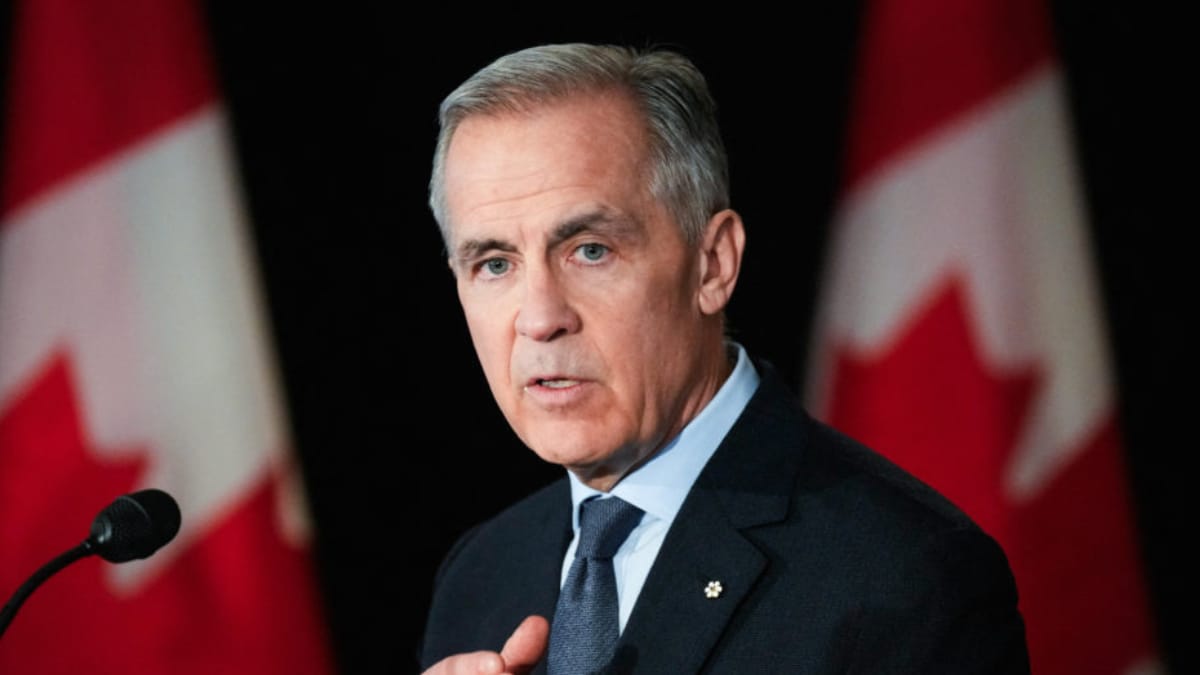
In Ottawa, Prime Minister Carney has sought to reassure both domestic stakeholders and international partners following Trump’s warning. On 25 January, he reiterated that Canada remains fully committed to its obligations under the United States–Mexico–Canada Agreement (USMCA) and has no plans to pursue a comprehensive free trade agreement with China. Carney said Canada’s approach is focused on resolving specific bilateral trade issues, particularly in agriculture and manufacturing, rather than undermining its relationship with the United States.
Carney’s office described Trump’s remarks as part of wider economic and trade pressures ahead of the upcoming USMCA review. Officials framed Canada’s engagement with China as a pragmatic adjustment designed to stabilise trade flows, not as a strategic shift away from Washington.
The exchange highlights the delicate balance Canada faces as it seeks to diversify its trade relationships while remaining deeply economically integrated with the United States. It also underscores how China-related trade policy continues to be a sensitive issue in North American politics, particularly amid rising geopolitical competition and protectionist pressures.