

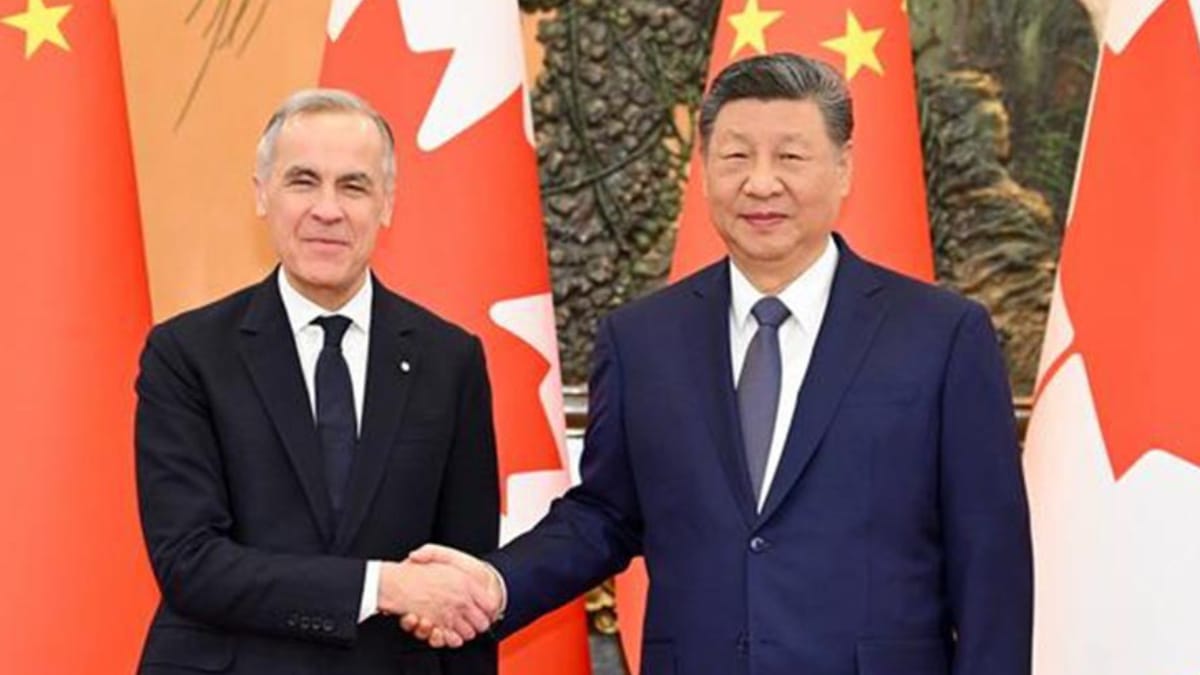
China and Canada revealed a limited but notable trade reset in mid‑January 2026 after high‑level talks in Beijing. The announcement followed meetings between Canadian Prime Minister Mark Carney and senior figures from China’s economic and trade leadership. Although the understanding falls short of a free trade agreement, it represents a cautious move to ease tensions that have disrupted bilateral commerce for almost eight years.
Officials on both sides described the outcome as a pragmatic framework intended to restore stability and reopen dialogue across key economic areas. The talks concentrated on removing long‑standing trade barriers rather than pursuing wide‑ranging liberalisation.
Agriculture and electric vehicles at the heart of the deal
A central element of the arrangement is China’s agreement to relax restrictions on major Canadian agricultural exports, notably canola. Canadian canola producers have faced heavy tariffs and regulatory obstacles in recent years, sharply reducing shipments to what was once a major market. Under the new framework, China has pledged to significantly lower those barriers, enabling Canadian farmers to regain access to trade flows worth several billion dollars a year. The change is expected to provide immediate relief to Canada’s agricultural sector, which has been under sustained pressure.
In exchange, Canada has revised its approach to Chinese electric vehicles (EVs). Rather than keeping broad, highly punitive tariffs previously imposed to shield domestic manufacturers, Canada will permit a fixed annual quota of Chinese‑made EVs to enter at standard tariff rates. Canadian officials say this compromise aims to balance the interests of domestic industry with consumer demand for more affordable EVs, while also supporting national climate and electrification objectives.
The framework also signals an intention to broaden cooperation in clean energy, advanced manufacturing and investment facilitation. Although the commitments are not legally binding, both governments have presented them as confidence‑building measures designed to stabilise economic ties.
Geopolitical context and what happens next:
Relations between China and Canada have been strained since 2018, following diplomatic disputes, reciprocal detentions and successive rounds of trade restrictions affecting agriculture, technology and manufacturing. Tensions escalated further during 2024 and 2025 amid a wider rise in global protectionism. Against this backdrop, the latest reset has drawn close scrutiny from Canada’s allies, particularly the United States, which has expressed concern about greater Chinese EV access to the North American market.
For now, analysts regard the agreement as practical rather than transformative. It delivers targeted economic relief, renews engagement and creates a channel for dialogue, while leaving deeper strategic disagreements unresolved.