History will not be kind to the international community for what it is choosing not to see in Iran.

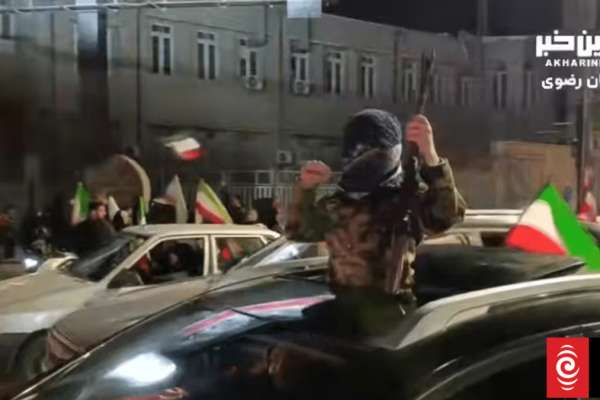
While diplomats trade letters at the United Nations, oil markets twitch nervously and governments issue statements carefully calibrated to avoid upsetting strategic balances, thousands of Iranian civilians have been killed in the streets, in detention centres and in secret courtrooms. Independent rights organisations including the US based Human Rights Activists News Agency and the Norway based Iran Human Rights group have documented death tolls ranging from more than 2,500 verified fatalities to over 3,400 according to parallel monitoring networks, with tens of thousands arrested since the current wave of protests erupted.

Children are among the dead. Non protesters are among the dead. Detainees have been sentenced to death in summary proceedings. Internet access has been cut nationwide. Families have been threatened into silence. Satellite communications have been jammed. Lawyers have been obstructed. Bodies have disappeared.

Yet the dominant global response remains diplomatic choreography.

This is not merely repression. It is not a routine authoritarian crackdown. Under the architecture of modern international criminal law, what is unfolding in Iran raises unavoidable questions about crimes against humanity, and potentially, under certain legal interpretations, genocidal intent against identifiable civilian groups defined by political identity.

The reluctance to say this aloud is not legal caution. It is political cowardice.

The legal threshold the world pretends does not exist

Under the Rome Statute of the International Criminal Court, crimes against humanity are defined as specific acts committed as part of a widespread or systematic attack directed against any civilian population, with knowledge of the attack. These acts include murder, imprisonment, torture, persecution, enforced disappearance and other inhumane acts intentionally causing great suffering.

Every element of this definition is already satisfied by the documented facts.

The killings are widespread, occurring across multiple provinces and cities. They are systematic, carried out by uniformed security forces, intelligence agencies and paramilitary units operating under state command structures. The victims are civilians. The intent is demonstrable through repeated official statements framing protesters as enemies of God, foreign agents or traitors.

Iran is not a party to the Rome Statute, but jurisdiction can still be triggered through a referral by the United Nations Security Council or through the doctrine of universal jurisdiction exercised by national courts, as seen in Germany’s prosecution of Syrian officials for crimes against humanity.

The legal door is open. The political will is absent.

Genocide, under the 1948 Genocide Convention, requires the intent to destroy, in whole or in part, a national, ethnic, racial or religious group. Political groups are not explicitly listed. This technical exclusion has become a convenient shield for regimes that exterminate dissent.

Yet modern legal scholarship increasingly challenges this artificial boundary, arguing that mass extermination of political identity groups, when systematic and intended to erase a segment of a population as such, violates the object and purpose of the Convention itself.

When a state repeatedly kills thousands of its own citizens because they belong to a clearly identifiable group defined by opposition to the regime, when it imprisons and executes them to extinguish that identity from society, the moral difference between that and classical genocide collapses.

The law is lagging behind the crime.

Iran’s internet shutdown is not a technical inconvenience. It is a tool of violent state control.

International human rights law, including the International Covenant on Civil and Political Rights to which Iran is a party, protects freedom of expression, access to information and the right to peaceful assembly. Blanket digital blackouts violate all three.

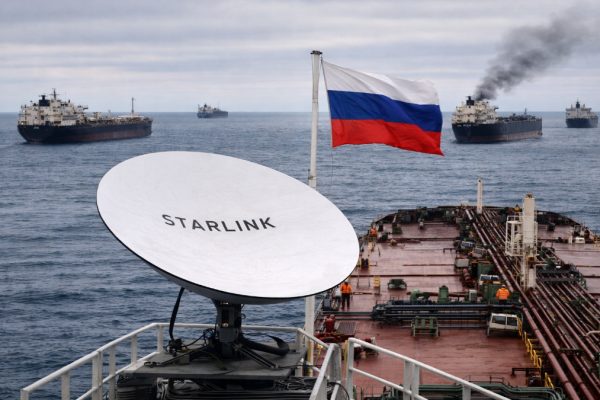
The deliberate severing of communications during lethal crackdowns has become a signature tactic of regimes seeking to kill without witnesses. The use of jamming against satellite services such as Starlink further demonstrates premeditation.

This is not spontaneous disorder control. It is infrastructure designed to facilitate killing in darkness.

In legal terms, this constitutes persecution and inhumane acts under Article 7 of the Rome Statute. It also aggravates state responsibility under the Articles on Responsibility of States for Internationally Wrongful Acts, triggering duties of non recognition and non assistance for other states.

Yet Western technology companies continue to operate cautiously. Governments issue concern. Trade flows continue.

The bodies accumulate.

Executions as terror, not justice

Iran’s use of capital punishment against protesters, even when temporarily paused under international pressure, violates multiple layers of international law.

Summary trials without due process breach Article 14 of the ICCPR. Executions for vaguely defined crimes such as corruption on earth or enmity against God violate the principle of legality. Executing juveniles violates the Convention on the Rights of the Child, also ratified by Iran.

When executions are used not as punishment for ordinary crime but as instruments to terrify a civilian population into submission, they become crimes against humanity.

No amount of televised courtroom choreography alters this legal reality.

Why then is the world still whispering?

Because Iran sits at the intersection of energy markets, nuclear diplomacy, regional war calculations and great power rivalry. Because sanctions fatigue has set in. Because Western governments fear escalation. Because Russia and China will veto any meaningful Security Council action. Because European states are paralysed between human rights rhetoric and strategic dependence.

The result is a grotesque legal double standard.

When similar patterns of killing occurred in the Balkans, tribunals were created. When they occurred in Rwanda, the word genocide was eventually spoken. When they occurred in Syria, universal jurisdiction filled part of the vacuum.

In Iran, the killings are treated as a regrettable internal matter.

This is not neutrality. It is complicity through omission.

Under international law, states have an obligation not only to refrain from committing atrocities but to prevent them where possible. The doctrine of the Responsibility to Protect, unanimously endorsed by the United Nations in 2005, establishes that sovereignty is not a licence to massacre.

Iran’s government invokes sovereignty. The law invokes humanity.

Only one of these claims is legitimate.

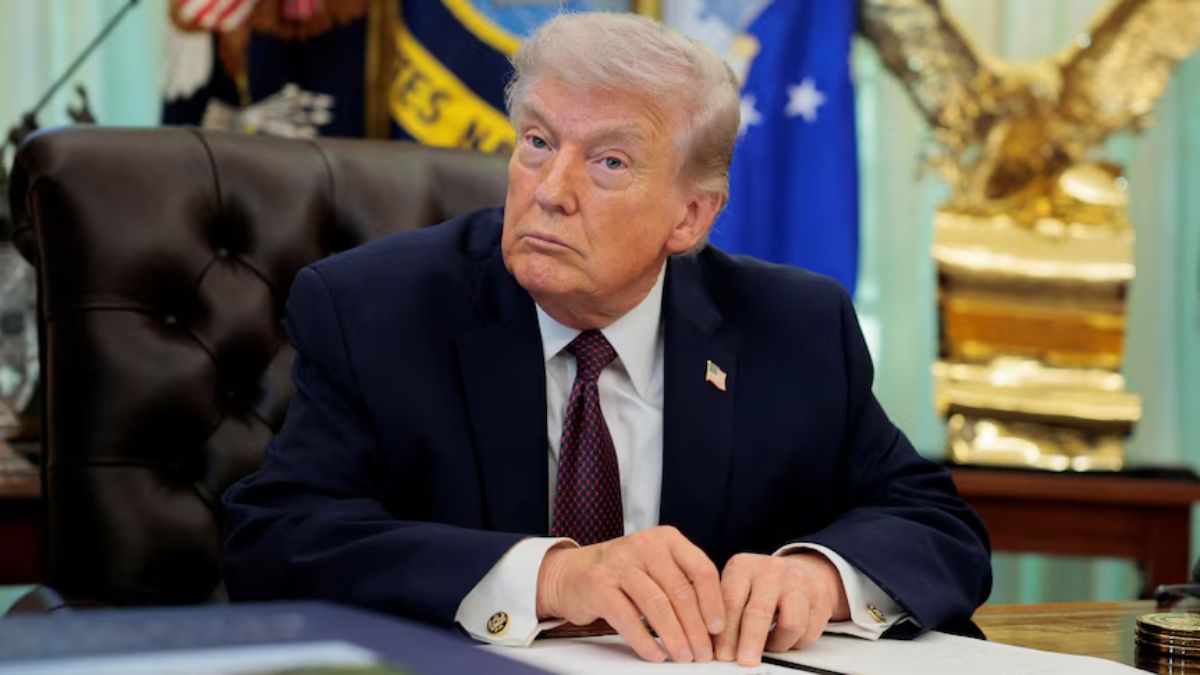
Trump, foreign interference and the legal theatre of distraction

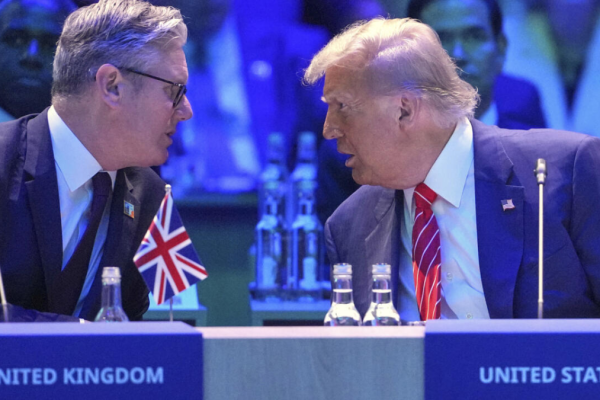
Iran’s letters to the United Nations accusing the United States of incitement are not legally frivolous. Article 2(4) of the UN Charter prohibits threats or use of force. Article 2(7) bars intervention in domestic affairs.

Public statements encouraging regime change can indeed constitute unlawful interference if paired with coercive measures.

But this argument is now being weaponised to divert attention from the primary crime.

Foreign rhetoric does not cause mass shootings of protesters. Tweets do not operate gallows. Statements do not fire live ammunition into crowds.

Even if external interference were proven, it would not erase the criminal responsibility of those pulling the triggers.

Invoking foreign plots is a textbook strategy of regimes attempting to launder domestic atrocities through international grievance.

It is legally irrelevant to the classification of the killings themselves.

If the Iranian crackdown is normalised, a precedent is set.

It tells every authoritarian government that mass killing of protesters is tolerable if done quickly, digitally invisibly and behind the language of sovereignty. It tells every security force that uniforms are legal shields. It tells victims that their lives are negotiable.

International law becomes theatre.

Human rights become branding.

Justice becomes optional.

What accountability would actually look like

Real accountability would require targeted sanctions under universal jurisdiction doctrines, arrest warrants against named officials, international investigations with forensic mandates, preservation of digital evidence, and formal recognition that crimes against humanity are ongoing.

It would require states to suspend diplomatic normality, not merely express concern.

It would require media to stop sanitising slaughter as unrest.

And it would require lawyers to say what diplomats refuse to say.

A state that systematically kills thousands of its own civilians to erase political opposition is committing one of the gravest crimes known to law.

The fact that the victims are politically inconvenient does not downgrade their humanity.

The most offensive part of this story is not the brutality of the Iranian security forces.

It is the fluency with which the international system pretends this is something else.

It is the quiet calculation that some lives are worth less than stability.

It is the willingness to debate language while graves are filled.

Call it crimes against humanity. Call it mass political extermination. Call it state terror.

But stop pretending it is normal.

Disclaimer:

This article is a journalistic and academic analysis based on publicly reported information from international news agencies, human rights organisations including HRANA and Iran Human Rights, and statements made to the United Nations by official representatives. It does not constitute a legal determination by any court or tribunal. Allegations referenced remain subject to independent judicial investigation and due process under international law. The views expressed are analytical and informational in nature and are intended to contribute to public discourse on international legal standards, human rights and state responsibility.

TOPICS: Donald Trump Elon Musk International Court of Justice International Criminal Court Starlink Top Stories UN Charter United Nations United Nations Charter