- 11:50 AM (IST) 14 Jan 2026Latest
Iran protests legal live updates: Iran appeals to United Nations Security Council after Trump calls for continued protests
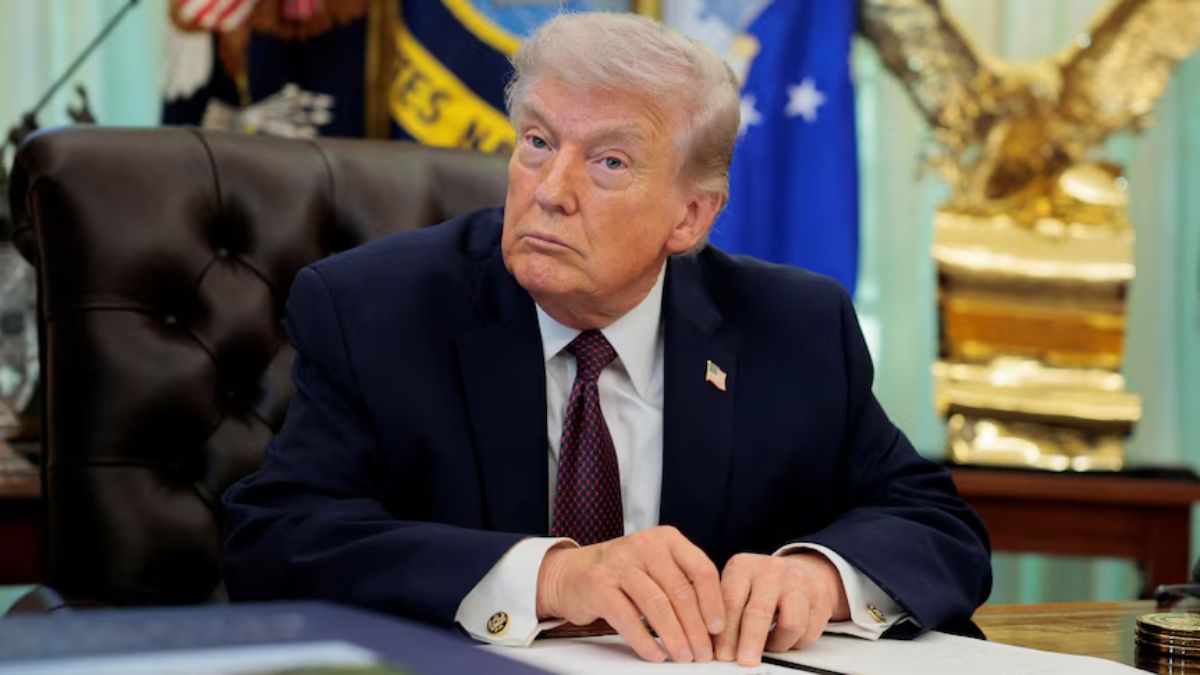
Iran’s decision to formally address the United Nations Security Council following public remarks by United States President Donald Trump urging Iranians to “keep protesting” marks a decisive escalation in an already volatile confrontation between domestic upheaval and international power politics. What might appear, at first glance, to be a routine diplomatic protest note is in fact a legally charged instrument that places the unfolding crisis squarely within the jurisdictional language of the United Nations Charter, the law of state responsibility, and the doctrine of non intervention.
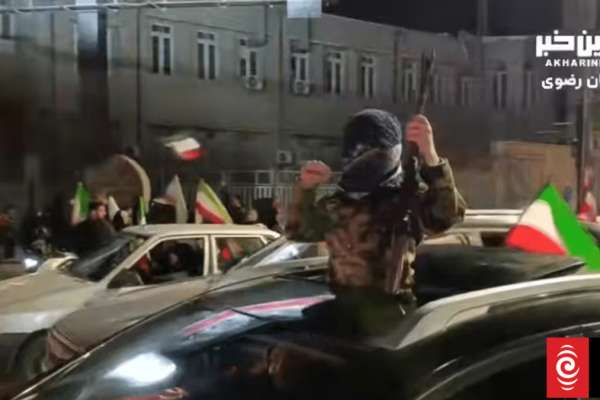
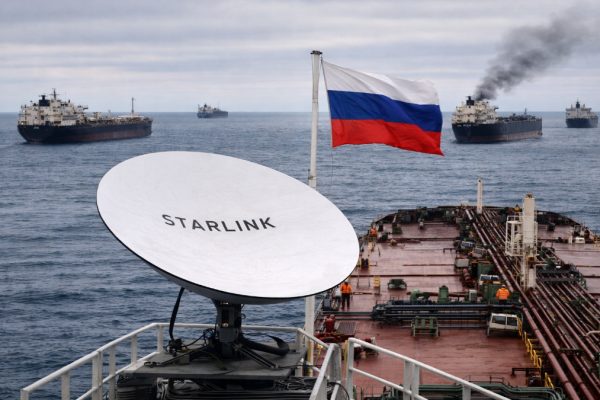
At a moment when verified civilian deaths have surpassed 2,500, when nationwide internet access has collapsed to a fraction of normal capacity, and when satellite communications have become the sole conduit between Iranian streets and the outside world, Tehran’s letter represents more than political theatre. It is a pre emptive legal framing of the conflict, aimed at shaping how responsibility for future escalation will be apportioned under international law.
The anatomy of Iran’s legal complaint
In its letter to the Security Council and the Secretary General, Iran’s Permanent Representative, Ambassador Amir Saeid Iravani, accuses Washington of inciting violence, interfering in Iran’s internal affairs, and implicitly threatening military action by encouraging the seizure of state institutions.
This formulation is neither casual nor rhetorical. It is carefully aligned with the operative language of Article 2(4) and Article 2(7) of the United Nations Charter, which prohibit both the threat or use of force against the political independence of a state and coercive intervention in matters essentially within domestic jurisdiction.
The Iranian mission further alleges that the remarks constitute encouragement of unrest and external support for attempts to dismantle constitutional order. In international legal terms, this is a claim that the United States has crossed the boundary between political expression and unlawful interference.
That boundary is narrow, contested, and historically consequential.
International law does not prohibit criticism of governments, nor does it forbid expressions of solidarity with protest movements. However, jurisprudence from the International Court of Justice, particularly in the landmark Nicaragua v United States case, establishes that coercive interference designed to influence the political system of another state violates customary international law.
The test is not merely whether words are spoken, but whether they form part of conduct intended to compel political change by unlawful means.
Statements urging citizens to overthrow institutions, encouraging security forces to defect, or signalling material or strategic backing for regime change can, when combined with contextual factors, satisfy the threshold of coercion.
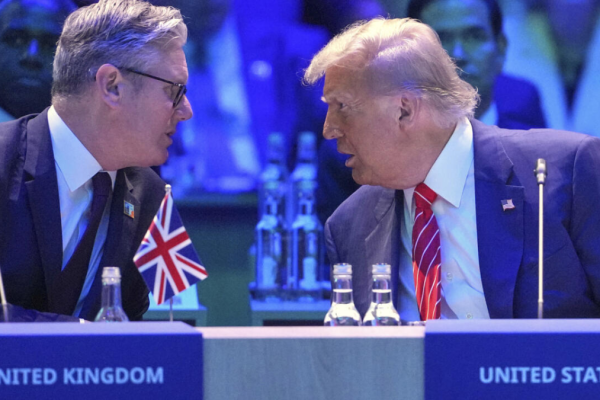
Iran’s argument is that Trump’s exhortation to “keep protesting” and “take over institutions” does not exist in isolation. It is delivered in a context of long standing United States sanctions, covert operations acknowledged in historical record, active regional hostilities involving Israel, and ongoing diplomatic isolation.
In such circumstances, Tehran contends that even rhetorical encouragement acquires a destabilising and legally actionable character.
Whether the Security Council accepts this interpretation is another matter. The United States holds veto power. Legal validity and political enforceability do not always converge.
Iran’s appeal to international law sits uneasily alongside its own conduct.
According to figures cited by Reuters from the Human Rights Activists News Agency, 2,571 people have been killed during the current protests, including more than 2,400 demonstrators and at least 12 children. Tens of thousands have been detained. Internet access has been almost entirely severed.
Iran is a party to the International Covenant on Civil and Political Rights. Under Articles 6, 7, 9, 19 and 21, it is obligated to protect life, prevent torture, avoid arbitrary detention, guarantee freedom of expression, and respect peaceful assembly.
No formal derogation has been lodged with the United Nations, which means that these obligations remain legally binding even in the presence of internal unrest.
This creates a dual legal reality.
Iran may possess a credible claim that foreign powers are interfering in its domestic affairs. Simultaneously, it may be committing grave violations of international human rights law, potentially rising to the level of crimes against humanity under Article 7 of the Rome Statute, defined as widespread or systematic attacks against a civilian population.
International law does not permit one violation to cancel out another.
The strategic function of the Security Council letter
Tehran’s letter is not primarily aimed at securing sanctions against the United States or Israel. Such outcomes are structurally impossible due to the veto system.
Its true function is evidentiary and anticipatory.
By formally placing its allegations on record, Iran establishes a documentary trail demonstrating that it warned the international community of foreign incitement before any further escalation. Should military confrontation occur, or should covert operations later be substantiated, Tehran will argue that causation and responsibility were already articulated.
This technique mirrors strategies employed by states in Ukraine, Syria and Yemen, where early diplomatic correspondence later became part of the factual record in international litigation and investigative mandates.
The historical shadow of 1953
Iran’s sensitivity to perceived external manipulation cannot be understood without reference to the 1953 overthrow of Prime Minister Mohammad Mossadegh, orchestrated by the United States and the United Kingdom.
That episode remains embedded in Iranian political consciousness as proof that protest movements can be weaponised by foreign intelligence services to engineer regime change.
Whether or not such claims are justified in the present context, they shape how Iranian authorities interpret contemporary events and how they deploy international legal arguments.
From Tehran’s perspective, Trump’s remarks revive a pattern in which external encouragement of unrest precedes intervention.
From Washington’s perspective, they may be dismissed as political messaging aimed at human rights advocacy.
The law sits uneasily between these narratives.
If protest deaths continue to mount, and if evidence emerges of systematic targeting of civilians, the focus of international legal scrutiny will increasingly shift from sovereignty disputes to individual criminal responsibility.
Under universal jurisdiction statutes in Europe, Iranian officials may face arrest warrants abroad. The United Nations Human Rights Council may establish a commission of inquiry. The Security Council, though paralysed by veto politics, may still commission investigative mechanisms.
At the same time, allegations of foreign interference, if supported by credible evidence, could expose Western officials to proceedings before the International Court of Justice or domestic courts invoking the law of state responsibility.
The current exchange of letters is therefore not diplomatic noise. It is the opening phase of a long legal conflict over narrative, causation and culpability.
Iran’s appeal to the United Nations Security Council following President Trump’s call for continued protests marks the moment when domestic unrest fully merges with international legal confrontation.
What began as demonstrations over governance has evolved into a dispute engaging the foundational principles of the modern international system: sovereignty, non intervention, human rights protection, and accountability for mass violence.
In Tehran, the state invokes international law to defend its political survival.
In Washington, political leaders frame their rhetoric as moral support for popular resistance.
Between these positions lies a growing body of civilian graves, digital evidence, satellite data, and diplomatic correspondence.
Long after the protests subside, these records will remain.
They will be examined not by crowds or politicians, but by investigators, judges, and international tribunals tasked with answering a question that has haunted Iran for more than a century.
Where does legitimate influence end, and unlawful intervention begin?
And at what point does the defence of sovereignty become indistinguishable from the commission of international crimes?
The Security Council letter does not resolve these questions.
It merely ensures that they will be asked, formally, legally, and for years to come.