
- 11:42 AM (IST) 14 Jan 2026Latest
[EXPLAINED] Iran protests and the law of power: How a century of legal evasion has culminated in a modern international crime scene
What distinguishes the present moment is not simply the scale of repression, but the convergence of historic patterns with modern international law. For the first time, Iran’s protest cycle is unfolding in a legal environment where the architecture of accountability is mature, documented, digital, and increasingly unavoidable.
Iran is once again convulsed by protest, bloodshed and geopolitical theatre. Verified death tolls now exceed 2,500. Internet connectivity has been reduced to near extinction. Satellite networks have become the last channel between Iranian streets and the outside world. Foreign leaders issue statements that Tehran characterises as incitement. Former Israeli defence officials speak openly of invisible hands guiding unrest. Exiled royalty calls for the army to defect. The United States President urges citizens to seize institutions.
To treat this moment as exceptional is to misunderstand Iran. What is unfolding is not merely another domestic crisis but the latest chapter in a century long collision between popular mobilisation, state coercion and the steady corrosion of legal restraint both inside the country and beyond its borders.
What distinguishes the present moment is not simply the scale of repression, but the convergence of historic patterns with modern international law. For the first time, Iran’s protest cycle is unfolding in a legal environment where the architecture of accountability is mature, documented, digital, and increasingly unavoidable.
Iran’s modern political identity was born in resistance. The Constitutional Revolution of 1905 to 1911 was one of the earliest mass movements in the Middle East to demand rule of law, parliamentary government and limitations on monarchical power. It ended with partial reform, foreign intervention, and the entrenchment of security politics as the primary language of governance.
In 1953, the overthrow of Prime Minister Mohammad Mossadegh through a covert operation orchestrated by the United States and the United Kingdom implanted a permanent trauma in Iranian political memory. It established a doctrine, widely believed within Iran and not without historical basis, that foreign powers manipulate internal unrest to reshape the state.
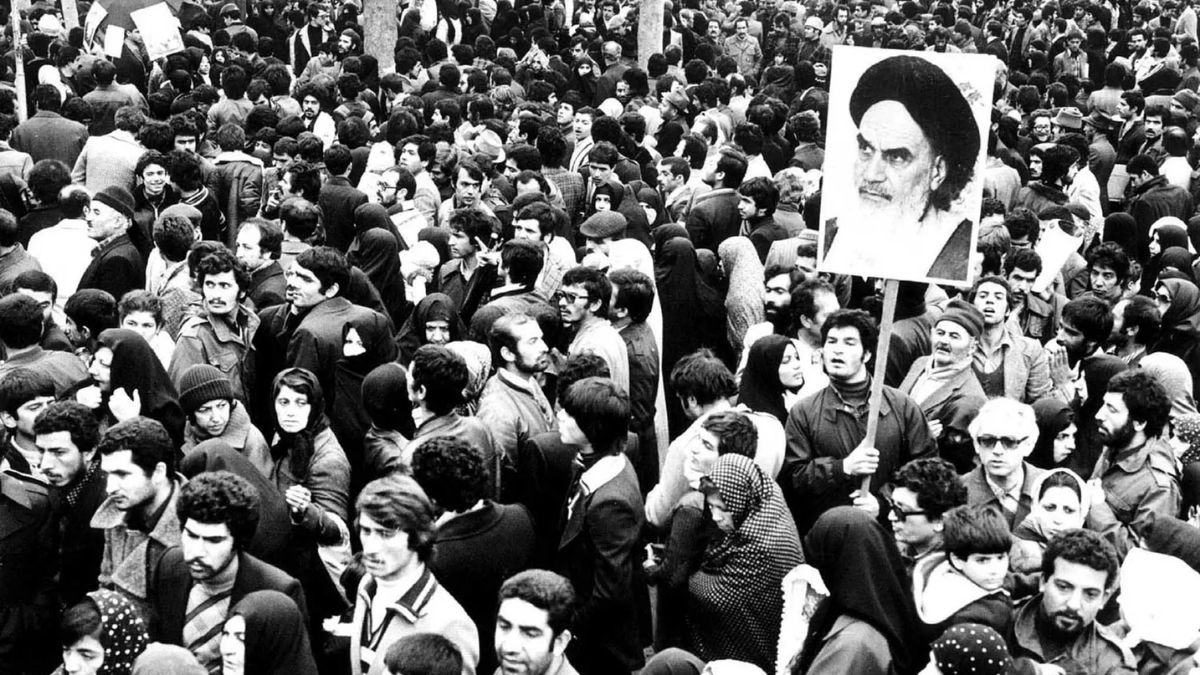
The Islamic Revolution of 1979 itself was a protest movement that succeeded. Yet it replaced monarchy with a system that constitutionalised clerical supremacy, emergency powers and revolutionary courts. The new state enshrined ideological security as a permanent condition, not a temporary deviation.
Since then, protest has never disappeared. Student uprisings in 1999, the Green Movement of 2009, economic demonstrations in 2017 and 2019, and now the present nationwide unrest all follow a similar trajectory. Initial tolerance, followed by mass arrests, lethal force, information blackouts, and retrospective legal justification.
What has changed is not the instinct of the state, but the legal consequences of its actions.
The present crisis as a legal watershed
According to the United States based Human Rights Activists News Agency, whose figures have been cited by Reuters and other international outlets, 2,571 people have been killed. Among them are 2,403 protesters, 12 children under eighteen, and nine civilians not involved in demonstrations.
In international law, numbers are not morally abstract. They are juridical thresholds.
Iran is a party to the International Covenant on Civil and Political Rights. It is bound by Article 6 on the right to life, Article 7 on freedom from torture, Article 9 on liberty and security of person, Article 19 on freedom of expression, and Article 21 on peaceful assembly.
Even in a declared public emergency, these rights may only be limited under strict conditions of necessity, proportionality and formal notification to the United Nations Secretary General. Iran has issued no valid derogation notice.
The killing of children alone constitutes a prima facie violation of the Convention on the Rights of the Child, to which Iran is also a party. International jurisprudence makes clear that minors enjoy heightened protection during internal security operations. Crowd control tactics that result in child fatalities are almost impossible to reconcile with lawful use of force.
When civilian deaths reach into the thousands, the legal vocabulary changes.
Article 7 of the Rome Statute of the International Criminal Court defines crimes against humanity as murder, imprisonment, torture and persecution when committed as part of a widespread or systematic attack against a civilian population.
The verified casualty figures, the geographical spread of protests, the scale of arrests, and the pattern of information suppression collectively satisfy the legal meaning of both widespread and systematic under contemporary international criminal doctrine.
Iran is not a party to the Rome Statute. This fact delays jurisdiction but does not extinguish liability. The United Nations Security Council retains referral authority. National courts exercising universal jurisdiction may prosecute Iranian officials abroad. Precedents from Germany’s prosecutions of Syrian officials demonstrate that political rank offers no permanent shield.
History shows that accountability often arrives late, but rarely vanishes.
Iran’s near total internet shutdown since Thursday night, with connectivity measured by Cloudflare at a fraction of one percent of normal traffic, is not merely a technical act. It is a legal event.
The right to seek, receive and impart information is protected under Article 19 of the ICCPR. The Human Rights Committee has repeatedly ruled that blanket internet shutdowns are presumptively unlawful, particularly during civil unrest when information access is essential for safety, medical assistance and legal documentation.
The appearance of Starlink satellite connectivity as the only remaining channel for international communication further complicates matters.
From Tehran’s perspective, satellite internet represents an unauthorised foreign telecommunications network operating without state consent, potentially in violation of domestic law. From an international law standpoint, however, the issue is more complex.
The International Telecommunication Union framework recognises state sovereignty over spectrum use, yet human rights law imposes limits where communication restrictions enable mass violations. Legal scholars increasingly argue that in situations of atrocity prevention, external digital access may be protected as a humanitarian necessity.
If evidence demonstrates that the shutdown facilitated killings or mass arrests, the act of disabling networks itself may constitute a contributing element to crimes against humanity.
Recent statements by foreign actors have sharpened Tehran’s legal rhetoric.
The former Israeli defence minister, Yoav Gallant, reportedly stated that Israel should direct events with an invisible hand. The United States President publicly urged Iranians to take over institutions. Reza Pahlavi, son of the last Shah, called on the army to defect.
Iran’s ambassador to the United Nations has accused Washington and Israel of violating international law, invoking sovereignty, territorial integrity and non intervention.
Here, the law is precise but often ignored.
Article 2(4) of the United Nations Charter prohibits the threat or use of force against the territorial integrity or political independence of any state. Customary international law, as articulated in the Nicaragua case before the International Court of Justice, prohibits coercive intervention in the internal affairs of another state, including efforts to overthrow governments through indirect means.
Political speech alone does not automatically breach this standard. However, statements encouraging military defection, institutional seizure or covert guidance of unrest approach the boundary where diplomatic expression becomes unlawful interference.
If material support, cyber operations or covert financing were established, the legal character would shift from rhetoric to actionable violation.
Iran’s invocation of these principles is legally coherent, even if strategically selective. A state may violate human rights domestically while simultaneously holding valid claims against foreign interference.
International law allows both to be true.
A familiar cycle with unfamiliar consequences
In 2009, following the Green Movement protests, hundreds were killed. In 2019, economic demonstrations resulted in approximately 300 deaths according to Amnesty International. Neither episode triggered formal international criminal proceedings.
The difference today lies in three developments.
First, the scale. Verified deaths now exceed all previous post revolution protest crackdowns combined.
Second, documentation. Satellite imagery, digital testimony, encrypted data transfers and independent casualty verification have reduced the state’s ability to control historical record.
Third, geopolitical context. Iran is already under sanctions regimes, nuclear scrutiny, and regional confrontation. Legal escalation is no longer politically implausible.
In earlier decades, protest bloodshed was absorbed into diplomatic silence. Today it accumulates as evidentiary material.
Authoritarian systems often survive by converting unrest into proof of foreign conspiracy. The narrative is internally effective. It justifies emergency measures and rallies loyal institutions.
But law is indifferent to narrative.
International criminal liability is assessed not by ideological framing, but by casualty tables, command structures, orders issued, weapons deployed, detention patterns and communication blackouts.
Each protester killed becomes not only a political liability but a potential exhibit.
Iran was shaped by protest long before it was governed by clerics. It overthrew kings, expelled foreign influence, and promised rule by law. Yet over a century later, it confronts a paradox.
The same mechanisms of mass mobilisation that once liberated the nation now expose it to the harshest scrutiny of international law.
The state that emerged from revolution now risks classification among regimes prosecuted for crimes against humanity.
And the foreign powers that once engineered Iran’s political fate now speak again, publicly and privately, in ways that test the limits of lawful conduct.
The protests will end. All protests do.
What may not end is the legal shadow that follows them.
In the archives of international justice, in courtrooms that convene decades after the chants fade, and in the diplomatic records of a world that increasingly treats mass civilian death as a prosecutable offence rather than an internal affair, the events of today are already being drafted into permanent legal memory.
Iran has lived through coups, revolutions, wars and sanctions.
It has never lived in an era where its treatment of protesters could be judged not by history alone, but by judges.
That may be the most consequential change of all.